
Walk a trade show floor for ten minutes, and something odd happens. Everything starts to blur.
Booths that spent six figures on design become wallpaper. Brands shouting clever taglines fade into ambient noise. You stop seeing any of it.
This isn’t a failure of creativity. It’s biology. The human brain is a ruthless filter, and it is working against you before you even get to tell your story.
But the real battle happens at the supermarket. What brand will draw your attention in a sea of sameness?
Understanding how attention actually works, not just how marketers talk about it, is the difference between a brand that gets noticed and one that gets walked past.
Here are six things every food and beverage brand builder needs to know.
1. Faces and Voices Have Their Own Neural Highway

The face area in the temporal lobe processes faces with extraordinary speed and priority. Humans are wired to detect and respond to faces faster than almost any other visual stimulus. This isn’t cultural conditioning. It’s hardwired.
The implication for food and beverage marketing is significant and underused. Brands that put a real human face at the center of their story, not a mascot, not a founder name in a serif font, but an actual face with a personality and a voice, have access to an attention channel that most brands aren’t using.
Tabitha Brown built a spice-and-food brand on exactly this principle. Before there was a product, there was a face and a voice. Her warmth, her manner of speaking, her specific way of describing food created a neural hook that millions of people responded to involuntarily. By the time McCormick partnered with her to develop a full line, she didn’t need to introduce herself. The face had already done the work.
On TikTok and Instagram, faceless brand accounts almost always underperform accounts anchored by a human presence. This is not a trend. It’s neuroscience.
2. Emotion Doesn’t Follow Attention. Emotion Is Attention.
There’s a persistent myth in marketing that you first capture attention, then create emotion. The actual sequence is almost the reverse. Research by Antonio Damasio and others shows that emotional relevance determines whether something is remembered at all. Without an emotional signal, the brain doesn’t bother encoding the memory.
This is why purely informational content, the kind that leads with certifications, grams of protein, or supply chain transparency, struggles to create recall, even when it is accurate and interesting. Information without emotional charge passes through and leaves no trace.
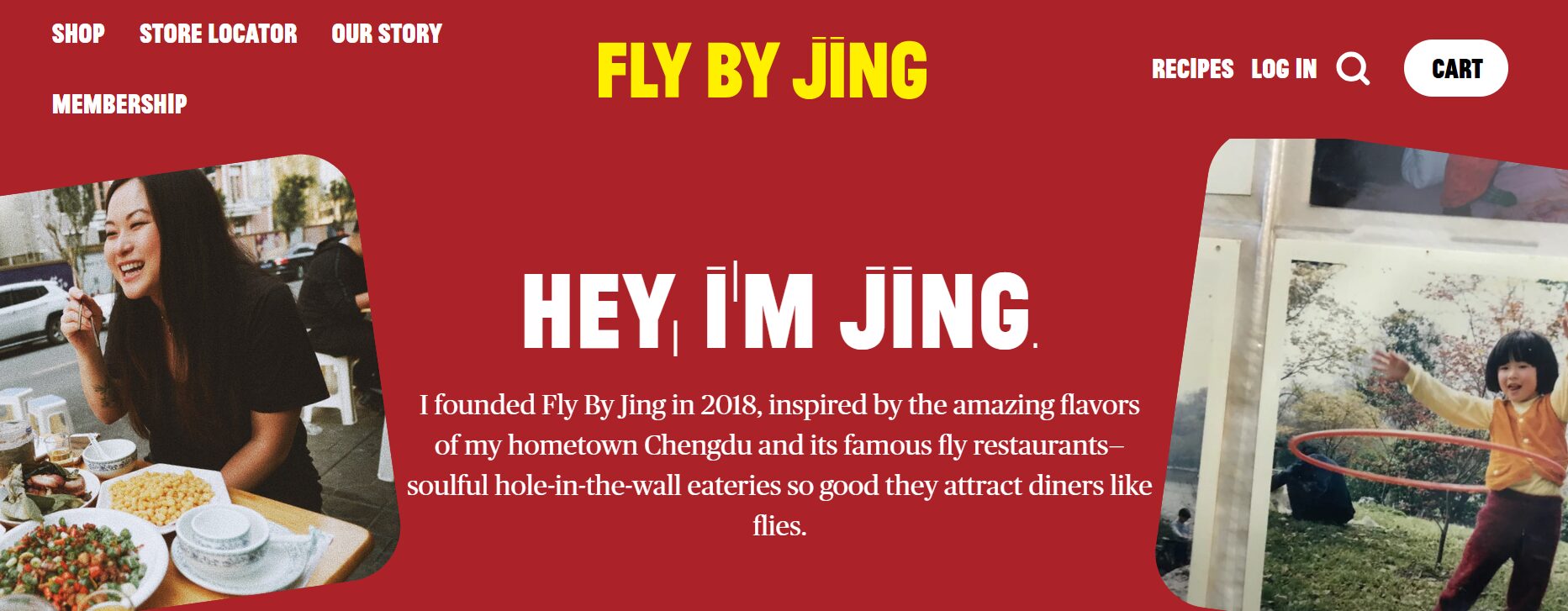
Fly By Jing figured this out. The founder, Jing Gao, didn’t launch a hot sauce brand. She launched a story about a dish she couldn’t find in the United States, a childhood flavor that existed nowhere outside her memory. The Sichuan chili crisp had a specific emotional origin. Every piece of content she made connected back to that longing. People didn’t just buy the product. They felt something about it. And feeling something is the only reliable path to remembering something.
Ask yourself what emotion you are creating before you ask what information you are delivering. The emotion is the door. The information is what you say once you’re inside.
3. The Cereal Aisle’s Orienting Response
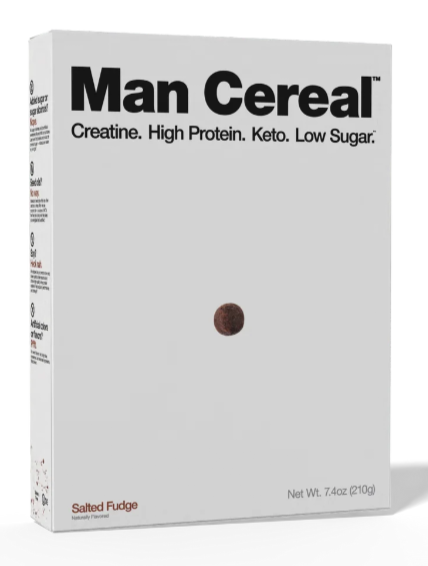
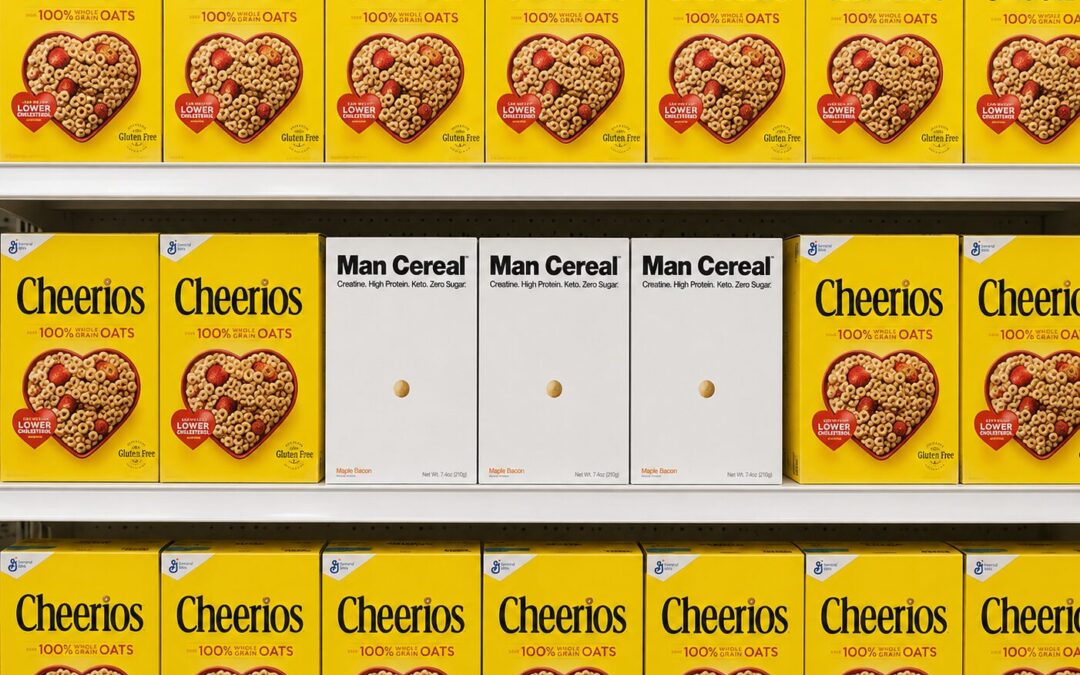
Man Cereal is a masterclass in category disruption through packaging alone. The cereal aisle has one of the most codified visual languages in grocery stores. Bright colors, cartoon mascots, or clean wellness aesthetics, friendly fonts, and happy families. It’s a category where every brand has unconsciously agreed to look like every other brand.
Man Cereal walked in wearing a completely different outfit. Dark, bold, no-nonsense packaging with the kind of visual energy you’d expect from a performance supplement, not breakfast food. The product itself is a genuine category innovation: 2.5g of creatine and 15g of protein per bowl, with no added sugar and no seed oils. But the packaging triggers the orienting response before the shopper reads a single word. It’s wrong for the aisle. And wrong for the aisle is exactly right.
The name is a pattern interrupt, too. “Man Cereal” is the kind of thing that makes you stop and read the box, even if only to figure out whether they’re serious. They are. And by the time you’ve processed that, the brand has already done its job.
4. Repetition Doesn’t Create Familiarity. Familiarity Creates Trust.
The mere exposure effect, documented by Robert Zajonc in the 1960s, is one of the most replicated findings in social psychology. People develop a preference for things they have been repeatedly exposed to, even without conscious memory of those exposures. Familiarity feels like trust.
This has a direct, practical implication for how smaller brands should approach media and distribution. One well-funded burst of attention rarely sticks. Consistent, lower-intensity presence over time builds something that eventually feels like a prior relationship.
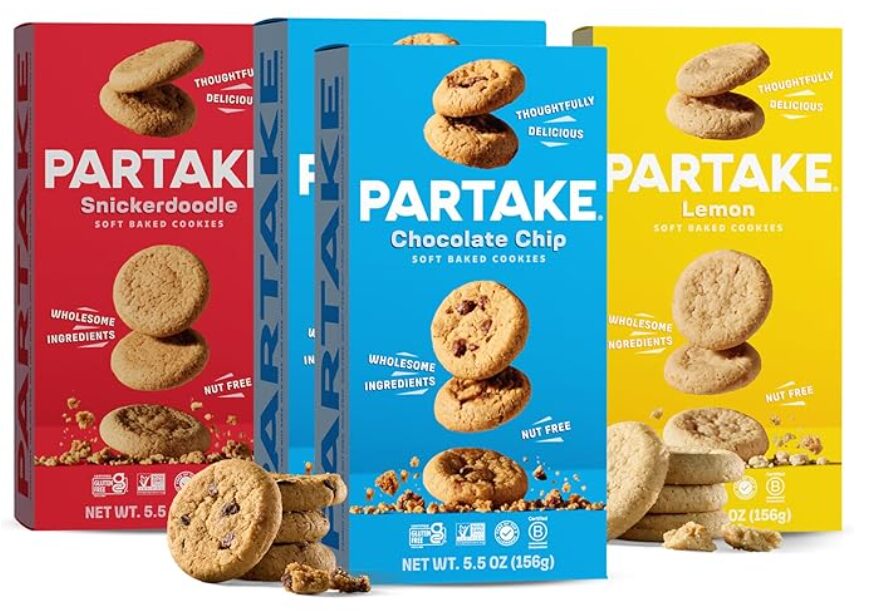
Partake Foods is a good example. The allergy-friendly baking brand didn’t break through on a single viral moment. Denise Woodard built the brand through persistent presence: Black-owned business features, mommy-blogger coverage, school-lunch roundups, Whole Foods regional demos, athlete partnerships, and a steady drip of earned media and community appearances over several years. By the time Partake started landing national shelf space, it felt to buyers and shoppers like a brand they already knew. That feeling was the product of repetition working below the level of conscious awareness.
Consistency of presence matters more than any single big moment. The brain rewards the familiar. Give it enough chances to recognize you.
5. Your Brain Is Running a Threat-Detection System, Not a Design Appreciation Service
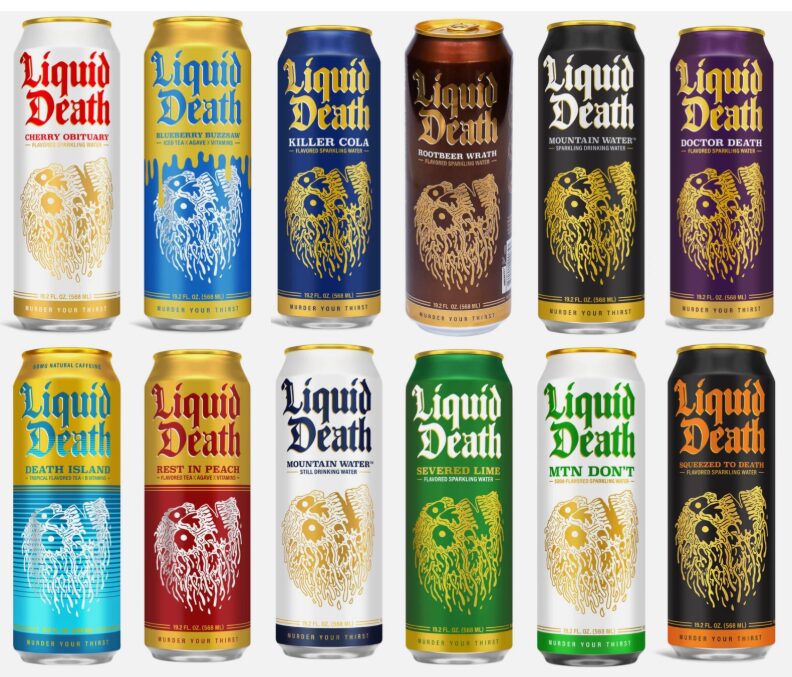
The orienting response is one of the most reliable findings in neuroscience. When your brain detects something unexpected, novel, or out of place in the environment, it triggers an involuntary shift of attention. You didn’t decide to look. You just looked.
This reflex evolved to help us survive. But it’s also why the most effective attention-grabbing isn’t always the prettiest or the most polished. It’s the thing that doesn’t belong.
Liquid Death understood this before most people had heard of them. Canned water in a black, heavy-metal-branded tall boy is a pattern interrupted. In the cooler, surrounded by pastel wellness brands, it violated every visual expectation for the category. Your eye went there first. Not because it was beautiful. Because it was wrong in all the right ways.
Most food and beverage brands do the opposite. They study the category, identify the visual codes, and optimize fitting in. That’s a strategy for avoiding notice.
Novel beats polished in the first three seconds. Every time.
6. People Don’t See What’s There. They See What They Expect.
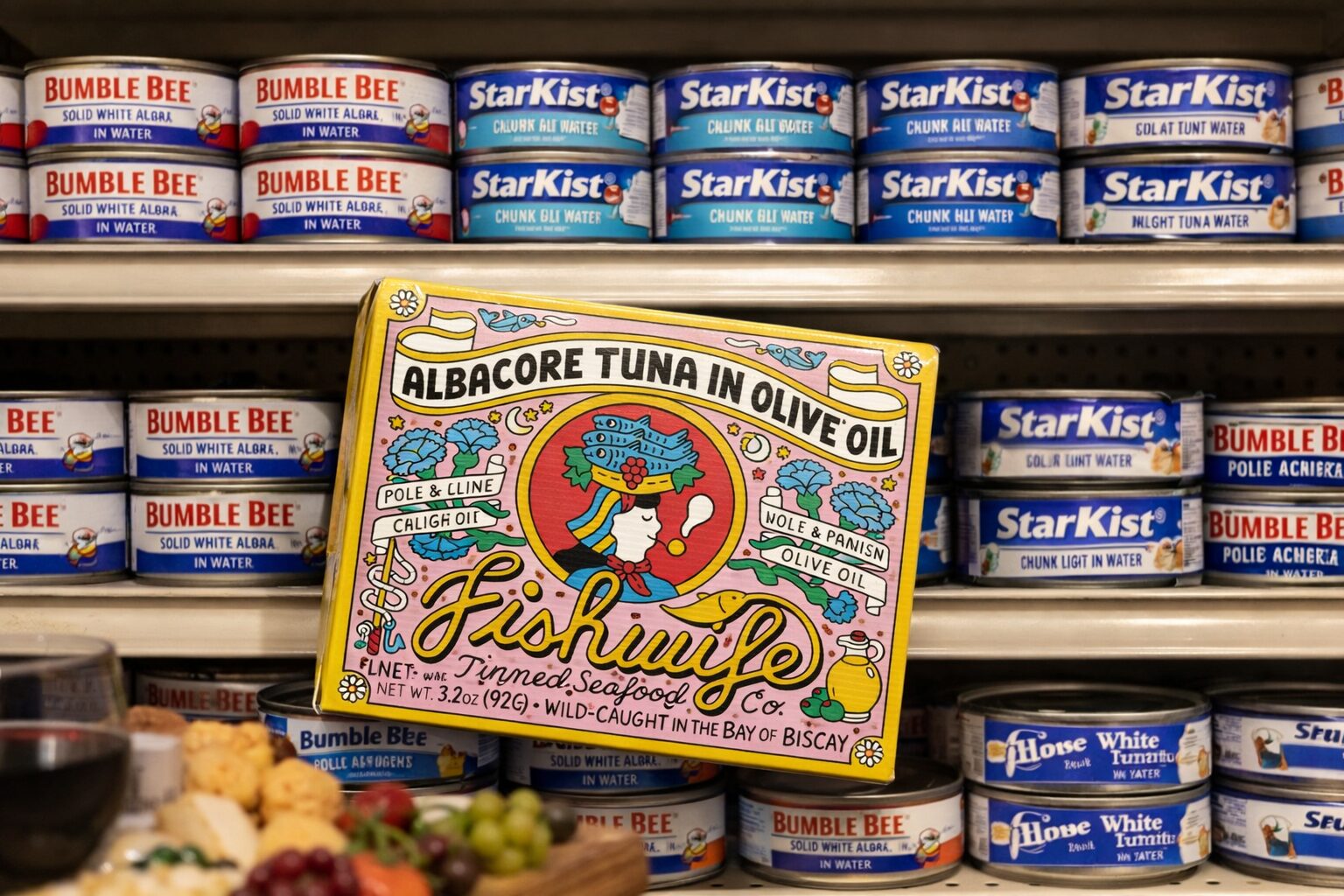
Cognitive scientists call it top-down processing.
Your brain doesn’t process everything in front of you with fresh eyes. It runs predictions based on prior experience and only updates when reality doesn’t match the forecast. The rest of the time, you’re essentially seeing your memories rather than the shelf.
This has a direct consequence for brand strategy. If your packaging looks like the category leader, shoppers may not even consciously register it as a separate choice. They see the general shape of the thing and move on.
Fishwife, the tinned seafood brand, exploited this brilliantly. The natural foods channel had a long-established visual language for tinned fish: muted earth tones, nautical imagery, utilitarian packaging. Fishwife came in with bold colors, illustrated art, and a graphic sensibility closer to a record label than a grocery brand. Shoppers’ prediction engines had no filing system for it. The mismatch forced a double-take, and the double-take became a conversation.
The practical question for your brand: are you trying to fit into what buyers and shoppers expect to see, or are you creating a visual experience their brains have no easy template for?
Three Key Takeaways
Attention is biological before it is psychological. The brain doesn’t evaluate your brand on its merits before deciding whether to pay attention to it. It decides whether to pay attention in milliseconds, based on novelty, threat, and pattern disruption. If your packaging, booth, content, or presence doesn’t align with expectations, it will be filtered out before a single conscious thought is formed. Design for the orienting response, not the approval of a focus group.
Emotion is not a layer on top of attention. It is the mechanism. Brands that lead with information and follow with story have the sequence backward. Emotional relevance determines whether the brain encodes a memory or lets it pass. Find the emotional origin of your brand, not its functional benefits or ingredient story, and build your content from that core outward. Fishwife, Fly By Jing, and Tabitha Brown all understood this before they had distribution.
Familiarity is a product, not a byproduct. Trust in consumer brands is built over time through repetition, not through a single moment of attention. Consistent presence across channels, occasions, and communities accumulates into something that feels like a prior relationship. That feeling is exactly what converts a first-time buyer into a repeat purchase. Build for frequency before you build for reach.
Attention isn’t won by being the loudest brand in the room.
It’s won by being the most unexpected, the most human, and the most present.
The brands that figure that out aren’t just getting noticed. They’re getting remembered. And in a category as crowded as food and beverage, that’s the only game worth playing as you start your CPG journey.
Getting noticed is the starting line.
Connect with Jeff at The Marketing Sage Consultancy. Interested in setting up a call with me? Use my calendly to schedule a time to talk. The call is free, and we can discuss your brand and marketing needs.

Would you like to read some testimonials about my work? Click here.
If you want to learn more about my new offering, The Trusted Advisor Board, click here for details. Feel free to email me at jeffslater@themarketing sage.com or text 919 720 0995. Thanks for your