
And Why Followers No Longer Matter Like They Used To
I have spent most of my career in marketing. Forty-five years of building brands, shaping strategy, and advising companies across food and beverage, CPG, and beyond. I understand audience psychology, positioning, messaging, and distribution.
And yet, last week, my 40 year old daughter explained something about social media that I had completely wrong.
That is not easy to admit. But it is the truth.
And if you are a marketer or a business leader who thinks you have a handle on how social media works, there is a good chance you are working from an outdated playbook, too.
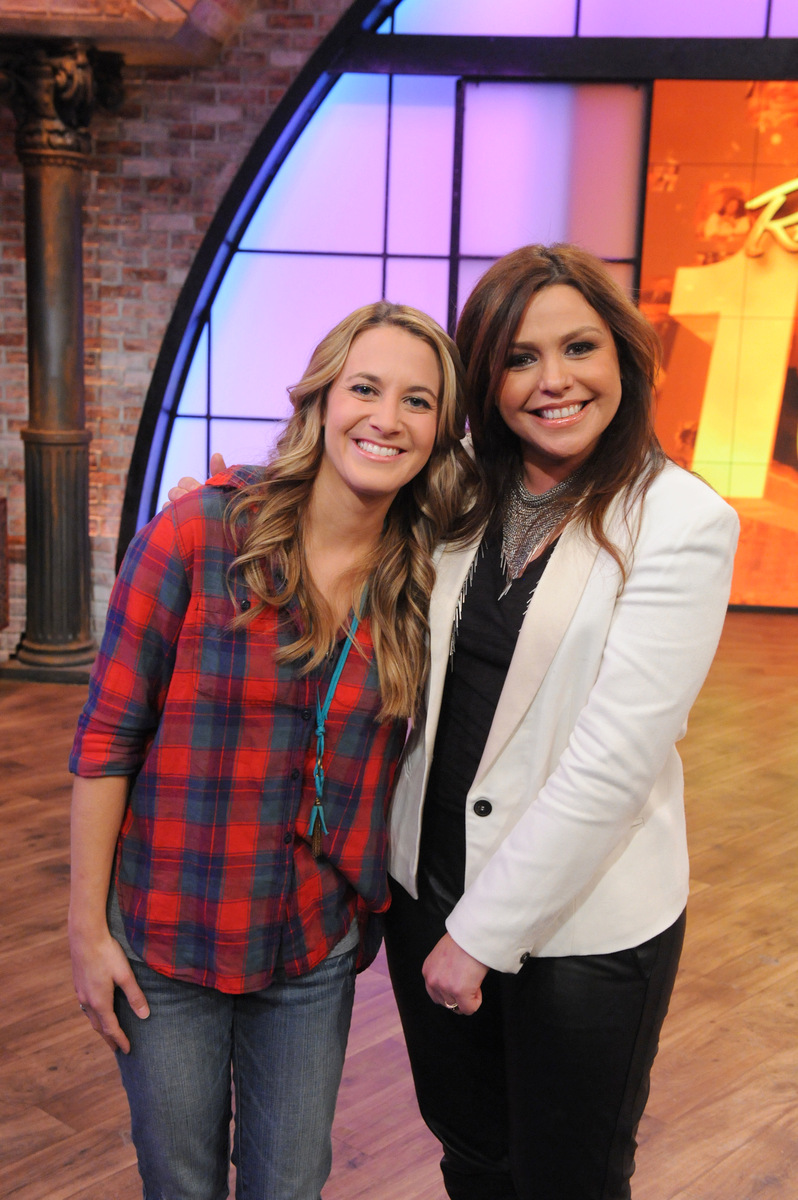
Meet Fanny
My daughter, Fanny Slater, is not just my daughter, who happens to work in marketing. She is a serious professional with an impressive track record. She won Rachael Ray’s Great American Cookbook Competition, had a show on Food Network, and has appeared on The Kitchen and Best Thing I Ever Ate. Her cookbook, Orange, Lavender & Figs, was published by Atria, a division of Simon & Schuster, and is available on Amazon.
And although I put the first spatula in her hand and cooked with her throughout her childhood, now the teacher has become the student. When she cooks for my wife and me, we are always in for an amazing meal.
Fanny is a creator, influencer, recipe developer, and food writer with video talent, working for brands like Marbull Wagyu and Hero Jerky. She also serves as a social media advisor and strategist for brands including Lid Licking BBQ Sauce, Otto’s Naturals, NewGems Wraps, Green Valley, and Noble Tangerines.
In other words, she is not guessing about social media. She is in it every single day, studying what works, what does not, and why. And she knows that strategy is vital to achieving a client’s goals.
The Metric I was using was wrong
Like most marketers of my generation, I learned to judge social media success by a handful of numbers: impressions, conversions, and followers. Follower count, in particular, seemed like a perfectly logical measure. If a brand had 100,000 followers, you could reasonably assume a healthy chunk of them would see the brand’s posts.
More followers meant more reach. That was the logic.
Fanny informed me that logic no longer holds.
Today, the metric that matters most is reach, meaning the actual number of people who see your content. Not your follower count.
Reach.
The reason is a fundamental shift in how platforms like Instagram operate. They have evolved from follower-based networks into content recommendation engines.
The algorithm decides who sees your content, not your subscriber list.
The Numbers That Changed My Mind
I told her I thought she was overstating the effect. She showed me the numbers.
One of the accounts Fanny manages belongs to Lid Licking Sauce, a small, early-stage start-up North Carolina BBQ sauce brand.
When she started working with them, the account had zero followers. It now has under 300 followers.
Under the old model, that would have meant a very limited audience. A few hundred followers, a few hundred viewers. Simple math.
Instead, a five-second reel posted from a tasting event reached more than 6,500 people. Another reached nearly 8,000.
And here is the part that really got my attention: in one case, 98 percent of those viewers were not followers of the account. They discovered the brand through Instagram’s Reels feed and Explore page. These are viewers who are interested in food, grilling, BBQ, and outdoor entertaining.
That is not a small tweak to how social media works. That is a different model entirely.
The platform showed the content to a small sample audience, measured viewers’ responses, and, when the signals were strong, pushed it to a larger audience.
The algorithm was evaluating the content itself, not the size of the account behind it.
What This Means for Smaller Brands
Fanny sees this play out repeatedly with the companies she works with. Food and beverage brands, in particular, have a real advantage because the products are visual and easy to demonstrate. One of the most effective formats she uses is surprisingly simple: short clips of someone tasting the product for the first time. No elaborate production. No scripted copy. Just a genuine reaction. And she is leveraging hooks to grab attention.
The viewer understands the story in seconds. And that is exactly what the algorithm rewards.
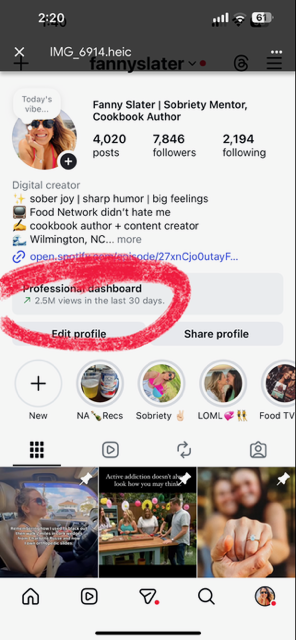
She also shared an example from her own content, which she builds around sobriety and recovery.
Fanny is 5-years sober! Go Fan!
Her account has fewer than 8,000 followers.
Over the past 30 days, her videos generated 2.5 million views.
One video alone reached 1.5 million people. Another nearly 500,000 in 24 hours. A third close to 300,000.
In total, that content produced 139,000 interactions, more than 17,000 profile visits, and hundreds of new followers during that stretch. And one video had something like 20K shares.
The vast majority of those viewers had never followed her account before. They found her through the platform’s recommendation engine.
The reach was driven entirely by how well the content performed, not by how many people had opted in to see it.
And her latest 500K-view video added 150 new followers to her account in the last week.
Reach Rate – Another Metric That Intrigued Me
Reach Rate is a helpful metric for social media professionals and brand teams — and frankly, not something I ever thought about in the context of Instagram.
So what is it?
Reach rate measures how many people your content reaches relative to your follower count.
The formula is simple:
Reach ÷ Followers = Reach Rate
For example, if an account reaches 500 people and has 2,000 followers, the reach rate is 25%.
But here’s where it gets interesting.
For Fanny’s sobriety account, the last month shows some astonishing numbers:
- 2,500,000 views
- 7,818 followers
That means her content reached the equivalent of 318 times her follower base — or 31,859% reach.
Extraordinary.
If you bought 2MM views through paid social on Facebook, that might cost you $30-60K, depending on your target.
Here is the math:
Facebook CPV (cost per view) typically ranges from $0.0074 to $0.0242 on for U.S.-based campaigns, depending on targeting, creative quality, and placement. Using that range:
So her organic content delivered roughly $35,000 in paid Facebook video reach during the last 30 days.
The story is the same, since virtually all of her views come from outside her follower base. The algorithm is clearly distributing her content well beyond her audience.
The follower conversion gap is actually even more striking with this number. She’s generating massive reach but not capturing it as audience growth. With 2.5M views and fewer than 8K followers, there’s a disconnect between people watching and people hitting follow. That’s the real opportunity to investigate.
Why it matters more than raw follower count
Follower count is a vanity metric.
Reach rate tells you whether those followers actually see what you’re posting, and whether your content is breaking out beyond them. Tracking it monthly gives you a trend line that raw numbers can’t.
What’s a good benchmark?
The average reach rate for brands with large followings is around 12% for posts. But here’s the interesting part: brands with smaller followings (under 10K) have the highest reach rates by far, so if you’re a smaller account, you should be setting the bar higher than 12%.
One nuance worth knowing
Instagram now distinguishes between reach and views. Reach counts unique people who saw your content, while views count the total times it was seen, including repeat views from the same person. For your ratio, reach is the better numerator since you’re trying to understand audience penetration, not just overall play counts.
What the platform itself says to watch
Instagram’s own head, Adam Mosseri, has pointed to watch time, like rate, and send rate as the three metrics that most directly affect how the algorithm distributes your content. So while reach rate is a great strategic measure, those three signals indicate whether the algorithm will push your content further. Remember, Instagram is a top-of-the-funnel and awareness platform.
Bottom line: tracking views-to-followers monthly is a solid practice, and plenty of marketers and agencies do it. Just make sure you’re using reach rather than impressions or raw views to keep it apples-to-apples each month.
The Bigger Lesson Here
Here is what I keep coming back to after this conversation with Fanny. Even with 45 years in marketing, I have to keep learning.
The fundamentals of great marketing have not changed much: connect with your audience, tell a compelling story, and create something worth paying attention to. But the mechanics shift constantly, and if you are not paying attention to how the platforms actually work today, you are building strategy on assumptions that no longer apply.
The brands that are winning on social media right now are not necessarily the ones with the biggest budgets or the most followers. They are the ones creating content that people genuinely want to watch. A small brand with 300 followers and a great five-second video can outperform a corporate account with 100,000 followers and a polished promotional graphic.
That is not a footnote. That is the whole story.
Why This Changes the Role of a Social Media Manager
One of the biggest misconceptions — especially for those who didn’t grow up with these platforms — is that social media is simply a matter of “posting.”
It’s not.
A better comparison might be this: hiring a social media manager today is less like hiring someone to put up flyers, and more like hiring a media buyer, creative director, and marketing strategist all in one.
In traditional terms, this role sits somewhere between:
- A brand strategist (deciding what message to communicate)
- A creative director (how it should look and feel)
- A media planner (how to get it in front of the right people)
- And a data analyst (measuring what worked and adjusting accordingly)
What looks like a quick post is often the result of hours of work: analyzing performance data, studying trends, testing hooks and formats, editing video, writing copy, and constantly adapting to what the algorithm is rewarding in real time.
Because the game has changed.
As the data shows, follower count is no longer the ceiling. Reach is. And reach is earned through performance, not just presence.
That means a strong social media manager isn’t just filling a content calendar. They’re:
- Studying what’s working (and what’s not)
- Iterating quickly based on performance
- Creating content designed to be shared and distributed beyond the current audience
- And keeping up with platforms that evolve weekly
In many ways, it’s similar to running a continuous marketing campaign — except instead of buying placement, you’re earning distribution through content.
That level of work takes time, skill, and ongoing education. So when brands invest thousands of dollars per month in social media strategy, it’s not just about “just post.” It’s for someone who understands how to turn content into reach — and reach into growth.
Because today, the difference between posting and strategy is the difference between being seen and being invisible.
3 Key Takeaways for Marketers
1. Followers are a vanity metric. Reach is the real measure. The number of people who actually see your content matters far more than the number of people who have opted in to follow your account. Platforms distribute content based on performance, not on how popular the account already is.
2. The algorithm rewards attention, not polish. Content that immediately captures a viewer, tells a story visually, and gives people a reason to keep watching will outperform professionally produced promotional material most of the time. If it looks like an ad, it will be ignored like one.
3. Small brands have a genuine opportunity. A company with a few hundred followers can now reach tens of thousands, or even millions, of potential customers if the content resonates. The playing field is more level than it has ever been. That is not just a silver lining. It is a real strategic advantage for brands willing to rethink how they show up.
My thanks to Fanny for the lesson. Clearly, even after more than four decades in this business, there is still plenty left to learn about marketing in 2026.
Now, what’s for dinner?

You can reach Fanny @fannyslater@gmail.com, on IG @fannyslater or visit her website at www.fannyslater.com
Connect with Jeff at The Marketing Sage Consultancy. Interested in setting up a call with me? Use my calendly to schedule a time to talk. The call is free, and we can discuss your brand and marketing needs.

Would you like to read some testimonials about my work? Click here.
If you want to learn more about my new offering, The Trusted Advisor Board, click here for details. Feel free to email me at jeffslater@themarketing sage.com or text 919 720 0995. Thanks for your interest in working with The Marketing Sage Consultancy.