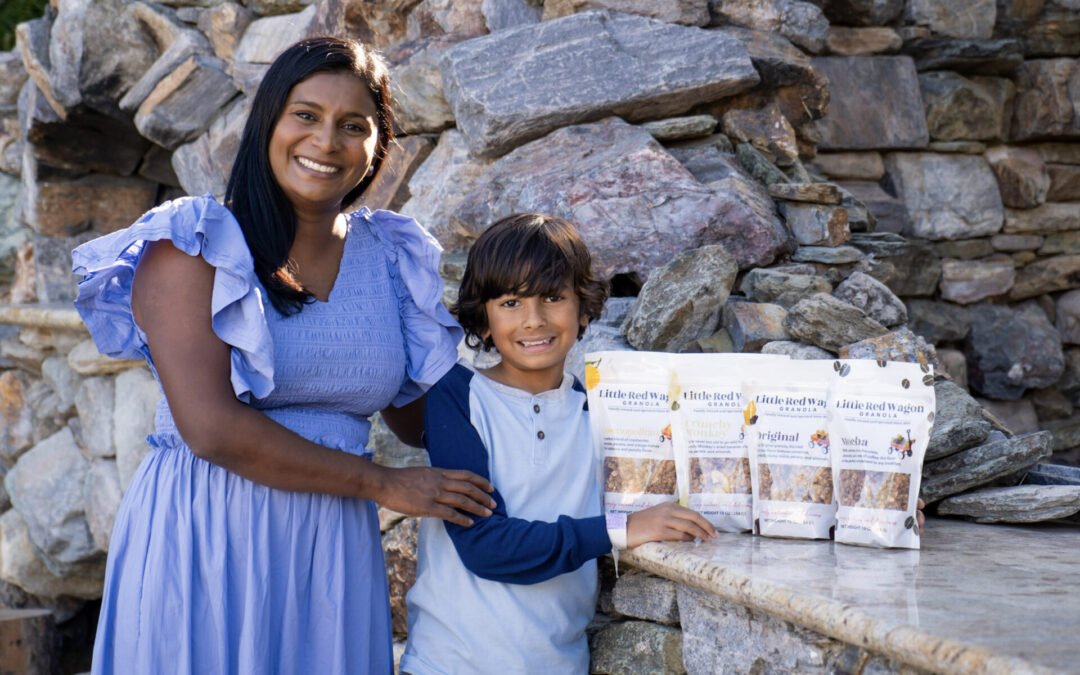
Venmathy McMahan has a PhD in chemical engineering from Rice University. She spent years at Intel optimizing semiconductor processes. And then, in 2020, she bought a granola company.
Not as a side project.
Not as a passive investment.
She bought Little Red Wagon Granola in Durham, North Carolina, and became the person who shows up every day to make sure the oats get toasted right.
I know that feeling of doing something that wasn’t in the original plan.
My wife and I spent years running Rachel’s Brownies, a wholesale bakery. Both of us have Ivy League degrees and made brownies for a living. There were moments early on when someone would ask what I did, and I’d hesitate for half a second before answering.
That hesitation went away the moment the business took off, and we started to enjoy what we were building.
When the work is good and the product is real, the pedigree stops mattering; what you make matters.
And Ven is making something worth paying attention to.
My wife and I have been enjoying Little Red Wagon Granola for the last seven years. It is our house granola and almost always sits on our shelf.
Where the Wagon Came From
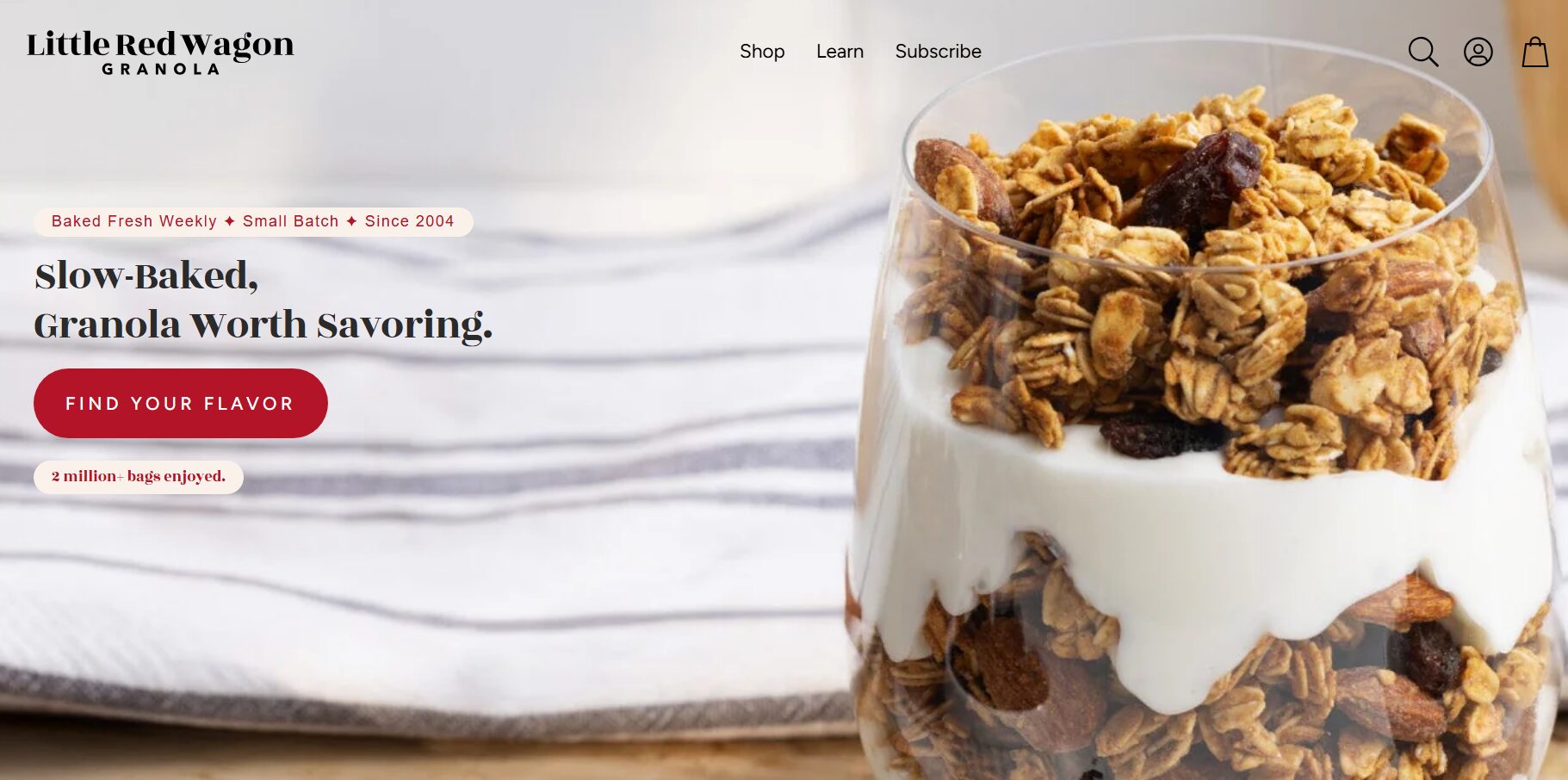
Little Red Wagon Granola started in 2004. Yolanda, a stay-at-home mom, began selling baked goods at the Carrboro Farmers’ Market. Her granola was the one people kept coming back for. It grew from a farmers’ market table into retail distribution across the East Coast and into Canada, while keeping the same simple philosophy: real ingredients, no shortcuts. She ran the business with her husband.
When Ven acquired the business from founders Hank and Yolanda, she wasn’t looking to flip it or scale it into oblivion. She was looking for something she could actually own, end-to-end, in a way that a corporate engineering role never allowed.
Food was the answer. Granola, specifically.
Today, the business is running out of the Durham production facility.
There are three full-time bakers.
Ven’s father handles the bookkeeping and operations.
A sales rep manages wholesale relationships.
The distribution footprint includes accounts for Weaver Street Market, Roche Brothers, Crosby’s, Whole Foods, and Fresh Market, all served through regional distributors.
A strong retail location moves several 12-count cases a week, which is excellent velocity in this crowded category..
Engineering Meets the Oven
Most food CPG founders come from culinary, marketing, or sales backgrounds.
They know how to develop a flavor or pitch a buyer.
What they sometimes struggle with is the operational consistency needed to turn a great product into a reliable one.
Ven comes at it from the opposite direction.
Her instinct is to standardize, measure, and systematize. Timed mixing. Equipment upgrades for efficiency. Production processes are built to repeat.
That’s not the romantic version of the artisan food story, but it’s the one that actually keeps a small food business alive past year three.
The product line itself has several flavors, from the flagship Original Cinnamon to Crunchy Monkey (chocolate and banana chips) to Cosmopolitan (orange and cranberry).
This summer, she’s launching an allergen-friendly line: dairy-free, nut-free, and gluten-free. That came directly from online customer feedback.
Someone asked for it repeatedly.
Ven listened and built it. And because it required only a supply chain adjustment, not new equipment, it was a clean call.
She’s also testing limited-time seasonal flavors online before committing them to full production runs. A Moravian spice mix, for example. Think of it as a minimum viable product approach applied to granola.
The engineering instinct shows up everywhere, once you know to look for it.
The Red Wagon Is the Brand
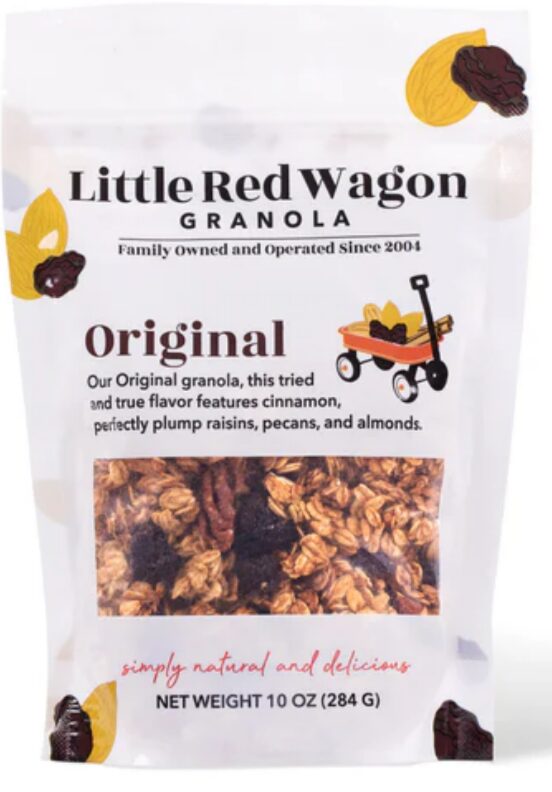
When I talked to Ven, one of the things I kept coming back to was the logo—a red wagon.
It’s simple, recognizable, and warm. It carries the right emotional freight: childhood, nostalgia, something handmade and trustworthy.
In a grocery aisle full of bold fonts and loud ingredient callouts, a little red wagon stands out by doing the opposite of shouting.
The opportunity is to lean into that visual asset more aggressively on the packaging.
The wagon is a mnemonic or a distinctive asset.
It’s the kind of visual that consumers remember and share with others.
“I bought a great granola. I forgot the name, but it is the package with the little red wagon.”
That’s word-of-mouth that no ad budget can manufacture. It has to be earned, and Little Red Wagon Granola already has it. The job now is to make sure the packaging works hard enough to remind people why they noticed it in the first place.
Ven is also investing in online sales through Shopify, which, in my view, is the right instinct for a brand at this stage.
Direct-to-consumer isn’t just a revenue channel. It’s a feedback loop. When a customer in Ohio orders online, tells you what she loves, and asks for a nut-free option, that is product development research that a traditional retail relationship would never surface. Ven is using that data.
The new allergen-friendly line is proof.
Three Key Takeaways from Ven’s Story
1. Your background is your advantage, not your liability. Ven didn’t leave engineering behind when she bought a granola company. She brought it with her. The discipline of process standardization, the habit of measuring inputs and outputs, the instinct to test before scaling — all of it applies directly to running a small food business. The lesson for founders is that your past isn’t a detour. It’s the toolkit. The founders who win aren’t the ones who start fresh. They’re the ones who figure out which tools from their old life belong in the new one.
2. Listen to your customers and then actually do something about it. The allergen-friendly line didn’t come from a market research report. It came from paying attention to what people were asking for online. That’s a capability that small brands have, and large ones often lose: the ability to hear a single customer’s request and take it seriously. Ven heard it. She built it. That kind of responsiveness is a competitive advantage that no amount of trade marketing spend can replicate.
3. Sustainable growth is a strategy, not a consolation prize. Ven isn’t trying to raise a Series A or land a national account in the next six months. She is building a business that works well at its current size and is growing it in a way that doesn’t compromise what makes it good. That is harder than it sounds. The food industry is full of brands that grew too fast and lost what made them special in the first place. Choosing to grow deliberately is a real decision, and it’s the right one for a brand built on quality and trust.
Still Pulling the Wagon Forward
Ven McMahan didn’t need to buy a granola company. She had a successful career in engineering. But she wanted something she could build with her own hands, something where the connection between effort and outcome was visible and real.
I respect that decision more than I can say. My wife and I made a version of it ourselves, once upon a time.
The work is unglamorous. The margins are thin. The hours are long. And when it’s going well, there is nothing quite like it.
Little Red Wagon Granola started in a North Carolina kitchen in 2004 with a mom who made great granola and a farmers’ market table to sell it from.
Twenty-two years later, it’s in the hands of a PhD engineer who makes great granola and knows exactly why the processes have to be right.
Same wagon. Different driver. Still worth the ride.
Connect with Jeff at The Marketing Sage Consultancy. Interested in setting up a call with me? Use my calendly to schedule a time to talk. The call is free, and we can discuss your brand and marketing needs.

Would you like to read some testimonials about my work? Click here.
If you want to learn more about my new offering, The Trusted Advisor Board, click here for details. Feel free to email me at jeffslater@themarketing sage.com or text 919 720 0995. Thanks for your interest in working with The Marketing Sage Consultancy.