How two founders built a $30 million DTC business by rethinking how amazing artisan bread gets from the oven to your table.
There is a business hiding inside the food industry that most people don’t notice, and it has nothing to do with restaurants, grocery chains, or meal kits. It lives in your freezer.
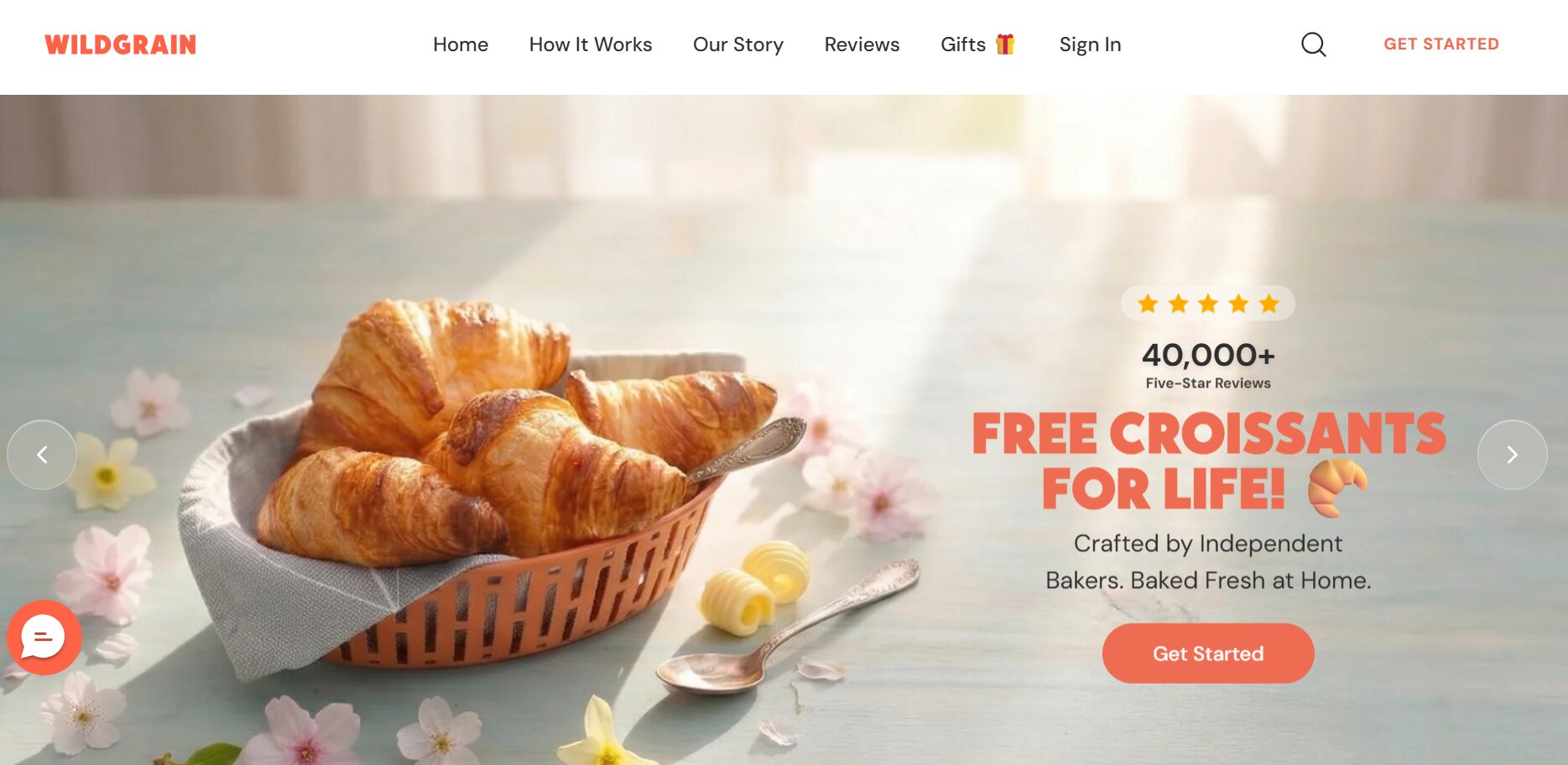
Wildgrain is a Boston-based subscription company that ships frozen, par-baked sourdough breads, fresh pasta, and artisan pastries directly to customers’ doors. You pull a croissant out of the freezer, put it in a hot oven for about 25 minutes, and out comes something that legitimately tastes as if it came from a neighborhood boulangerie. That’s the whole pitch.
And it’s working remarkably well.
By the way, they don’t own any bakery.
From Paris to a Pandemic Pivot
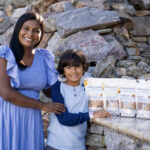
Johanna and Ismail are a married couple who spent years in Paris before relocating to Boston in 2015 to build their first company, Qleek, a music hardware startup. When Qleek wound down at the start of the pandemic, they found themselves reassessing everything.
And, like so many pandemic-era decisions, a personal craving became a business plan.
They missed the remarkable bread from Paris.
Specifically, they missed the kind of bread you can only get at a good European bakery: the fresh baguettes, the flaky croissants, the sourdoughs with the right crust and crumb.
American grocery store bread, even the good stuff, wasn’t cutting it.
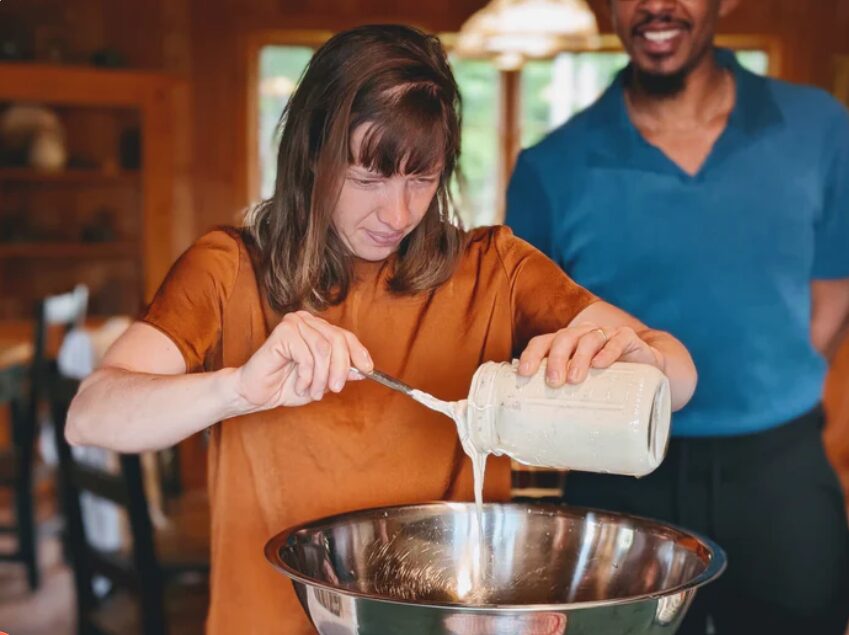
Johanna started baking at home. She got obsessed with sourdough and slow fermentation. Then she realized this wasn’t just a personal problem. Millions of people across the U.S. were living nowhere near a great bakery and had no idea what they were missing.
Wildgrain launched in 2020, the same week their son was born. Ismail has described the timing as “madness,” which seems like a fair assessment.
Their previous company had a relationship with Bolt Ventures, a venture firm that backed Qleek. That relationship gave them an early advantage. Bolt cut them a $750,000 seed check to launch Wildgrain. It was, by startup standards, a modest raise. What they did with it was anything but modest.
A Business Model That Breaks the Mold
Most bakery businesses work in one of two ways.
Either you own the ovens, the staff, and the retail space and sell what you make, or you produce at scale with traditional copackers and sell through grocery distributors and wholesalers.
Wildgrain does neither.
What they built is closer to a marketplace model, with a premium DTC subscription wrapper.
Wildgrain doesn’t own most of its production. Instead, it has assembled a network of more than 50 independent artisan bakeries, pasta makers, and pastry chefs across the United States and Europe. These partners bake according to Wildgrain’s recipes and standards. The products are then flash-frozen at peak freshness and shipped directly to subscribers.
Ismail has spoken publicly about an interesting side effect of this model. Because Wildgrain aggregates demand from a large subscriber base and routes those orders through its bakery network, it has become a larger buyer than Whole Foods or Trader Joe’s for some of its smaller bakery partners. That gives Wildgrain meaningful purchasing leverage without requiring the capital investment of owning production facilities.
The model is almost entirely direct-to-consumer. There are no grocery store deals, no wholesale accounts, no retail shelving fees. The business runs on subscriptions.
This is unusual in the food industry, where the default growth playbook eventually leads companies toward retail. Most DTC food brands eventually crack and take the Whole Foods deal, because shelf space feels like legitimacy. Wildgrain has been deliberate about staying in the DTC lane, at least for now, and it shows in the numbers.
The Numbers Are Hard to Ignore
Wildgrain crossed $30 million in annual revenue in 2023, just three years after launching, and reached profitability. That is an uncommon combination. Most DTC food brands that grow this fast are burning money to do it.
The company claims to have over 100,000 active subscribers and more than 40,000 five-star reviews. And they outsource their business processes through a BPO as explained in the video.
It has been named the number-one food subscription box by USA Today for three consecutive years (2023, 2024, and 2025) and has appeared in Oprah Daily, Food & Wine, and Bon Appétit.
Publicly available funding data show the company has raised approximately $750,000, essentially the original Bolt seed round. For context, that is a fraction of what most consumer brands spend before they see their first dollar of meaningful revenue. Wildgrain appears to have grown almost entirely on subscription revenue, with very little outside capital injection.
One of the metrics that stands out most is their monthly customer retention rate. According to Ismail, Wildgrain retains 96% of its subscribers each month, compared to an industry average of around 80% for food subscription companies. A 16-point gap in retention is enormous. At scale, that difference determines everything from customer acquisition cost to lifetime value to profitability.
How did they build that kind of retention? Ismail credits obsessive customer service and a philosophy of not over-hiring. He has talked publicly about waiting to hire “until it’s painful,” which keeps the team lean and focused and avoids the bloat that often kills young companies.
What You Actually Get
The subscription model is fairly straightforward. Members choose a box size (4, 6, 8, or 12 items) and select from four box types: Variety, Gluten-Free, Vegan, or Protein.
Each box is customizable, with items ranging from slow-fermented sourdough loaves and ciabatta rolls to fresh rigatoni, macarons, croissants, and waffles. There’s also a growing selection of seasonal items, sauces, butter, and olive oil.
The “bake-from-frozen” format is the critical differentiator—no thawing required. The bakeries do the heavy lifting, par-baking each product to 80-90% done before freezing. The customer finishes the job in a home oven. The result is warm, fresh-from-the-oven bread and pastries in under 30 minutes.
The sourdoughs are slow-fermented for more than 20 hours, which is meaningful from a flavor and digestion standpoint, compared to about 20 minutes for most commercial breads.
Pricing runs from roughly $6 to $14 per item, depending on what’s in the box. The brand positions itself as accessible luxury, better than anything you’d find in a grocery store but priced for regular consumption, not just special occasions.
Why the DTC Bet Matters
The decision to remain DTC warrants careful consideration from a business model perspective.
Going direct to the consumer means Wildgrain owns the customer relationship. They know who their subscribers are, what they order, how often they skip a box, what they say in reviews, and when they’re likely to churn. That data is invaluable and impossible to get through a grocery retailer, where brands get a purchase signal but no customer identity.
It also means the margin structure is different.
A food brand selling through grocery retail typically sees 40-50% of the retail price eaten up by distributor and broker fees, as well as retailer margins. Wildgrain captures most of the economics directly. That’s part of how they reached profitability without raising meaningful outside capital.
The tradeoff, of course, is that DTC growth depends heavily on paid digital advertising and word of mouth. Customer acquisition costs in this space have risen sharply over the past few years as more brands compete for the same online audiences.
Wildgrain’s exceptional retention rate is the answer to that problem. If you keep customers for a long time, you can afford to pay more to acquire them.
The Artisan Network as a Competitive Advantage
The bakery partnership model deserves more attention than it usually gets in coverage of this company.
Most food businesses that reach $30 million in revenue have significant fixed assets: ovens, employees, facilities, and equipment. Wildgrain’s asset-light approach keeps the balance sheet clean and the operation flexible. If a bakery partner can’t scale, they find another. If a new product category makes sense, they find the right baker for it. The network is extensible in a way that a vertically integrated production facility is not.
It also gives the brand a genuine story to tell, one about community, small business support, and craft. Wildgrain isn’t pretending to be artisanal. They actually are, because the people making the products are artisan bakers. That’s harder to fake than a rustic label design.
The company has also built a social mission into the model. For every order placed, Wildgrain donates two meals to a food security nonprofit of the customer’s choice. They report having donated more than 850,000 meals to date, including through a long-running partnership with the Greater Boston Food Bank.
What to Watch
Wildgrain has the profile of a company that could be an acquisition target or choose to stay independent and push further into adjacent categories. They’ve already expanded beyond bread, pasta, and pastries into sauces, butters, and olive oil. Corporate gifting is a growing line. The gluten-free and protein sub-boxes suggest they’re closely following consumer dietary trends.
What they haven’t done publicly is move into retail. That may be the most interesting strategic question facing the company. They’ve proven you can build a large, profitable food business without a single grocery store deal. Whether they maintain that position as the company grows will say a lot about what kind of company they want to be.
A business that generates $30 million in revenue on $750,000 in outside funding, runs at a profit, and retains 96% of its customers every month doesn’t happen by accident.
They have baked a novel business model into their success.
Connect with Jeff at The Marketing Sage Consultancy. Interested in setting up a call? Use my calendly to schedule a time to talk. The call is free, and we can discuss your brand, marketing needs, and challenges.
Feel free to email me at jeffslater@themarketing sage.com or text 919 720 0995. Thanks for your interest in working with The Marketing Sage Consultancy.