
I get several inquiries a month from people who want help but can’t afford to hire a startup branding consultant.
Founders who have just left a good job try to convince their spouse that the salsa recipe everyone loves at the holiday party is actually a business.
They are trying to figure out what to do first, and they don’t have the budget to hire an experienced marketing advisor.
So here is the free version of what I share.
Eleven pieces of advice, in the order I think matter most, based on years of advising more than fifty entrepreneurs. None of these suggestions requires a marketing degree. Most of it requires slowing down before you jump.
1. The Problem You Solve Comes Before Everything Else
Before starting on the recipe, packaging, and pricing, you need one honest sentence that explains what problem your product solves and for whom.
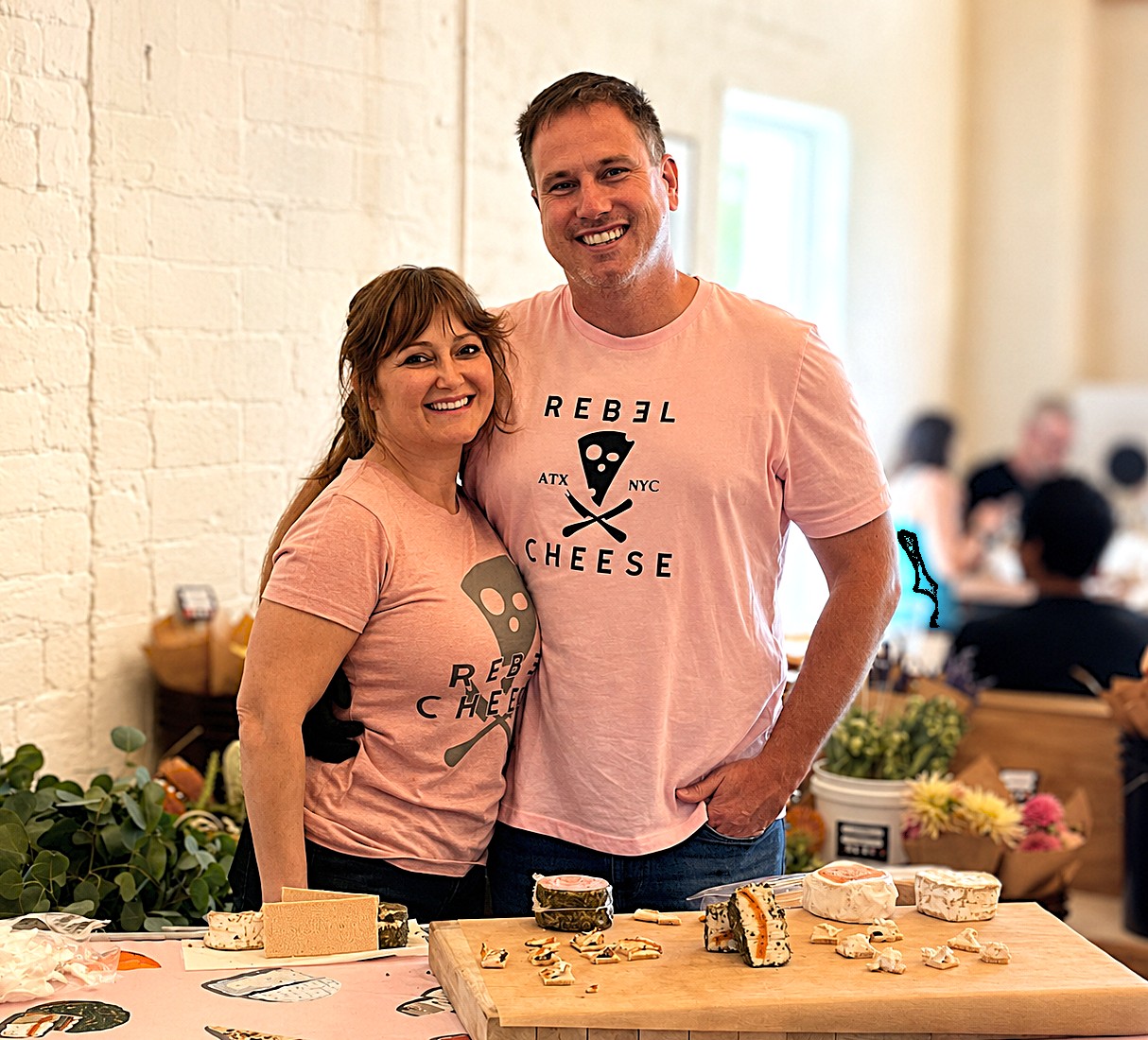
Rebel Cheese didn’t set out to make “another vegan cheese.” They set out to fix the actual problem: most plant-based cheeses taste like a sad compromise for people who are lactose intolerant. Their answer was cheese made from cashews using real aging and culturing techniques, so it tastes like cheese, not like a consolation prize.
If you can’t say what problem you solve in one or two sentences, you don’t have a product yet. You have a commodity.
2. Know Your Numbers Before You Make a Single Unit
This is the one thing nobody wants to hear, and it’s the one that kills more food businesses than bad marketing ever will. Before you find a co-packer, design packaging, create a brand name, or build a website, sit down and figure out exactly what it costs you to make your product. Then figure out what a store would need to pay you for it, and what that store would then charge a shopper.
If that final shelf price makes you wince, you have a problem to solve now, not later. A lot of founders fall in love with a brand name or a novel recipe, and then fall back on the business model. Flip that order. Know the economics first. The recipe can be adjusted. Channels of distribution can be changed. A business that loses money on every unit sold cannot survive. Know your numbers at startup, and estimate whether you can build volume and get better pricing at scale.
3. Solve One Problem, Not Five
New founders love to list everything their product does. It’s healthy. It’s convenient. It’s sustainable. It supports a cause. It tastes amazing.
Pick one.
A shopper walking down an aisle gives your package about two seconds. Two seconds is not enough time to read a list of virtues. It’s enough time to understand one clear idea. What is the single reason someone should buy this instead of the ten other things sitting next to it? Answer that question honestly, then build everything else around it.
4. Get It In Front of Real Strangers Before You Spend Real Money
Your friends and family are not a focus group. They love you, and they will tell you your product is great even when it isn’t ready. Before you invest in packaging, a website, or a big production run, find a farmers’ market, a local pop-up, or a neighbor’s backyard barbecue where you can hand your product to people who have no reason to be nice to you.
Watch their faces before they say anything. That reaction is more honest than any survey you could run.
If your product is for new moms, put it in front of them to get an honest reaction. Find creative ways to get honest feedback.
5. Start Small and Prove It Works Close to Home
Every founder dreams about a wall of their product at a national chain. That dream is fine to have, but it’s not where you start. Start with the store down the street, the local co-op, the market where you can actually walk in and see how your product is doing.
Selling well in one store and selling well again the next month in that same store tells you something a big launch never will. It tells you people are coming back. That is the real test, not the size of the first order.
I often advise that getting distribution is the easy part. But will your customer come back and buy again and again? Testing and learning locally is much easier than at a distance.
6. Make Your Package Do the Talking
You will not be standing in the store to explain your product. Your package has to do that job alone, in about two seconds, from a few feet away. That means a clear name, a clear picture of what’s inside (if it helps), and one clean message about why someone should care.
Resist the urge to cover the front of your package with every award, certification, and claim you’ve earned. Save those for the side or the back. The front has one job. Everything else is a supporting cast member, not the star.
7. Get Into the Right Stores, Not Just Any Store – or Online
Not every store is the right store for your product, even if they’ll take you. A store’s shopper needs to match the person who actually wants what you’re selling. A high-end health food shop and a busy convenience store attract two very different customers, and your product might make sense to only one of them.
Chasing every yes is tempting when you’re small, but a shelf that doesn’t match your customer is a shelf where your product quietly dies. It’s better to be strong in a few of the right places than thin and invisible across a lot of wrong ones.
8. Build Relationships With the People Who Decide, Not Just the People Who Taste
A buyer at a store is not the same as a shopper trying your sample. Their first question is often, ” What new customers are you bringing to this category? The buyer cares about things like how fast your product sells, how reliable your deliveries are, and whether you’ll still be in business next year. Getting to know that person, being honest with them, and showing up when you say you will matter just as much as how good your product tastes.
Food and beverage is a relationship business before anything else. The founders who last tend to be the ones buyers actually like.
9. Protect Your Cash Like It’s the Last of It, Because It Might Be
Growing a food business costs money at every single stage. Ingredients, packaging, shipping, a bigger cooler, and a new labeling machine. It adds up faster than most first-time founders expect, and running out of cash is one of the most common reasons good products never make it.
Before you say yes to a big order or a new piece of equipment, ask honestly whether you can actually afford it, not whether you can find a way to afford it. Those are two very different questions, and the second one gets founders into trouble. You can use Claude or Chat GBT to create financial models that help predict cash flow.
10. Expect It to Take Longer Than You Think
Nobody’s product blows up overnight, no matter what the founder’s social media interviews make it look like. Most of the brands you admire spent years building, one store and one customer at a time, before anything looked like an overnight success from the outside.
If your growth feels slower than you hoped in the first year or two, that doesn’t mean you’re failing. It might just mean you’re doing it the normal way. Patience is not a weakness in this business. It’s usually the difference between the founders who make it and the ones who quit right before they would have. Most founders who succeed don’t ever quit. They keep finding a way forward until they succeed.
11. Focus on Getting People to Buy It Again, Not Just Once
A first sale is easier than a second one. Anyone can get a curious shopper to try something new. The real business is built on the customer who buys it again next month, and then again after that, without needing to be convinced all over again.
If people aren’t coming back, that’s a signal worth paying attention to, even if your first sale numbers look good. A business that lives on repeat customers can actually grow. A business that only wins new customers over and over is a business that’s always starting from zero.
Four Key Takeaways
Bring a solution to a community in need. Find a group of people with a problem and try to deliver a product that solves that pain point. Don’t be a vitamin; be a painkiller when you start with a community, like those with dairy intolerance who would love to eat cheese again, make a cheese they can enjoy without the lactose issues.
Your numbers matter more than your recipe. A great-tasting product built on a business model that loses money on every unit is not a business; it’s an expensive hobby. Know your costs and your pricing before you fall in love with anything else.
Clarity beats cleverness on the shelf. Shoppers don’t have time to read a list of everything your product does. Give them one clear reason to pick it up, and let the package do that job without any help from you standing there.
Patience and repeat customers build real businesses. The founders who make it are rarely the ones with the fastest first year. They’re the ones who kept showing up, kept the customers they earned, and let the business grow in the slow, steady way that actually lasts.
I didn’t figure any of this out on my own, and neither will you. Hopefully, this saves you a few of the expensive lessons I learned the hard way.
Connect with Jeff at The Marketing Sage Consultancy. Interested in setting up a call? Use my calendly to schedule a time to talk. The call is free, and we can discuss your brand, marketing needs, and challenges.
Feel free to email me at jeffslater@themarketing sage.com or text 919 720 0995. Thanks for your interest in working with The Marketing Sage Consultancy.