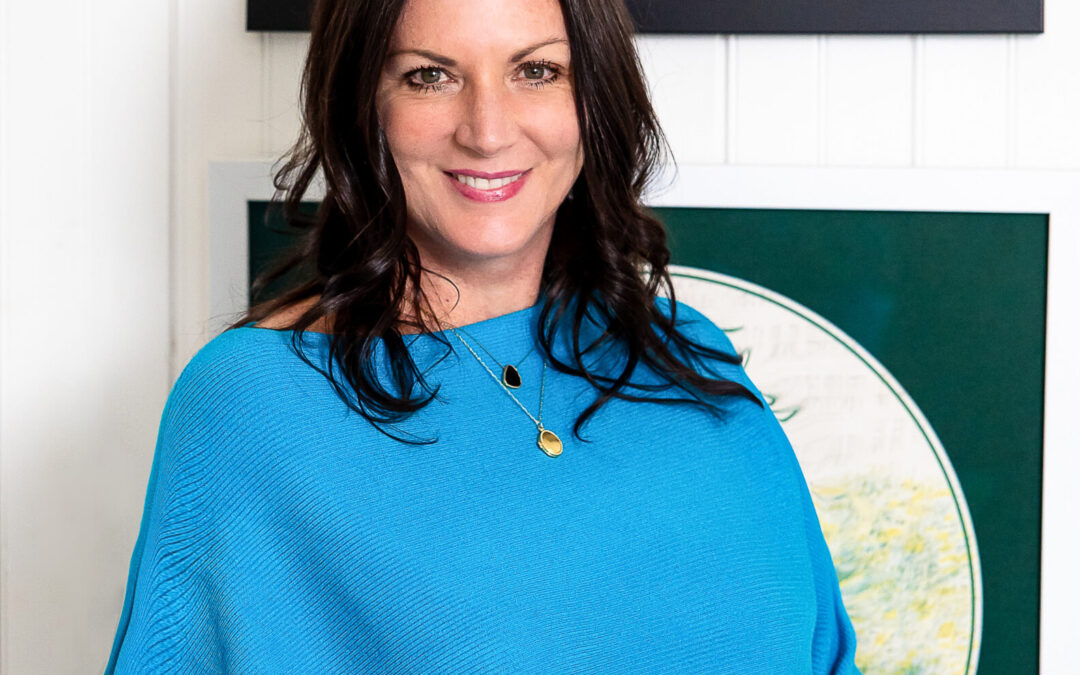
The Surprising Origin Story Behind One of Specialty Retail’s Favorite Popcorn Brands
Some of the best brand origin stories start with a memory, not a business plan.
For Ginger Frank, it was popcorn. Growing up, popcorn wasn’t a snack. It was a ritual. A reward. Something her family made together when something good happened, or when the evening called for a little celebration.
That sensory memory — the smell, the warmth, the specialness of it — never left her.
Over time, work needed to change. She had a job she loved, but required weekend work. That meant missing valuable time with her kids.
Today, Poppy Hand-Crafted Popcorn is a multimillion-dollar brand, distributed across all 50 states, and operates out of a 45,000-square-foot production facility in Asheville, North Carolina.
And it started with a single mom, $24,000, and a stubborn refusal to use artificial ingredients.
That’s not a footnote. That’s the story.
The Problem That Started Everything
In 2014, Ginger was working in the wedding industry. Good work, steady income. But weddings happen on weekends, and her kids — seven and nine years old — needed their mom’s presence.
She wasn’t looking to build an empire. She opened a small popcorn shop that she would close at 2:30 so she could pick up her kids and bring them back to the store, where she would work until 6.
A Food Network clip changed everything. She saw a segment on Cornucopia, a popcorn shop in Austin, Texas, and something clicked. She tracked down the owner, a woman named Nadia, and paid her $3,500 for a three-day consultation.
Here’s what I love about that detail—the $3,500 funded Nadia’s new popcorn popper. Ginger learned what she needed to learn. But she didn’t copy the model. Nadia’s approach leaned on artificial flavors and colors. That wasn’t right for Asheville, and it wasn’t right for Ginger. She took the knowledge and made something different. Natural ingredients. Handcrafted process. Flavors that felt honest.
She opened the first Poppy store in Asheville with $24,000—part eBay sales, part a family loan. And from the beginning, the business was built around her family’s schedule. The store closed at 2:30 PM for school pickup. Customers didn’t just accept it. They loved it.
The Pivot That Could Have Broken Them
For years, Poppy operated as a single retail shop with some wholesale to local gift shops and a small direct-to-consumer business.
Then COVID hit. Everybody remembers where they were in March 2020.
The store’s lease expired right as the pandemic arrived. The wholesale revenue from specialty boutiques dried up almost instantly.
And as fate would have it, Ginger was about to sign a new lease for a shop in downtown Asheville.
Most brands in that position would have looked for a lifeline. Ginger found an opportunity.
Two things happened simultaneously.
Corporate America started sending care packages to employees working from home, and demand for quality snacks—real, feel-good snacks—surged.
And grocery stores, suddenly scrambling to fill shelves and source new products, became unusually open to conversations they wouldn’t have taken before. Ginger walked through both doors.
That pivot — from retail and local wholesale to national distribution and DTC — transformed the business. Not tweaked it, but transformed it.
The 10th anniversary store Ginger had planned to open? Hurricane Helene destroyed the building. She took it as a sign. Wholesale was the path.
Her focus was stability, so retail dreams would have to wait.
Why 80% Wholesale Is a Strategic Choice, Not an Accident
Right now, 80% of Poppy’s revenue comes from specialty wholesale gift shops, boutiques, and independent retailers. Twenty percent comes from direct-to-consumer. Grocery is a deliberate, carefully managed part of the picture.
That’s not an accident. It’s a cash flow decision.
Specialty retail pays upfront. Grocery does not.
With the traditional grocery channel, you often wait 60 to 90 days for payment, absorb slotting fees, fund promotional allowances, and manage a retailer relationship that is rarely in the vendor’s favor.
For a bootstrapped founder without outside capital, math is punishing.
Gift shops and specialty boutiques operate differently. The check arrives with the order. Margins stay intact. The relationship is simpler. For a brand like Poppy — artisan quality, distinctive packaging, flavors that feel premium — specialty retail is also a natural fit. The shopper in that environment is already predisposed to pay for something that feels handcrafted and thoughtful.
Ginger calls the grocery a “necessary choice.”
That’s refreshingly honest. She’s not pursuing shelf space at a major chain because she’s in love with the channel. She’s doing it because she can selectively learn if the brand can compete in the traditional grocery context.
It’s a strategic decision for her regarding retail growth and scaling at some future date.
Most founders either chase the grocery channel too early and run out of cash or avoid it entirely, leaving value on the table.
Ginger is threading the needle: build the proof point, control the exposure, don’t bet the business on it.
What Poppy Actually Sells
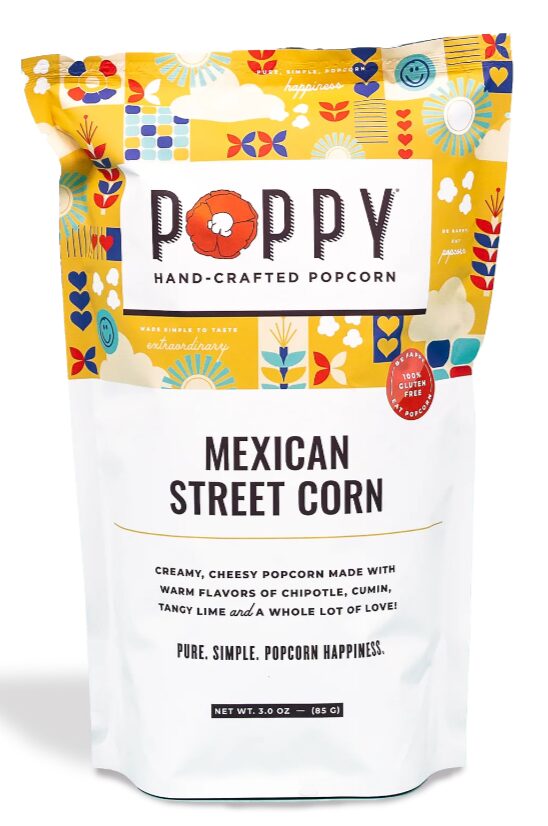
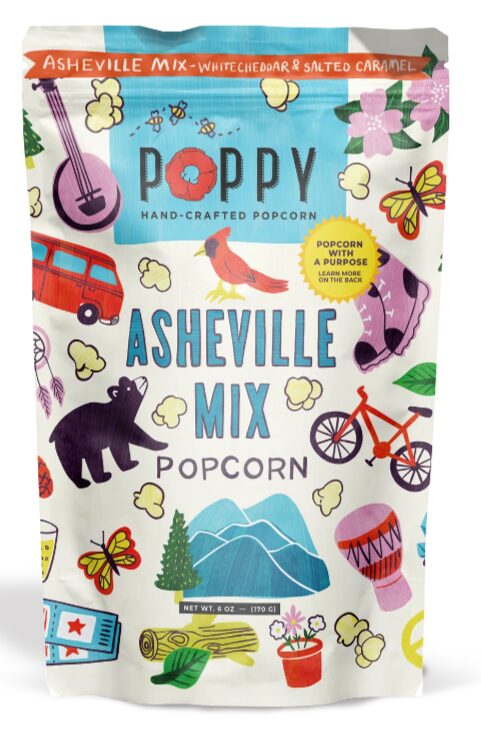
The product line includes flavors that would stop you in your tracks in a gift shop aisle: Mexican Street Corn, Cotton Candy, and Cinnamon Bourbon Pecan.
These aren’t mass-market flavors engineered for the lowest common denominator.
They’re flavors from a distinctive perspective.
That matters for the channel strategy. A Bourbon Caramel popcorn in a handsome bag, sitting next to artisan chocolates and locally made jams, is a natural fit. It tells a story before anyone reads a word of copy. The product is the positioning.
And the memory element is real.
Popcorn carries cultural weight that most snack categories don’t. It’s associated with celebration, with family, with sitting together and sharing something.
Ginger didn’t invent that association. She built a brand that honors it.
Three Key Takeaways
1. The life you want to live is a legitimate brand strategy. Ginger didn’t start Poppy because she saw a gap in the popcorn market. She started it because she needed a job that fit her kids’ school schedule. That constraint, to be available at 2:30 to pick up her kids, was critically important to her. Building her business around the family turned out to be a feature, not a limitation. Customers connected with it. The community embraced it. The brand felt real because it was real. Too many founders try to engineer authenticity after the fact. Ginger’s authenticity was baked into the founding decision. When your business model reflects your actual values, marketing practically writes itself.
2. Knowing which channel makes business sense is as important as knowing which channel builds brand. Specialty wholesale isn’t the most glamorous path for a growing food brand. It doesn’t generate the same press as a Whole Foods launch or a Target endcap. But for Poppy, it’s generated something more valuable: healthy margins and reliable cash flow without the weight of a 90-day payment cycle. Ginger’s decision to build her business on specialty retail first, and approach grocery strategically, not desperately, is a masterclass in channel discipline. Distribution is a business decision before it’s a marketing one. The best placement is the one that keeps you in business long enough to win.
3. Knowing when to let go of your original model is what separates brands that scale from brands that stall. The COVID pivot was forced. The lease expired. The boutique’s Wholesale dried up. Ginger could have tried to rebuild what she had. Instead, she recognized that the door to the old model had closed and looked for the ones that were opening. DTC surged. Grocery became accessible. Corporate gifting provided a revenue bridge. The brand Ginger built was flexible enough to move because it was built on something durable — a product with real quality and a story worth telling. When circumstances changed, Poppy had the substance to travel into new channels. The lesson: build something worth pivoting with, not just something worth selling today.
Ginger Frank set out to build a job that fit her life. What she built instead was a brand that fits her customers’ lives, too, in gift shops across all 50 states, in corporate care packages, in the hands of people looking for something that feels made, not manufactured.
She started with a childhood memory, $24,000, and a very specific time to be home by.
Turns out, that was enough to pop.
Connect with Jeff at The Marketing Sage Consultancy. Interested in setting up a call? Use my calendly to schedule a time to talk. The call is free, and we can discuss your brand, marketing needs, and challenges.
Feel free to email me at jeffslater@themarketing sage.com or text 919 720 0995. Thanks for your interest in working with The Marketing Sage Consultancy.