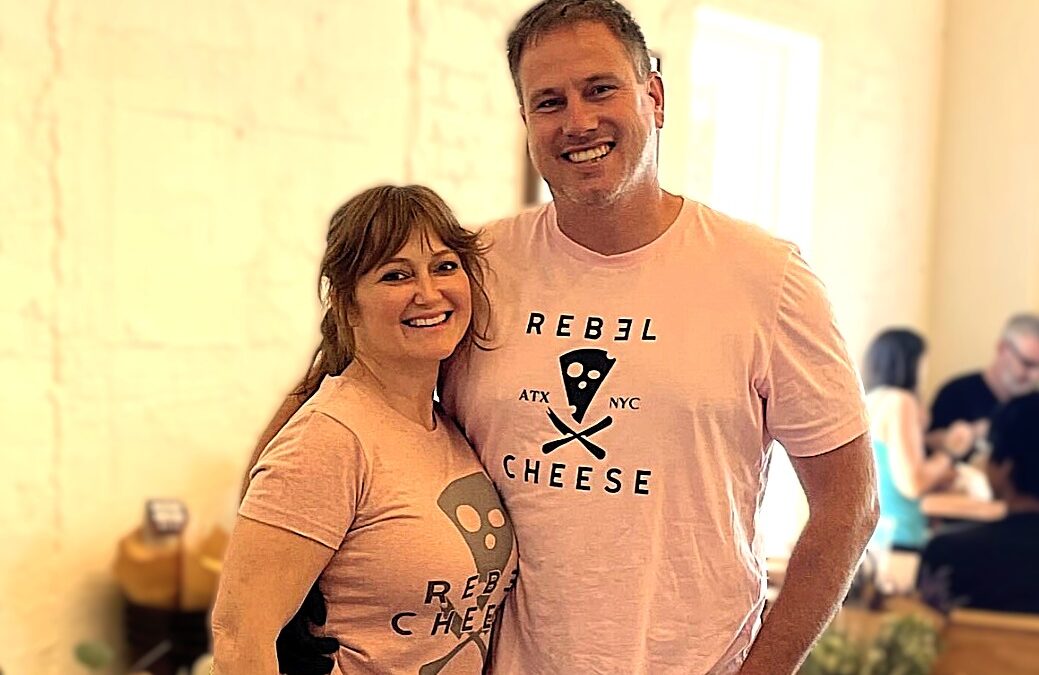
How Kirsten Maitland and Fred Zwar built something the food industry said couldn’t be done
Everyone in the food business had the same advice for Kirsten Maitland and Fred Zwar.
It was delivered with authority, sometimes with pity, always with the same basic logic: two weeks is too long to make a cheese. You’ll never be profitable. Find a faster way.
Kirsten and Fred heard that advice. They sat with it. They understood the math behind it.
And then they did the opposite.
Their Austin-based company, Rebel Cheese, rests on a single, stubborn conviction: that great cheese, real cheese, is complex and alive and worthy of the name. It can be made without a drop of dairy.
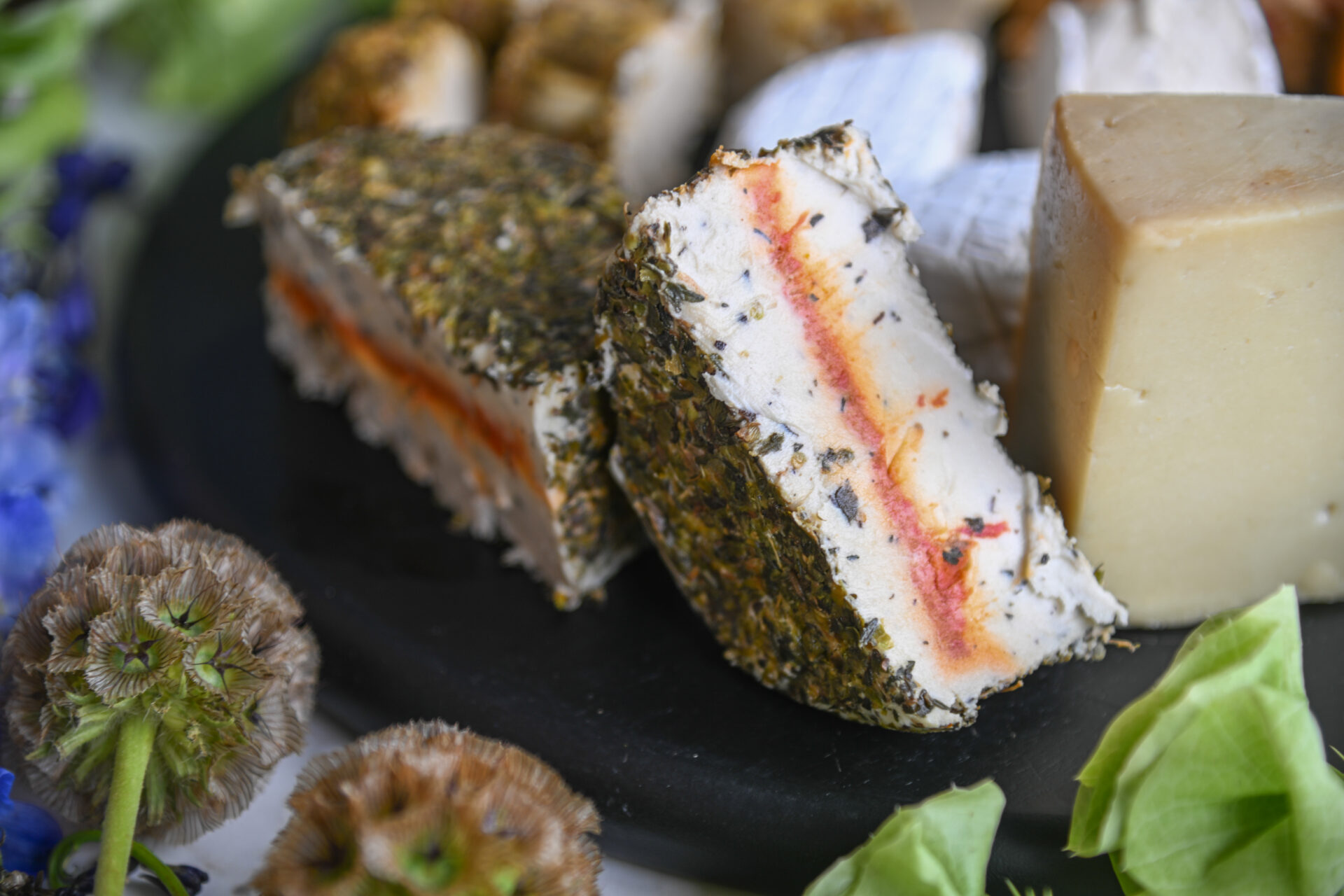
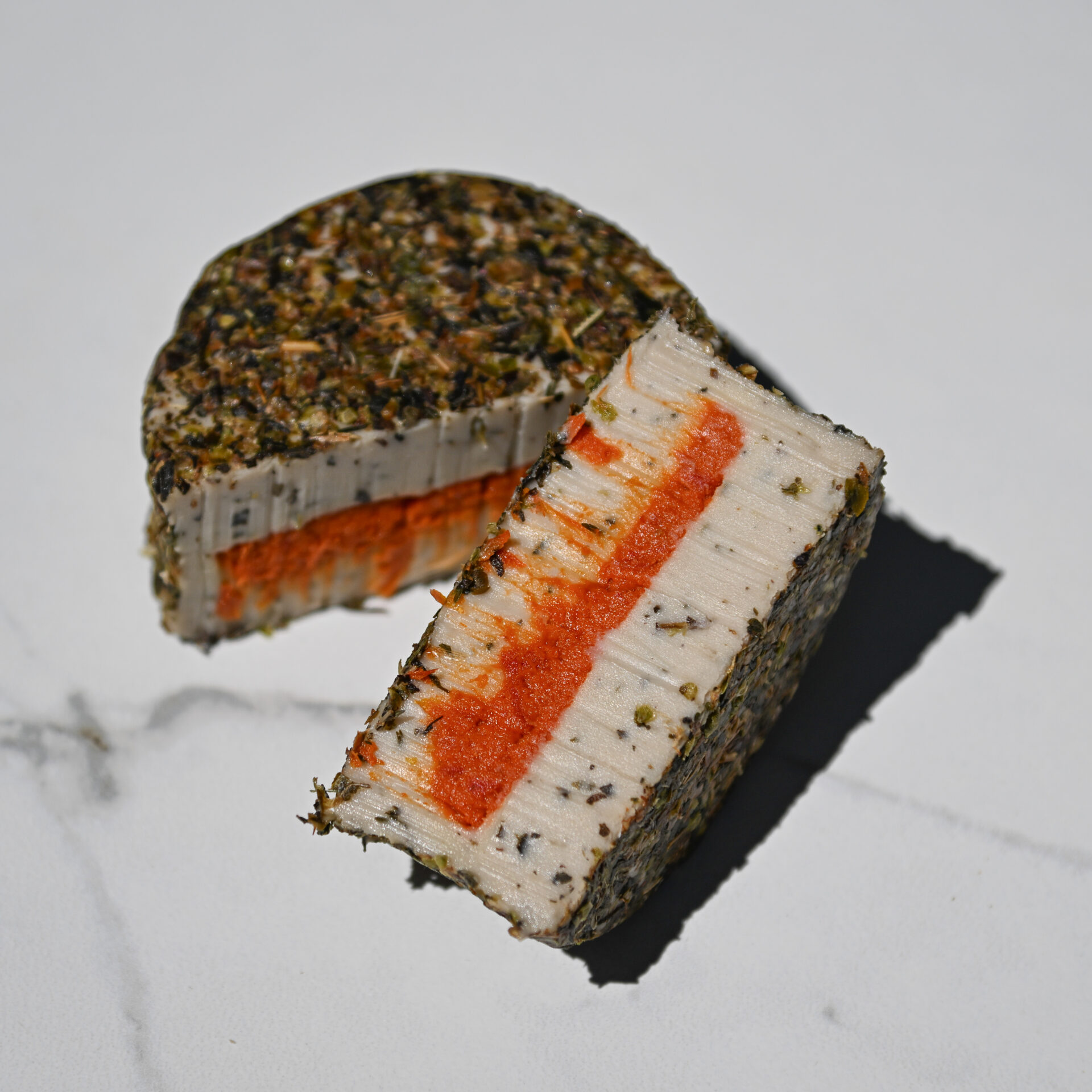
The proof isn’t in a pitch deck or a press release. It’s in the brie.
And it takes exactly as long as it takes.
Their brie recipe, the one that anchors the menu and defines the brand, has been quietly refined over seven years. Two weeks from start to finish, every time. And Kirsten, with the particular smile of someone who knows she will never be finished, will tell you it is still a work in progress.
That kind of obsession is not a marketing strategy. It’s a belief system.
Any food brand strategist worth their salt will tell you the same thing: the entrepreneurs who outlast everyone else are the ones who can’t stop thinking about the product. That’s Kirsten and Fred. They are relentlessly obsessed.
Two Different Roads to the Same Place
Kirsten’s story begins with trips to France during childhood.
Her first real memory of cheese was brie — the cool, chalky rind, the way it gave way, the simplicity of it alongside a torn baguette. A small pleasure that planted itself somewhere permanent. She carried that memory for decades, across countries and kitchens, until a book changed everything.
Reading Dr. Michael Greger’s How Not to Die, she came across a chapter on dairy and cancer. It wasn’t abstract. Her mother had died young, and so had her father. The family history was a long shadow, and suddenly it had a new shape.
She closed the book and changed her diet essentially overnight. It was less a choice than a reckoning. She became a vegan.
But she missed cheese.
Fred’s story starts in Seattle, at the specialty counter of Pike Place Market. He was the kind of kid who slowed down in front of artisan cheese — drawn to the rinds, the names, the mystery of what time and milk and skilled hands could produce. He loved that it was made. That someone had learned something difficult and put it into a wheel.
When his own health journey brought him to a plant-based diet, he wasn’t looking to walk away from that world.
He wanted to rebuild it.
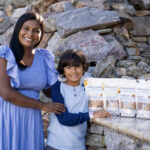
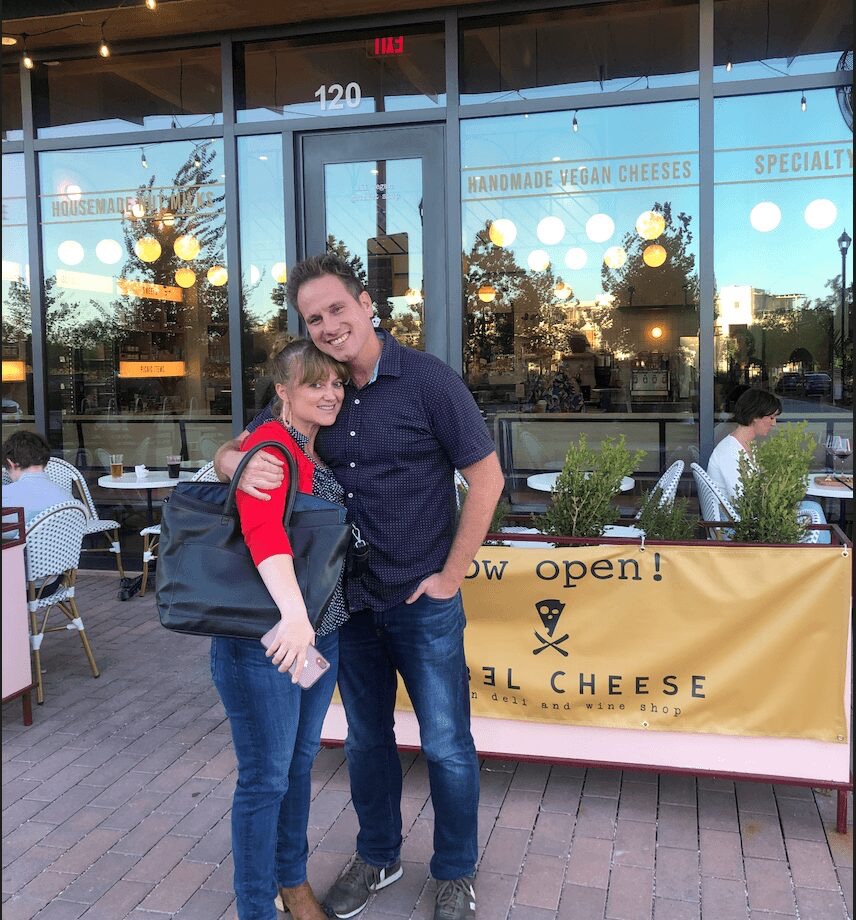
They found each other, and in 2019, they opened Rebel Cheese in Austin, Texas — a restaurant and retail shop built on an idea the industry had mostly dismissed: that plant-based cheese could be made well enough to earn the respect of people who actually love cheese.
They’ve done that. And then some.
What “Rebel” Actually Means
The name is not decoration. It’s a decision.
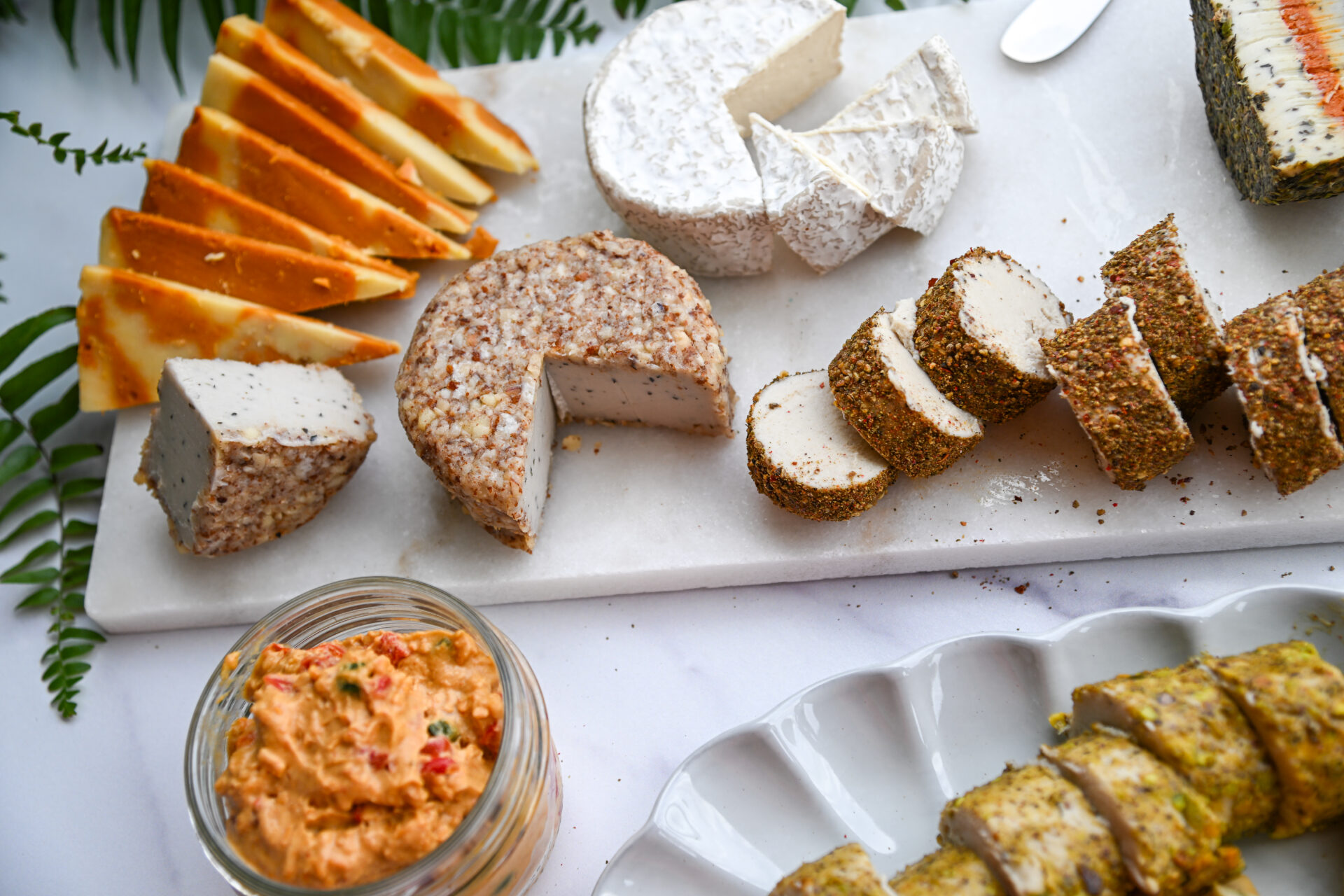
In an industry built on shortcuts — on texture additives, flavor masking, and the relentless pursuit of cheaper, faster, more scalable, Rebel Cheese chose a different direction entirely. They chose slow. They chose real. They chose biology over chemistry.
Their process uses custom European cultures, specific enzymes and yeasts, and hands-on methods that most food manufacturers would find economically indefensible. Swiss cultures for fondue. French cultures for brie. Not simulations of the flavors, but actual flavor development through actual fermentation. The ingredient lists are short because biology does the work.
When I spoke with Kirsten and Fred, they kept coming back to that word: biology. The right culture in the right conditions produces the right flavor. You can’t rush it. You can’t fake it. You can only tend it and wait.
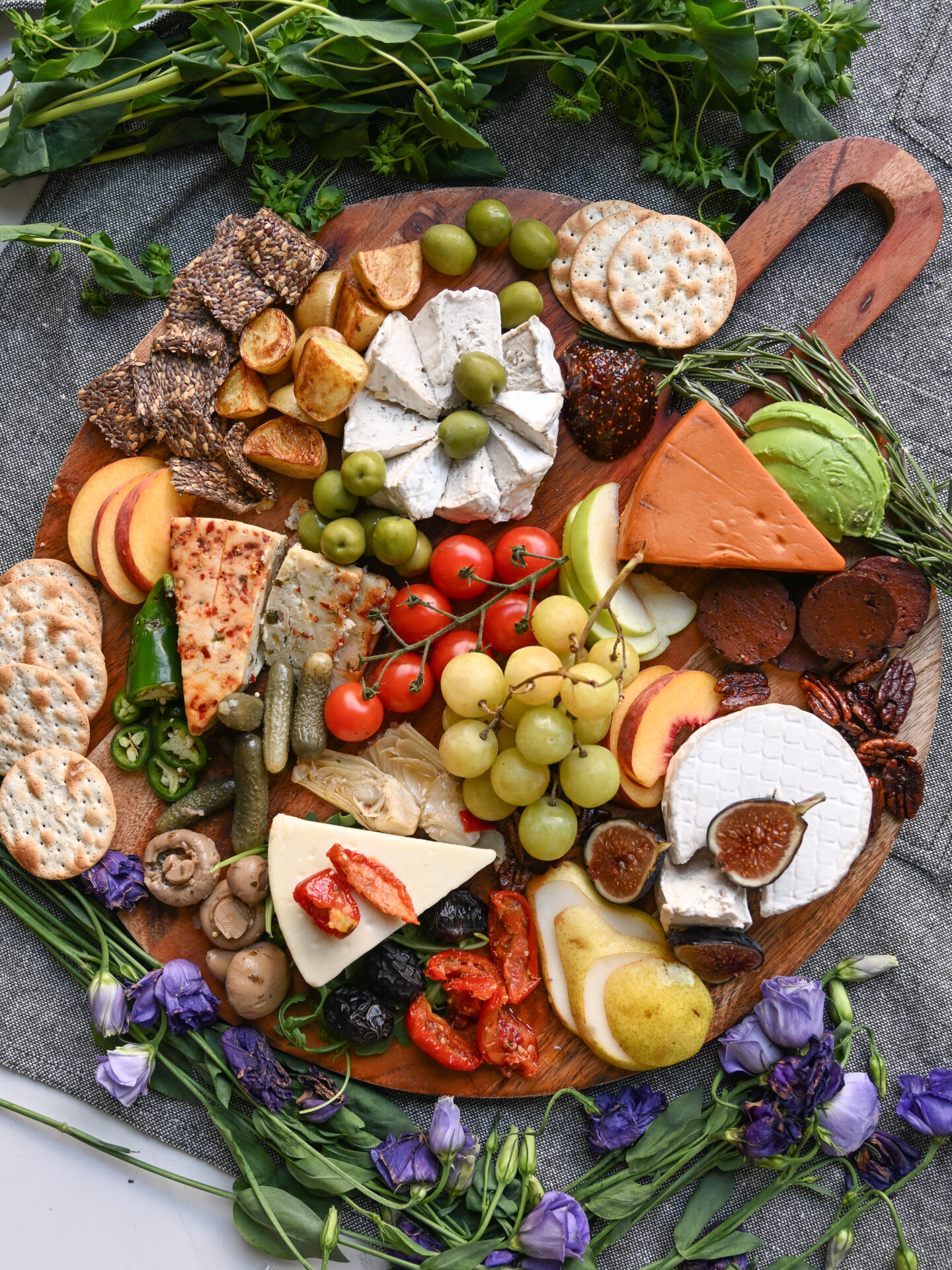
The result is cheese that stands up to cheese. Not “cheese for people who gave up dairy.” Cheese for people who love cheese.
That distinction is the whole company.
And they are stubbornly, cheerfully unwilling to compromise it.
The Smartest Marketing Decision
Here is where the story gets genuinely interesting.
Rebel Cheese’s website describes itself as a vegan cheese company.
But inside their restaurant, the word “vegan” appeared exactly once on the menu.
Their social media leads with beauty — food that looks like food, not like a cause. And the marketing message that converts customers at nearly twice the rate isn’t “vegan.” It’s “dairy-free.”
Eventually, the restaurant was sold.
Why does the difference matter?
Because 74% of Rebel Cheese customers are not vegan.
Read that again, slowly.
Nearly three out of four people who buy their cheese eat animal products. They are not members of a movement. They are people with a problem, a dairy allergy, a cholesterol diagnosis, a tick-borne condition called alpha-gal syndrome that can force someone to eliminate meat and dairy practically overnight.
They are people looking for something that tastes good, not something that signals who they are.
The numbers tell the story.
Vegans represent roughly 3% of the U.S. population. Lactose-intolerant individuals account for 10 to 15% of the population, or between 30 and 50 million people. Add those managing dairy for cardiovascular health and other medical reasons, and the addressable market for dairy-free cheese isn’t a niche.
It’s closer to 100 million Americans.
Alpha-gal syndrome deserves particular attention. Known to science since 2009 but only emerging into wider awareness between 2019 and 2022, it is a tick-borne allergy that can transform someone’s relationship with food overnight, stripping away red meat and often dairy with a single diagnosis.
Kirsten and Fred told me that alpha-gal has driven meaningful customer growth in places like Indiana, where the tick-exposed population is large, underserved, and desperately seeking options that don’t taste like a compromise.
This is not a vegan brand that happens to appeal to non-vegans. It’s a craft food brand with a market far larger than the “vegan” label suggests.
The word “vegan” carries weight in the food world, and not always the kind that helps. For many consumers, it signals ultra-processed, starchy, or just not particularly good. “Dairy-free” is neutral — it describes what the product is without triggering an association. And “artisan” tells a different story altogether: that someone cared deeply about getting this right.
The name Rebel Cheese carries none of the dietary baggage. It doesn’t say vegan. It says quality. It says independence. It says this is not the processed square at the end of the dairy aisle.
One retailer has figured this out. Gelson’s, in California, places Rebel Cheese in the specialty cheese section alongside traditional artisan varieties rather than in the plant-based ghetto most stores create. That placement isn’t a cosmetic change. It’s a statement about who this product is really for.
The Challenges That Don’t Make the Instagram Feed
Kirsten and Fred are building something real. Which means they are living with real problems.
The most immediate ones are production capacity and shipping. Rebel Cheese does 90% of its revenue through direct-to-consumer sales, a channel they stumbled into during COVID and have since treated as their primary growth engine.
But shipping perishable artisan cheese across the country is expensive. Expensive enough to set a minimum order threshold of around $80 for free shipping, which is a genuine barrier for a first-time buyer who only wants to try the brie.
Their solution is practical: build a fulfillment center in the Northeast to reduce shipping costs and enable next-day delivery. That’s not just a cost fix. It’s a trial fix. When the barrier to first-order entry is low, new customers enter the market. When it’s an expensive freight commitment, many never bother.
The Complicated Math of Retail
Retail is its own complicated story. A $6,000 invoice to a distributor can generate a check for $146 after accounting for trade spending, slotting fees, and retailer margins. That math is brutal, and Kirsten and Fred know it. They are deliberate about which retail relationships they pursue and how. But their focus has been on direct relationships with their customers.
And then there is the challenge of the team itself.
Kirsten was direct: she and Fred are at capacity. They have built a small, close-knit culture — a family-oriented team they are proud of. But the business has grown past what two founders can carry on their own. They need infrastructure. They need expertise. They need the next chapter.
Mark Cuban came in through Shark Tank, purchasing 10% of the business for $750,000. Cuban, in particular, has been exactly what a good investor should be: hands-off, supportive, and available when an introduction matters. The foundation is there.
Rebel’s goal, stated plainly, is to become the world’s largest plant-based cheese brand. After spending time with them, I wouldn’t bet against them.
If you haven’t seen Kirsten and Fred on Shark Tank, watch their pitch here:
Three Lessons Worth Keeping
1. Your brand name can limit your market.
The word you choose to define your product is not just a description. It’s a filter. “Vegan” tells one group to come closer and signals another group to walk away. Rebel Cheese discovered, through real sales data, that leading with craft and dietary identity yields dramatically different results. If your brand is built around something that isn’t, it’s worth asking how many potential customers never give you a chance because of the branding you chose.
2. Slow can be a strategy.
In a business culture that prizes speed and scale above nearly everything else, a two-week brie is not a problem to be solved. It is the point. The process is differentiator. Biology is the moat. Not every brand can or should move slowly. But for premium products in categories where quality is legitimately questioned, a commitment to craft isn’t inefficiency. It’s the story.
3. Know where your real customers come from.
Rebel Cheese did not plan to sell 74% of its cheese to non-vegans. The market found them. When they paid attention to who was actually buying and why, they were able to sharpen their messaging, rethink their channel strategy, and identify underserved communities — like the alpha-gal population — that no one else was talking to. The lesson isn’t that data matters. You know that already. The lesson is that your real customer may look nothing like the customer you imagined when you started. Stay curious about who’s actually showing up.
Kirsten and Fred are doing something genuinely hard in a category that has burned through enormous amounts of capital and goodwill without delivering on its promise.
They let their cheese age.
Kirsten and Fred embrace the funk.
They understand that something worth making — real cheese, real craft, real flavor — needs time to mature, the right culture to develop, and the patience to let something unexpected emerge.
Most plant-based food companies tried to shortcut that process. Rebel Cheese didn’t. They’re making cheese that tastes like cheese.
And they refuse to take the fast whey.
Connect with Jeff at The Marketing Sage Consultancy. Interested in setting up a call? Use my calendly to schedule a time to talk. The call is free, and we can discuss your brand, marketing needs, and challenges.
Feel free to email me at jeffslater@themarketing sage.com or text 919 720 0995. Thanks for your interest in working with The Marketing Sage Consultancy.