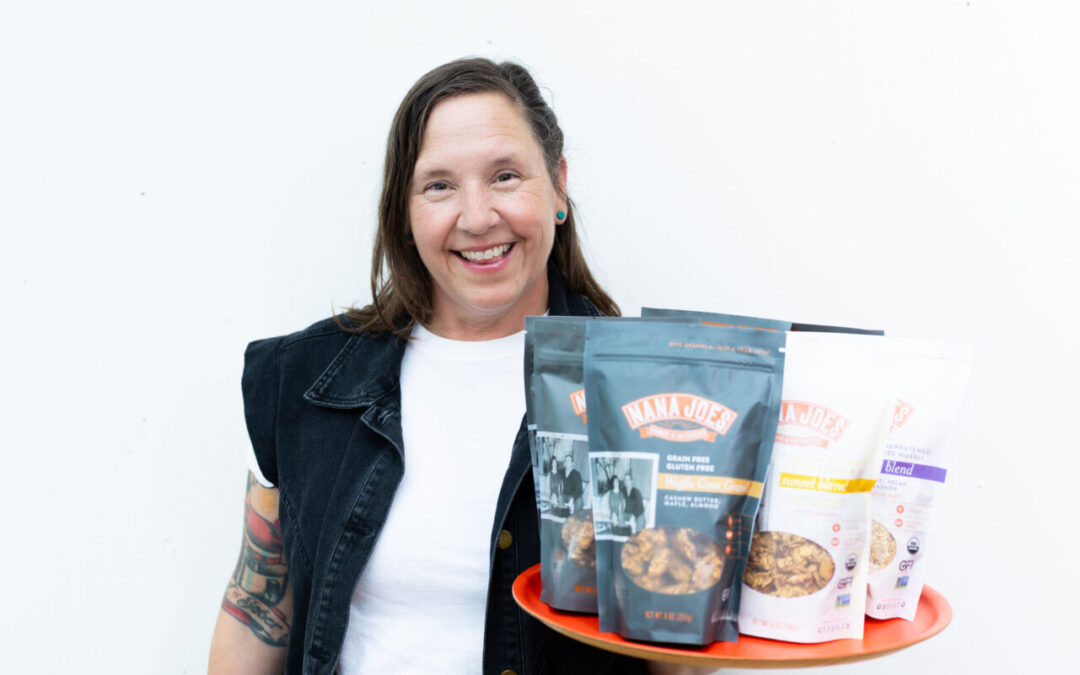
How the founder of Nana Joes Granola learned to trust her own instincts and quiet confidence as she built something.
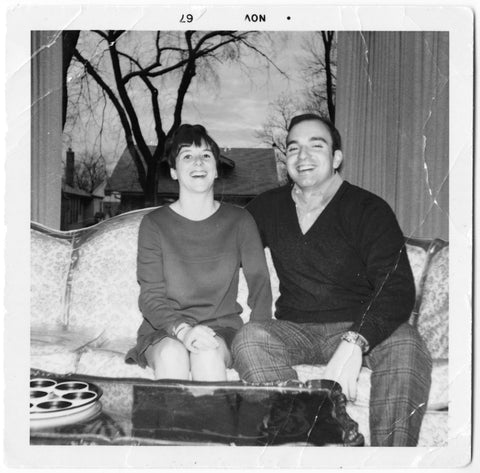
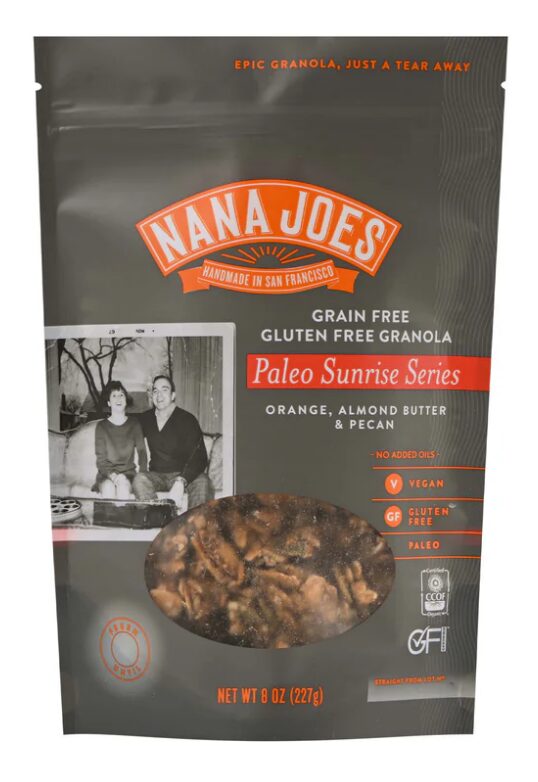
There is a black-and-white photograph on every bag of Nana Joes Granola. It shows two young people laughing after a home-cooked meal, taken in 1968. They are Michelle Pusateri’s parents. When she first put it on the packaging, more than a few advisors told her it was a mistake. Too personal, they said. Too niche. It wouldn’t connect with customers.
She kept it anyway.
That photograph is a good place to start when you’re trying to understand who Michelle is and what she has built over nearly 16 years with Nana Joes Granola.
It tells you something about where she comes from, what she values, and how she makes decisions. It also tells you something about the kind of founder she has become.
She is someone who has learned, over time, to trust herself.
From Pastry Chef to Granola Maker
Michelle grew up in the Dallas, Texas area, and by her own account, the kitchen was always where she felt most at home.
She spent years bartending before taking a baking class at her local community college that changed everything. Within a week of starting, she was in love with the science of it. She went on to graduate from the Culinary Institute of America. She worked as a pastry chef at some of San Francisco’s most respected kitchens, including the Fairmont Hotel, the Four Seasons, Nopa, and Nopalito.
But the idea for Nana Joes Granola came from something more personal.
Michelle is an avid surfer, and she couldn’t find a granola on the market that met her standards: no refined sugars, no weird oils, no preservatives, and genuinely nutritious enough to sustain her through long sessions in the water.
So, she made her own.
She started selling at local farmers markets, then at Bi-Rite Market and Whole Foods, and eventually built what is now a certified gluten-free, vegan operation with nearly $2 million in annual sales and distribution across multiple states.
What she created is not just granola. It is granola with a point of view.
Every product uses certified organic ingredients. The oats are Purity Protocol gluten-free.
Nothing is sweetened with refined sugar — only pure maple syrup.
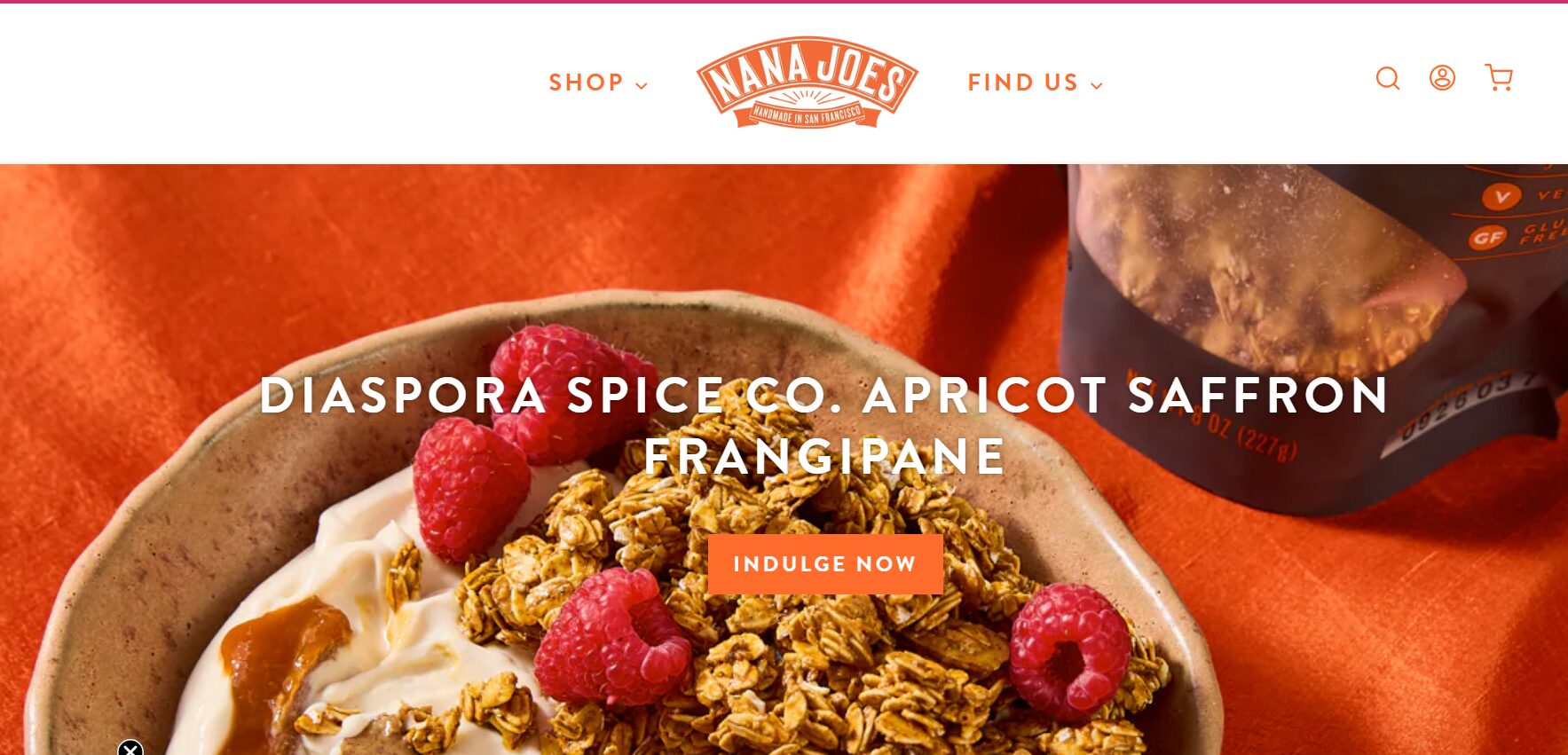
And the flavors she develops as a trained pastry chef go well beyond what you’d typically find on a grocery store shelf: Paleo Orange with Almond Butter and Pecan, a Sunset Blend with Pecan, Mulberry, and Coconut, an EPIC Chocolate Oat Blend, and a limited-edition collaboration with Diaspora Spice Co. featuring an Apricot Saffron Frangipane inspired by a family farm in Kashmir.
These are not flavors that come from a focus group.
What 16 Years Actually Looks Like
When I spoke with Michelle, one of the things that came through most clearly was how much confidence in her own voice she has grown over the years.
She did not start her business with the self-confidence evident today.
Early on, like most founders, she was listening to many voices telling her what to do and how to do it. Some of that advice was useful. Some of it would have diluted what made Nana Joes Granola special.
The photo on the packaging is the most visible example of her holding her ground.
But it runs deeper than branding. She has consistently refused to compromise on ingredient quality, even when the economics of doing so might have made the business easier to run. Certified organic costs more. Premium gluten-free oats cost more.
Not using “natural flavorings” as a shortcut costs more. Michelle has absorbed those costs rather than passing them on to the product.
The reasoning is simple: the quality of the ingredients is the product. Change that, and you’ve changed everything.
This is not stubbornness for its own sake. It is a clarity about what the brand stands for and who it is for. And that clarity has taken time to develop.
The Michelle Pusateri who started Nana Joes Granola in 2010 in a rented kitchen at the San Francisco JCC is not the same person running the business today. She has been shaped by the experience of building something real, and by the people she has deliberately sought out along the way.
Seeking Advice Without Losing Your Voice
One of the more interesting things about Michelle’s story is that her growing confidence in her own perspective has not made her less open to outside input. If anything, the opposite is true. She is deliberate about seeking out people who have been where she is trying to go.
Most recently, she appeared on Guy Raz’s How I Built This Advice Line, where the episode’s founders featured were Angie and Dan Bastian, the husband-and-wife team behind Angie’s BOOMCHICKAPOP.
Michelle shared that the business is roughly one-third DTC and two-thirds retail. And that she has added other SKUs besides granola-to-granola bars, breakfast brownies, and some special bites.
The Bastians built their snack company from a kettle corn setup they ran out of their garage and eventually sold it for a reported $250 million to Conagra Brands.
On the show, Michelle brought a specific and honest question: how to think through the tradeoffs of accepting outside investment to scale her organic granola brand. It is exactly the kind of question that has no clean answer, and exactly the kind that benefits from the experience of someone who has actually navigated it.
The Bastians are a compelling pair to learn from. They built a brand in the same snack-food aisle where Michelle operates, stayed true to their own identity through growth, and found a way to scale without sacrificing what made the product worth buying in the first place.
All would have informed Michelle of that experience.
This is what sophisticated founders do. They do not look for someone to tell them what to do. They look for people whose experience can sharpen their own thinking.
Michelle has been doing this for years, and it shows in how she talks about her business. She knows what she believes. She keeps looking for better ways to test and refine those beliefs against reality.
Three Lessons for Small Food and Beverage Founders
Michelle’s journey holds a few lessons that are directly relevant if you are building a small food or beverage brand and trying to figure out how to grow without losing what makes you worth buying.
- Your constraints are your brand.
The ingredients Michelle refuses to compromise on are not just quality standards. They are a promise to her customers and a statement about what Nana Joes Granola is. Certified organic, no refined sugar, real whole food ingredients: these constraints narrow the market but deepen the relationship with the people who care. In a crowded category, the brands that win in the long term are usually the ones that stand for something specific.
The temptation to broaden the appeal by softening your standards is almost always a mistake. What looks like a limitation is often your most powerful differentiator.
2. Seek advice from people who have been where you want to go.
Not every advisor is the right one. Generic business advice can actually be dangerous for a small brand because the instinct it produces is usually to become more like everybody else.
The Bastians were the right people for Michelle to talk to because they had navigated the specific tension she is facing: how to grow without losing the product’s soul. Find people who have made the decisions you are about to make. Their experience is worth more than any framework.
- Brand identity takes years to clarify, and that’s okay.
Michelle did not walk into this with a brand strategy document. She built one through 16 years of decisions, some of which she second-guessed in the moment. The photograph on the packaging. The choice to stay certified organic when it hurt the margins. The decision was made to continue producing in San Francisco rather than move production to a cheaper location.
Each of those decisions was a vote for what Nana Joes Granola is. Over time, those votes add up to something coherent and hard to replicate. Do not expect to have clarity on day one. Build it through the choices you make.
What It All Adds Up To
The best food and beverage brands are almost always reflections of people with a clear point of view about how things should be done.
Nana Joes Granola is that. It is a brand built on the conviction that clean, real ingredients, handled with care, will always produce something worth eating. Michelle Pusateri has held that conviction for nearly 16 years, through the highs and what she herself calls the lowest of lows.
She listened to advice, absorbed what was useful, and left the rest.
The photograph of her parents is still in every bag. It was never a mistake.
Trusting your voice is not something you decide to do once. It is something you practice every time you are tempted to make an exception. Michelle Pusateri has been practicing it for 16 years, and Nana Joes Granola is the result.
Photos courtesy of Sarah Deragon
Connect with Jeff at The Marketing Sage Consultancy. Interested in setting up a call with me? Use my calendly to schedule a time to talk. The call is free, and we can discuss your brand and marketing needs.

Would you like to read some testimonials about my work? Click here.
If you want to learn more about my new offering, The Trusted Advisor Board, click here for details. Feel free to email me at jeffslater@themarketing sage.com or text 919 720 0995. Thanks for your interest in working with The Marketing Sage Consultancy.