Every founder I work with can tell me why their brand matters. They have a story. A cause. A conviction about what’s wrong with the category and why they’re the ones to fix it. That clarity of purpose is real, and it’s valuable.
But here’s what I’ve learned after years of advising food and beverage companies: having a great mission doesn’t mean you have a great business. And confusing the two is one of the most expensive mistakes a brand can make.
Simon Sinek’s Start With Why changed how a generation of brand builders thinks about positioning.
If you haven’t read it, the argument is elegant: people don’t buy what you do, they buy why you do it. And there’s truth in that. Purpose-driven companies do tend to attract better talent, build more loyal teams, and earn a different kind of credibility with retail partners who’ve heard every pitch under the sun.
But when you’re standing in the energy bar aisle at Whole Foods, or the snack section at Target, or scrolling through a DTC landing page at 10 p.m., most people aren’t buying your why.
They’re buying your what.
And more specifically, they’re buying whether what you solve is something they actually care about, right now, at this moment, for a specific occasion.
Or they want a quick meal that’s healthier than what they ate growing up.
Mission Is the Wind in the Sails. It Is Not the Boat.
Let me be direct about what mission and purpose actually do well. They attract and retain employees who want to work on something meaningful.
They give retail buyers a narrative to bring to their category managers. They generate press coverage that performance marketing can’t buy. They create a foundation for community, for storytelling, for the kind of organic word-of-mouth that makes a brand feel like a movement.
That ain’t nothing.
In fact, for a young brand with limited marketing dollars, mission can be the most cost-efficient way to get earned attention. If your brand genuinely stands for something, you have a story. And stories travel.
But here’s what mission cannot do. It cannot save a product that consumers don’t find compelling enough to repurchase. It cannot fix poor velocity at retail. It cannot sustain distribution once a buyer sees that the turns aren’t there.
Retailers are running businesses. They are not in the business of supporting your cause. They are in the business of selling products off shelves, and if your brand isn’t doing that, the mission statement on your website is irrelevant to the conversation.
I’ve watched brands with genuinely beautiful missions lose distribution because their products weren’t solving a sharp enough problem. And I’ve watched brands with no particular ethos beyond “we make good stuff” build loyal repeat customers because their products hit a nerve.
The market is not sentimental.
In a recent interview that Guy Raz did with Daniel Lubietsky, founder of KIND bar, he said:
“A mission isn’t enough to grow a business.”
Daniel lubetsky – founder of kind bars
His first business was called Peaceworks.
PeaceWorks, launched in 1994, was built around the idea that Israeli, Palestinian, and Arab neighbors could create food products together, using the business itself as a vehicle for Middle East peace. The problem was that consumers found the mission compelling but didn’t actually buy the product, teaching Lubetzky the hard lesson that a powerful social purpose can make people feel good but it can’t make up for a product that doesn’t stand on its own.
What Actually Wins: A Product That Earns Its Shelf
The brands I find most compelling right now are those solving a real problem that an existing product ignores or creating a genuine occasion that nobody has thought to own. They’re not just better.
They’re different in a way that matters.
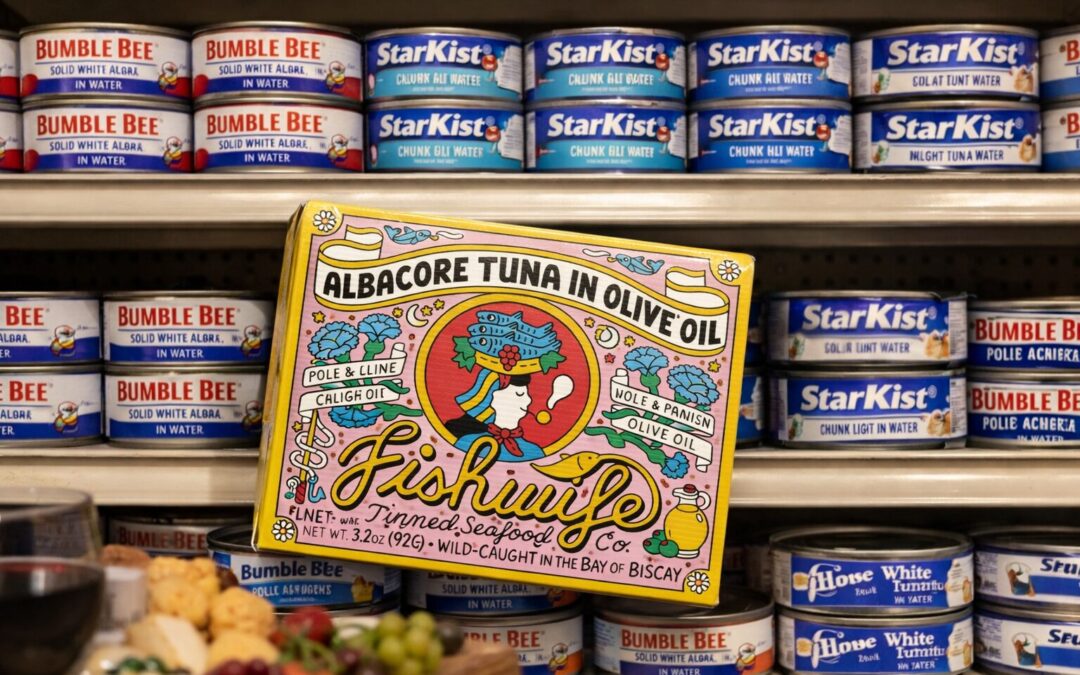
Take Fishwife. Tinned seafood has existed forever. StarKist and Bumble Bee have had the canned fish aisle to themselves for decades. The product category was tired, utilitarian, and unglamorous. Fishwife walked in and said, “What if we treated this like a premium pantry ingredient?” What if the packaging was beautiful, the sourcing was transparent, the flavor profiles were interesting, and the whole experience of buying and eating tinned fish felt like something worth talking about?
They didn’t just improve the product. They reimagined the occasion for it.
Tinned fish went from emergency pantry backup to charcuterie board centerpiece. That’s a completely different job to be done.
Goodles did something similar in a category that most serious food brands had written off. Kraft Mac & Cheese is a cultural institution.
You don’t compete with it on nostalgia. Goodles didn’t try. Instead, they asked a sharper question: what does the consumer who loves mac and cheese but feel guilty about eating it actually want?
The answer was a product that delivers on the emotional promise of comfort food while meeting a modern demand for cleaner ingredients and better nutrition.
Same occasion, new product, different consumer permission structure. That’s smart.
And then there’s Smearcase. Frozen cottage cheese in the freezer aisle is genuinely novel. It’s not a line extension. It’s not a flavor variation. It’s a format that didn’t exist for a consumer who already loves cottage cheese but wanted a different use occasion.
That takes real product thinking. Not just “what do we believe in” but “what job is nobody doing yet, and can we do it in a way that consumers will actually pay for and come back to?”
The Danger of Leading With Why When Your What Isn’t Sharp Enough
There’s a pattern I see regularly with early-stage food and beverage brands.
The founder has a compelling personal story. They experienced something, overcame something, believed in something, and built a product around it. The mission is authentic. The values are real. And the pitch to investors and retail buyers centers entirely on the why.
The problem is that when consumers encounter the product on a shelf with thirty competitors around it, they are not reading your origin story. They’re reading the front of the package. They’re looking at the price point. They’re making a quick judgment about whether this product fits a moment in their life.
And if the product positioning isn’t instantly clear, if it doesn’t click into a recognizable occasion or solve an obvious problem, the mission doesn’t get a chance to land. Blending into the category is the kiss of death. You can’t be the eleventh salsa sauce on the shelf that uses the same category tropes and images and expect it to turn.
Purpose becomes a liability when it substitutes for product clarity rather than complementing it. I’ve seen brands use their mission to avoid the harder question: why would a busy shopper reach for this and then reach for it again next week?
That question has to be answered by the product itself, by the flavor, the format, the occasion it fits, and the problem it solves. The mission can reinforce that answer, but it cannot replace it.
The Both/And That Actually Works
The best brands I’ve worked with don’t choose between mission and product. They build the mission into the product’s logic. The why and the what become inseparable.
Fishwife’s mission around sustainable sourcing isn’t a separate story from the product. It’s embedded in why the product is worth the premium. The sourcing transparency is part of the product proposition.
Goodle’s commitment to nutrition isn’t a cause that exists alongside the mac and cheese. It is the mac and cheese. The mission is product differentiation. That alignment is what makes these brands durable rather than just buzzy.
When I’m advising a founder on positioning, I push hard on this integration. Don’t tell me what you believe, then show me a product anyone could have made. Show me a product where the belief is structurally baked in, where the mission is the reason the product is different, and the product difference is the proof of the mission.
When those two things lock together, you have something genuinely hard to copy.
That’s also the version of your story that resonates with a retail buyer. Not “we care about the planet” in isolation, but “here’s a product that does something nobody else does, and here’s why we built it this way, and here’s the consumer who has been waiting for it.” The mission gives the product a richer story. The product gives the mission commercial credibility. You need both.
Velocity Is the Report Card
Here’s the part that no founder wants to hear but every founder needs to internalize early.
Retail is not a charitable act. When a buyer gives your brand shelf space, they are betting that your product will move. And when it doesn’t move fast enough, they don’t call to discuss your brand values. They call to let you know you’re losing the slot.
Velocity, the rate at which your product sells per store per week, is the metric that determines whether you hold distribution or lose it.
A brand with a powerful mission and weak velocity is a brand on borrowed time at retail. A brand with a clear product proposition, a defined occasion, and strong repeat purchase has leverage. It can grow. It can tell a story of momentum to new buyers. It has proof.
This is why occasion-based and jobs-to-be-done thinking matters so much in early-stage brand strategy.
If your product owns a specific moment clearly enough that consumers reliably reach for it in that moment, you have the foundation of velocity. Add a mission that makes people feel good about their purchase and encourages them to share it with their network, and you have a flywheel. But the flywheel starts with the product doing a job worth doing.
Three Key Takeaways
1. Mission earns the room, but product closes the sale. Purpose and mission give you access to conversations you couldn’t otherwise have with employees, press, and retail buyers. They are genuine assets. But no amount of mission will sustain a brand that consumers don’t find compelling enough to repurchase. Build both and make sure your product is doing heavy lifting on its own before you ask your mission to carry the weight.
2. The most durable brands make the mission and the product inseparable. When the reason you built the product is structurally embedded in what makes the product different, you have something much harder to copy than either a great mission or a great product alone. Fishwife, Goodles, and Smearcase aren’t just purpose-driven companies. They’re products that exist because a specific problem needed solving and a specific consumer was waiting. That’s the intersection worth building in.
3. Velocity is the score. Everything else is commentary. Retail is a performance business. Your product needs to move off the shelf consistently enough to justify its slot, earn reorders, and build the kind of proof that opens new doors. Occasion-based thinking, a clear jobs-to-be-done proposition, and a product that earns repeat purchase are the ingredients of velocity. Mission can accelerate the flywheel. It cannot start it.
Start with why. Sinek wasn’t wrong about that. But don’t stop there.
The consumer standing in the aisle needs a reason to reach for your product that they can feel in three seconds or less. Give them that, and your why has a chance to matter. Make the why the whole pitch without a sharp what underneath it, and you’re building a mission statement, not a brand.
The why matters. The what is what gets you reordered.
Connect with Jeff at The Marketing Sage Consultancy. Interested in setting up a call with me? Use my calendly to schedule a time to talk. The call is free, and we can discuss your brand and marketing needs.

Would you like to read some testimonials about my work? Click here.
If you want to learn more about my new offering, The Trusted Advisor Board, click here for details. Feel free to email me at jeffslater@themarketing sage.com or text 919 720 0995. Thanks for your interest in working with The Marketing Sage Consultancy.