What happens when a group of seasoned food executives retire and realize they aren’t done yet?
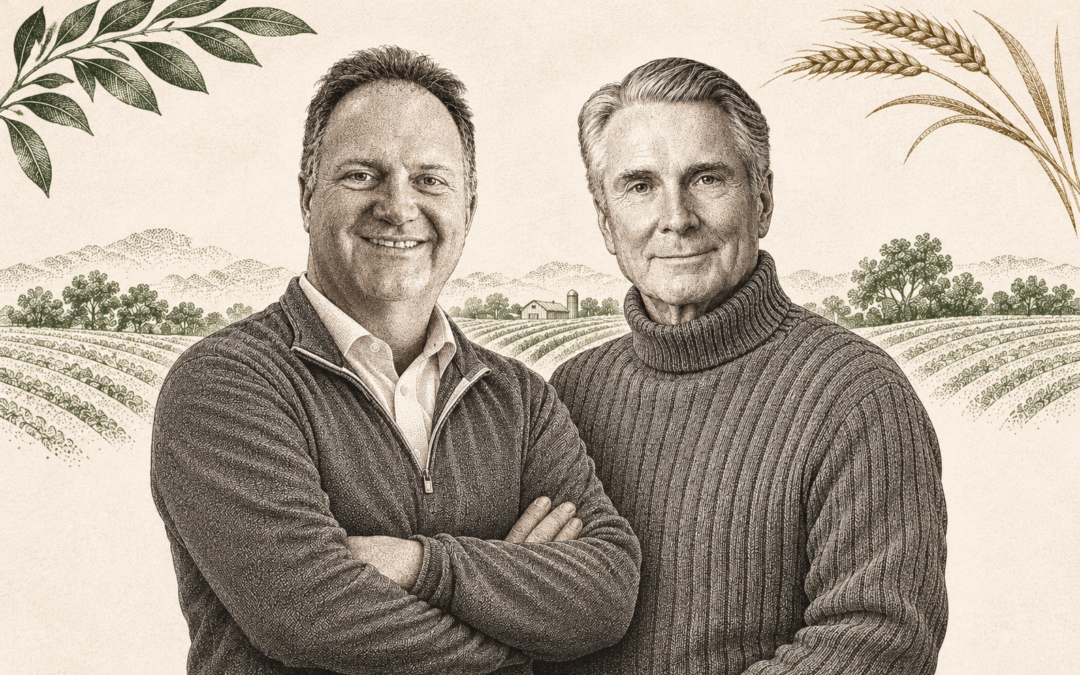
That’s the question I kept coming back to after talking with Bill McClellan and Paul Edmondson, co-founders of Foodscape Advisors. Between them, they’ve worked in tobacco fields and boardrooms, waited tables and run global businesses, sold coffee to C-stores and bought bakeries for billion-dollar companies.
Paul summed up the firm’s spirit better than I could. “We didn’t miss our day jobs, but we missed solving problems.”
That one line explains a lot about Foodscape.
It’s not a consulting firm built by consultants. It’s a team of operators who have run plants, managed P&Ls, and sat across the table from the toughest buyers in the business. Now they help mid-sized food and beverage companies, and the investors who back them, figure out how to grow in one of the hardest markets I’ve seen in my career.
Bill McClellan: in the food business since age seven
Bill’s story starts on his grandfather’s farm in East Tennessee. It was about 100 acres of tobacco, corn, cattle, and hogs. By age seven, Bill was out in the fields working alongside his grandparents.
“I’ve been in the food business since I was seven years old,” he told me.
That early start gave him something many executives never get. He knows how hard it is to raise a crop or a herd, and he’s never forgotten it.
His family moved often before settling near East Lansing, where he first bagged groceries at Meijer. He went on to Smucker’s in marketing and sales, then to Heinz, where he worked on Weight Watchers frozen foods and rose to general manager at Ore-Ida. His team introduced Bagel Bites, still a freezer case staple today.
From there, his career reads like a tour of American food. He ran a $120 million seafood business that passed from Tyson to ConAgra. He led processed foods at Swift and Company and served as an executive vice president after JBS bought the company.
Then came 12 years at Dawn Food Products. Bill ran foodservice and later Dawn’s frozen business unit, a business with about 1,000 people and four plants making laminated dough, brownies, cookies, and cakes. At one point, his team supplied nearly everything in Panera’s bakery case. When he took over, the frozen business was losing about $25 million a year. With a leadership team he says had an “us against the world” spirit, it was soon making about $20 million. While at Dawn, Bill was a past IFMA Chairman of the Board and a member of the GS1 Foodservice Executive committee. Dawn then sold the division to Rise Baking, and Bill led the transition.
After that, he started his own advisory practice, working with companies like MGP Ingredients and Nestlé. He also stepped in as CEO of Local Hive Honey to rebuild trust with retailers, going customer by customer to major retailers and clubs across North America. Today he also sits on the board of a malt and food ingredient company and is Managing Director of food and beverage for the Sellside Group, an M&A firm.
Paul Edmondson: from Bennigan’s to running P&G Professional
Paul’s path looks nothing like Bill’s, and he thinks that’s the point.
“Our stories are quite different,” he said, “which makes us an interesting combination.”
He grew up in England. His father worked for a British bank, and by age 12 Paul had attended five different schools. He finished at a boarding school in England and planned to go to university there. That plan fell apart at the last minute.
He landed in New Jersey and waited tables at Bennigan’s on Route 17 in Ramsey. He calls that year the best thing that ever happened to him.
He fell in love with American optimism and learned how people really work. One night after a bartending shift, he walked into a local high school and took the SATs. He ended up at Boston College as a marketing major and paid his way partly by selling Cutco knives.
Procter & Gamble hired him out of school to sell Citrus Hill orange juice and Folgers coffee to retailers. A year later, he spent a day riding along in P&G’s foodservice division, calling on restaurants and hotels. He was hooked. “Nothing happens unless the salesperson shows up,” he said. To him, foodservice felt like the Wild West.
Paul built his career at P&G. He worked on restaurant and distributor accounts, created a hot-beverage program for convenience stores, and ran Pringles’ export business for Latin America and the Caribbean until Kellogg’s bought it. Later, he returned to P&G as general manager of P&G Professional, the job he’d always wanted. He spent his last decade there before retiring at the end of 2023.
A share group that turned into a firm
Bill and Paul met through IFMA, the International Foodservice Manufacturers Association. Both served on the board. Paul loved being around commercial leaders from different companies who cared about the health of the whole industry, not just their own business.
At Paul’s last IFMA conference in 2023, he asked Bill what life after retirement looked like. Bill laughed and said he wasn’t retired. Paul admitted he didn’t understand private equity and wanted to learn. They agreed to stay in touch.
A handful of other former IFMA board members were stepping away from big jobs around the same time. They started meeting once a quarter as an informal share group. Each time they met, someone had a friend with a problem. A company needed a growth plan. An owner was weighing a sale. Before long, they looked at each other and decided to make it official.
“We’re all operators,” Paul said. “None of us are classically trained consultants. We’ve seen every business cycle you can imagine over 30-plus year careers.”
Who they serve and how they work
Foodscape works across the whole food and beverage system, both retail and foodservice. Most of the team came from big CPG companies with both divisions so that they can talk price-pack architecture with a grocery buyer in the morning and GPO contracts with a distributor in the afternoon. The bench includes veterans of Coca-Cola, US Foods and Gordon Food Service, plus a top operations leader.
Their sweet spot is small and mid-sized manufacturers, often founder-led or recently bought by private equity. Many have been in business for decades. Paul said they all share one challenge: “How do we grow in this environment, and what bets should we be placing?” A lot of them win in retail and want to crack foodservice.
Foodscape helps them make that translation.
Private equity firms are the other core clients. Bill works with PE firms every day on deals. “They talk a good game about food,” he said, “but until you’ve run a plant, until you’ve run a business, they don’t know what they don’t know.” Foodscape helps investors size up a target before the deal and build a growth plan after it closes.
Two stories show how this works in practice.
The first client was a well-established regional manufacturer. Growth had stalled, the CEO was retiring, and the leadership team wasn’t aligned. Foodscape helped them build a one-page growth strategy the whole company could rally behind. The hardest part was choosing. “If you try to do everything, you don’t typically do anything particularly well,” Paul said. That work led to clear action plans on brand awareness and forecasting, and then to more projects.
The second came from a multinational company looking to buy a bakery. Because Bill had run one, he knew the competitors, their plants and their plans. He narrowed the field to 10 targets and spent time teaching the client’s operations team how to make laminated dough, brownies, and cookies.
The firm organizes its work in five areas:
- Growth strategy and action planning
- Revenue management and profit improvement
- Operational excellence in the plant and supply chain
- Practical uses of AI
- Consumer and customer insights
The profit work may be the most urgent. Volumes are flat, restaurant traffic is down, and costs keep rising. “You can’t really take pricing anymore,” Paul said. A hard look at product mix, pricing, and trade spend can free up money to reinvest and restart growth.
Three key takeaways from my conversation
1. Experience shortens the learning curve. Foodscape’s advisors have run plants, sales teams, and whole companies. Clients don’t spend months teaching them the business. That speed matters when a growth plan or a deal has a deadline.
2. Small, focused projects build trust. Foodscape prefers a clear 60- to 90-day project with a real return over a big retainer. As Paul puts it, they hate it when the advice “goes in a drawer.” They want clients to act on it. Most of their work comes through word of mouth, and they are highly selective about who they take on as clients and on their advisory team.
3. A bench beats a lone expert. Each advisor runs an independent practice, and the firm pulls in the right specialist for each problem. When a client asks for help with something unexpected, like a market in Canada, someone on the team has likely done it before.
After my 50 years in the food business, I’ve learned that the costliest mistakes rarely come from bad ideas. They come from good ideas handed to companies that aren’t built to carry them out.
Foodscape’s founders have spent their careers on the carrying-out part. For a mid-sized food company trying to grow in a tough market, that may be the most valuable help there is.
In a foodscape full of advisors who have studied the terrain, it pays to call the ones who have farmed it.
Connect with Jeff at The Marketing Sage Consultancy. Interested in setting up a call? Use my calendly to schedule a time to talk. The call is free, and we can discuss your brand, marketing needs, and challenges.
Feel free to email me at jeffslater@themarketingsage.com or text 919 720 0995. Thanks for your interest in working with The Marketing Sage Consultancy.