
How a small team in California turned a juice bar side project into a fast-growing cracker brand by making everything themselves and selling direct.
In the last year, I have used one brand as an example with my clients when we talk about innovation.
Most food founders I meet want to compete inside an existing category. They make better granola, a cleaner protein bar, or a hotter hot sauce. The problem is that the shelf is already crowded, and “better” is hard to prove in three seconds. You can read more about that innovation topic here.
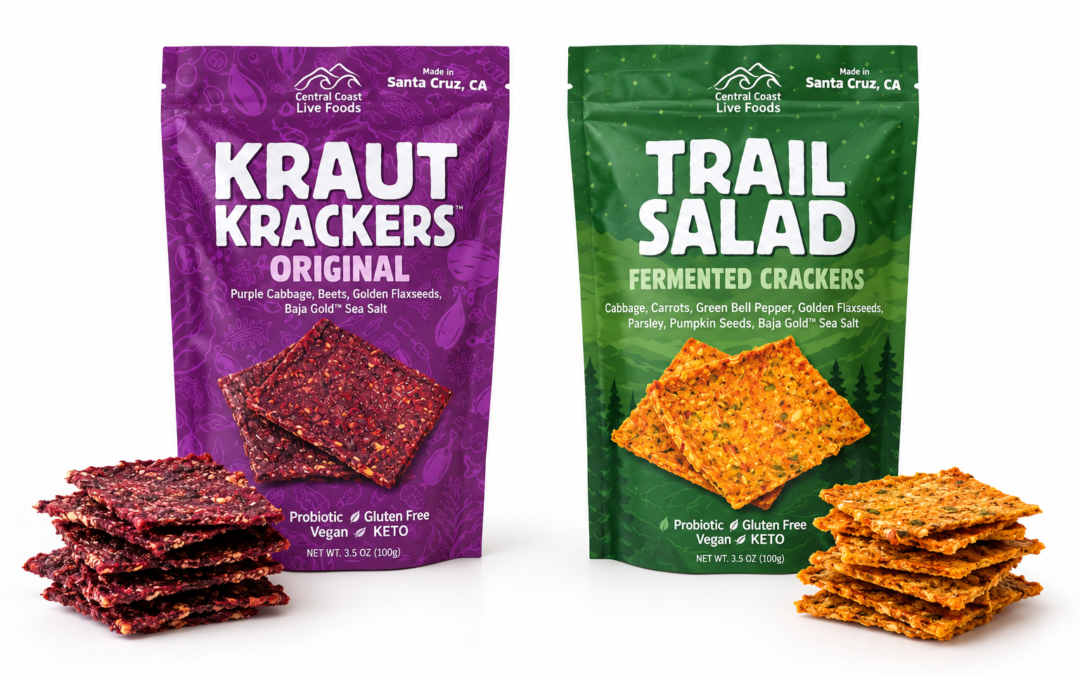
Kraut Krackers took a different path. They took a cultural trend, fermentation, and brought it somewhere nobody expected. Crackers.
I finally got to talk with Max Breall, one of the people behind the brand, and hear how it all came together. What I learned surprised me. The product was only half the story.
The other half is how fiercely they protect their customer relationships.
A Juice Bar Becomes a Test Kitchen
The story begins with Central Coast Juicery, founded in 2014 by Mark Kaltenbacher. Like many founders, Mark came to food after burning out in the corporate world. He discovered juice, and it changed his life enough that he built a business around it. The juicery eventually had locations in Pacific Grove and Santa Cruz, California.
Max met Mark in 2021 and started working for him. The team was always experimenting with new recipes and products to sell alongside the juice. One of those experiments was a raw, vegan cracker inspired by recipes they already knew.
They made a small batch and sold it to juice customers.
People loved them. The crackers became one of the shop’s best-selling items, and customers kept coming back for more.
“It was kind of our little test market,” Max told me.
That is one of the smartest things an early-stage food brand can do. Before investing in packaging, distribution, or a big launch, they had real customers voting with real dollars. No focus group can match that.
Mark needed help with the digital and marketing side of the business, so Max stepped in. Together they launched Kraut Krackers as a legitimate CPG product. They got into a few stores right away and did demos to spread the word.
Over time, the crackers took over. About a year ago, the company stopped making juice entirely. They sold off the storefront, wound down home deliveries, and went all in on crackers.
“It was always the direction we knew we were headed,” Max said.
Why They Don’t Sell on Amazon or TikTok Shop
This part of the conversation stuck with me most.
When I asked where they sell online, I expected to hear Amazon, TikTok Shop, or both. That is where many young brands chase volume today.
Instead, Max said they sell almost entirely through their own Shopify store. They drive traffic there using paid social ads on Meta’s properties like Facebook and Instagram.
His reasoning was simple and clear.
“Through Amazon and TikTok, you don’t own the end customer,” he explained. “You don’t get their email. You don’t get their contact. You can’t build a real, solid email list.”
When a customer buys on the Kraut Krackers website, the brand learns who they are. They know what they bought, how often they come back, and what they say in reviews. That information feeds everything else, from remarketing to new product ideas to the next round of ads.
And they keep more of the profit.
I have seen this approach work on a much bigger scale.
I recently wrote about Wildgrain, which built a $30 million direct-to-consumer business. Their advantage came from the same place. When you own the relationship, you own the data, and the data helps you make smarter decisions faster.
Many brands give that relationship away without realizing what it costs them. A marketplace can bring you sales. It rarely brings you customers you can talk to again.
How Paid Social Actually Works for Them
I asked Max what his theory behind Meta ads was. Why do they work so well for Kraut Krackers when so many brands struggle with rising acquisition costs?
His answer came down to knowing exactly who he was talking to.
“When you’re writing your ads, you need to know who you’re talking to,” he said. “We’re at a point now where we have so much customer data from reviews or just talking to customers. That data is really helpful.”
He also believes the product does some of the work. The ingredients are clean and simple, and the idea of a fermented cracker stands out in a crowded feed. It cuts through the noise.
Max made a distinction I wish more founders understood. Acquisition and retention are two different jobs.
Getting someone to buy for the first time depends on your advertising. How well can you speak to what that person wants or what problem they have?
Getting them to buy again depends on the product and the experience.
“You can have the fanciest email flows in the whole world,” he said. “But at the end of the day, if your product sucks, people are not going to come back and buy it again.”
He is right. Marketing can open the door. Only the product keeps people inside.
Knowing the Product Is Polarizing, and Being Fine With It
Max was honest about something many founders avoid saying out loud. Kraut Krackers is not for everyone.
The original cracker has a strong, sour tang from the sauerkraut. Some people try it once and never come back. That is fine with him.
“The people who really like it, we have super fans, and they buy again and again,” he said. They now have a large number of active subscriptions, and he describes their lifetime value compared to acquisition cost as strong.
The website is also set up to protect the economics of every order. The smallest purchase is three bags for $30. From there, customers can buy five, 10, or 15 bags. With a 12-month shelf life, loyal customers can stock up without worry.
Many small brands miss this detail. Shipping an $8 order is a quick way to lose money. Building a minimum order into the offer solves the problem before it starts.
Trail Salad: Giving Customers More to Love
The second product, Trail Salad, came from listening to customers. It uses the same cracker format but a different recipe, with cabbage, carrots, bell peppers, parsley, pumpkin seeds, and flax seeds.
The goal was broader appeal. Not everyone curious about fermentation is ready for a bold sour flavor.
“We wanted something that had a bit more mass appeal,” Max said.
The launch day was one of the best days in the company’s history. Trail Salad is catching up to the original in popularity, and many customers buy both, even without a bundle offer on the site.
I would push back gently on one thing here.
Sour is having a big moment. Candy, snacks, and beverages built on sour flavors have grown fast over the past year. See Better Sour, for example.
The original may have a larger audience than even Max realizes. The tang that turns off some people is exactly what others are hunting for.
The Real Constraint Is the Kitchen
When I asked Max about the challenges ahead, I expected to hear about marketing or retail. His answer was neither.
“Our production capacity is the main thing,” he said. “We just need to make more products.”
Kraut Krackers makes everything in its own kitchen with a five-person team. The team includes Mark, Max, two kitchen staff, and a recently hired operations lead. They sell everything they make. At times, they’ve sold out completely.
The specific bottleneck is dehydration capacity. The company plans to acquire and build out a new facility in 2027, and Max says their growth depends on it.
Making the product itself gives them full control over quality and recipes. The tradeoff is that growth now depends on square footage and equipment, not just demand.
I shared an idea I have been hearing more often from founders: partnering with a similar-sized brand to share a facility and split overhead. Max’s concern was fair. If both brands need dehydrator time, they could end up competing for the same equipment. It is still an option worth watching, especially as capital is harder to find.
Retail, On Their Terms
Kraut Krackers is sold in about 50 independent specialty grocery stores. I will admit I told Max to stay away from independent specialty retail, other than to test and learn. I have watched too many great products fail in that channel for reasons that have nothing to do with the product itself.
Max’s answer showed he had already thought it through.
They focus only on highly curated natural food stores that buy directly from the brand, not through a distributor like Kehe. That way, they keep a direct relationship with the store, just as they do with online customers. And they are still seeing strong sales velocity in those stores.
The same philosophy applies to a different channel. Stay close. Avoid the middle layer whenever possible.
The Generalist Behind the Brand
Max did not grow up planning to sell crackers. He was into technology and studied video game design in college.
He sees a clear link between the two.
“As a game developer, you have to know how to do a bunch of different things,” he said—coding, design, even music. Video games combine many art forms into one product.
Running a small food brand requires the same thing. On any given day, he is a copywriter, a data analyst, an operations planner, and a salesperson. That generalist mindset may be one of the company’s quiet advantages.
Three Key Takeaways
1. Own the customer relationship whenever you can. Kraut Krackers passed on Amazon and TikTok Shop because those channels keep the customer’s name, email, and buying history. By driving shoppers to their own website and selling directly to stores, they learn from every sale. That knowledge sharpens their ads, improves their products, and strengthens their margins.
2. Let real customers test your idea before you scale it. The crackers started as a side item at a juice bar. Customers bought them, came back, and asked for more before the brand ever existed. Trail Salad followed the same path, built on direct feedback. Listening early saved them from guessing.
3. Know the difference between getting customers and keeping them. Advertising brings people in the door. The product decides whether they return. Max accepts that a bold, tangy flavor will lose some people, because the fans who stay become loyal, repeat buyers. A brand that tries to please everyone often ends up loved by no one.
Great fermentation takes patience. So does building a brand that customers truly care about.
Kraut Krackers seems to have the recipe for both.
Connect with Jeff at The Marketing Sage Consultancy. Interested in setting up a call? Use my calendly to schedule a time to talk. The call is free, and we can discuss your brand, marketing needs, and challenges.
Feel free to email me at jeffslater@themarketing sage.com or text 919 720 0995. Thanks for your interest in working with The Marketing Sage Consultancy.