How Steve Push and Legacy Food Group are Rewriting the Rules of Private Equity in Foodservice
Every independent foodservice distributor eventually faces the same question. What happens when the founder is ready to step back?
For decades, the answer has usually been the same too. Sell to a national player like Sysco or US Foods, watch the local name disappear from the trucks within a year, and hope the employees who built the business find a place in the new org chart. It is not a bad outcome, exactly. It is just a final one.
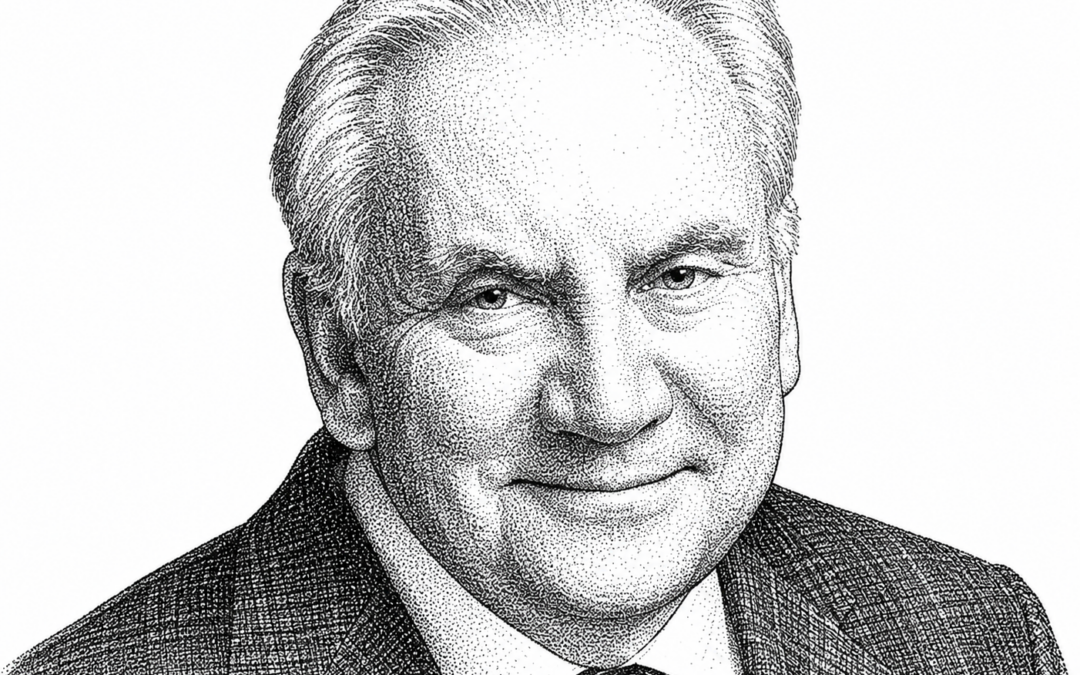
Steve Push has spent the last several years helping build a different answer. As Executive Chairman of Legacy Food Group (“LFG”), Push is helping run what might be the most interesting experiment in foodservice distribution today: a private equity-backed company whose entire pitch is that it will not act like Sysco or US Foods after the transaction closes.
A Career Built Inside the Industry, Not Above It
Push did not arrive at this model from a spreadsheet. He arrived at it from decades of watching independent distributors live and die by the same set of pressures.
He started his career during college, working as a restaurant manager. Fresh out of school, he became Foodservice Director at a private university with the contract-feeding company Saga Foodservice, then spent five years as a regional sales manager for Institutional Distributors, a top 50 distributor based in Kentucky. In 1983, he joined Pocahontas Foods USA, a buying group that he helped grow to roughly 430 member companies over the next two and a half decades, moving through sales leadership and eventually into the executive vice president role for sales and marketing.
In 1987, Pocahontas merged with two of its distributor members to form Performance Food Group, structured as an ESOP specifically as a defensive move against the wave of corporate consolidation already reshaping the industry. PFG became public in 1992 and has grown into one of the largest foodservice distributors in the country.
After Blackstone took PFG private in 2008, Push struck out on his own in 2009, building a new buying group from scratch into what became known as Legacy Foodservice Alliance. This network eventually connected around 120 independent distributor locations with roughly 600 supplier members.
That is the résumé of someone who has spent an entire career on the side of the independent operator. So, when the private equity firm Quad-C Management acquired Legacy Foodservice Alliance in 2023 along with Keck’s Food Service, M&V Provisions and Thomsen Foodservice to launch Legacy Food Group, it was not just buying a platform. They were buying Push’s relationships, his credibility, and his understanding of exactly what keeps a family business owner up at night.
The Problem Nobody Wants to Talk About
Many independent distributors are still run by their founders or a second generation, and most of those owners are past 60. Few have a real succession plan. Many assume they have another fifteen years to figure it out, right up until a health scare or a market shift forces the decision anyway.
The traditional exit path, selling outright to a large corporate distributor, solves the money problem but rarely solves anything else. Brands get folded into a bigger name. Local sales teams get restructured or laid off. Decades of community relationships are absorbed into a national playbook not built with that community in mind.
Legacy Food Group was built to offer a genuine alternative, one that keeps the name on the building and the trucks, keeps the team in place, and keeps the owner involved.
Why This Is a Different Kind of Succession Story
Here is the part that should catch the attention of anyone who thinks they already know how the foodservice industry consolidation playbook works.
The common perception of the national players in a fragmented industry is roll up, strip out costs, and centralize everything. Local identity is usually the first casualty, treated as inefficiency to be engineered away.
Legacy Food Group inverts that logic. Local identity is the asset, not the inefficiency. Owners who join keep their company name, their leadership team, and meaningful day-to-day autonomy over their market. What Legacy Food Group’s capital actually buys is not a name change. It buys growth capital for facilities and sales teams that owners were often hesitant to fund with their own money, relief from personal guarantees on operating lines of credit, and shared back-office infrastructure across finance, IT, HR, procurement, and logistics that no single mid-tier distributor could justify building on its own.
These are only some of the benefits to scale available to the larger players. Legacy Food Group brings a collaborative, growth mindset and offers these scale benefits with local market service, relationships, and nimbleness.
The financial structure reinforces the same philosophy. Instead of taking a check and walking away, owners roll a meaningful equity stake into the new holding company. That stake is tied to Legacy’s collective growth across its divisions, not just their own division’s performance. As the platform expands, that equity could be worth substantially more at a second recapitalization event three to five years down the road, in some cases doubling the value the owner originally had.
In other words, the owner is not selling and leaving. They are converting a single, illiquid, single-location asset into a diversified stake in a growing platform, while staying in the operating seat. This is a genuinely different generational succession structure that has been available to owners in this market provided only by the national consolidators.
Quad-C brings real firepower to that structure. It is a middle-market firm founded in 1989, and its team includes partners with deep experience in specialty distribution and food and beverage. This is not generalist capital looking for the next hot sector. It is sector-focused capital that understands why a distributor’s local reputation is worth protecting rather than dismantling.


Proof in the Divisions
Legacy Food Group currently operates six divisions, including Best Mexican Foods, Keck’s Food Service, M&V Provisions, Thomsen Foodservice, Halsey Foodservice, and Duva Distributors. The plan is to grow that to twelve or fifteen operating divisions, concentrated in high-density markets across the Eastern United States. Legacy Foodservice Alliance is now part of UniPro.
The owners who have already joined tell a fairly consistent story. Terry Giles of Halsey Foodservice described reaching a point where continued growth would require capital and support beyond what the company could generate on its own. He said LFG offered a way to keep direction over the business while gaining the backing needed to build toward the future and realize additional growth.
Brian Keck of Keck’s Food Service noted that day-to-day operations and the customer relationships his clients count on would not change under the new structure. In addition, he would have an opportunity to grow his business with LFG support meaningfully. Ed Thomsen of Thomsen Foodservice, facing fifty years of family leadership with no next generation ready to take over, called joining LFG the answer to supporting his long-time customers, providing growth opportunities for employees, and facilitating a transition for non-involved shareholders.
That last point is worth sitting with. Succession is not just a financial event for these owners.
It is personal.
It involves employees who have been with the company for decades and customers who trust a name they have known for just as long. A model that protects both while still solving the capital and liquidity problem is solving for something the standard national consolidator playbook usually ignores entirely.
Where This Goes Next
Push is currently focused on reaching roughly 170 mid-tier distributors in the Eastern US who fit LFG’s target profile, primarily through direct outreach, industry relationships, and content designed to explain a model that remains unfamiliar to most owners. That is precisely why authentic voices matter so much here. Hearing directly from an owner who leaped does more to build trust than any amount of polished corporate messaging ever could.
For an industry facing a genuine succession wave over the next decade, Legacy Food Group is proving that its model can be a partner in preserving and growing what makes independent distributors valuable in the first place, rather than a force that erases it.
Four Key Takeaways
1. Succession does not have to mean consolidation and erasure. LFG’s model shows that these ownership transitions can be structured to grow businesses, preserve local brands, teams, and owner involvement rather than stripping them away, which is a meaningful departure from the consolidation playbook most business owners associate with national players.
2. Rollover equity changes the emotional calculus of an exit. By letting owners convert a single, illiquid business into a stake in a growing, diversified platform, Legacy Food Group turns a one-time sale into an ongoing partnership, with real upside tied to collective growth rather than a single payday.
3. Succession planning is as much about people as it is about price. The owners who have joined LFG consistently point to continued community engagement with customers and employees, not just maximizing sale price, as their primary motivation. Any acquirer that wants to win trust in this space needs a story that speaks to both.
4. The LFG model doesn’t demand exit now; it helps create the future. In large measure, the owners who join LFG are planning their next chapter. Realizing growth potential, benefits of scale, reducing significant risk, continuing to lead the business while growing the next generation of senior leaders, and setting the company up for a smooth transition of leadership. They are positioning their companies to compete, grow, and win in the long term, extending their Legacies into the next generation.
Connect with Jeff at The Marketing Sage Consultancy. Interested in setting up a call? Use my calendly to schedule a time to talk. The call is free, and we can discuss your brand, marketing needs, and challenges.
Feel free to email me at jeffslater@themarketing sage.com or text 919 720 0995. Thanks for your interest in working with The Marketing Sage Consultancy.