
When most food entrepreneurs start building a brand, they bring hustle and passion to the table. What they’re usually missing is twenty years of experience navigating the corridors of powerhouse CPG companies like Mars Wrigley, J&J, Haleon, and Bausch + Lomb.
Tatyana Jones has done something differently.
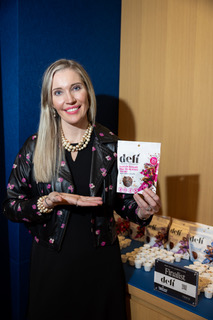
She’s spent years learning how food companies like Mars Wrigley think about innovation, how the Dove Chocolate brand scales globally, and how retail partnerships actually get built. And now she’s using all that knowledge to crack a problem that’s been hiding in plain sight: the chocolate snacking category is broken.
The problem, as Tatyana sees it, is that consumers are trapped in a false choice.
You want real chocolate and real indulgence. You also want to feel good about what you’re eating. The market, however, has forced you to pick one.
Either you get decadent chocolate loaded with sugar, or you get a protein bar that tastes like cardboard and relies on artificial sweeteners to mask the taste.
There’s nothing that actually does both things well. Indulgence and great ingredients.
That’s where DEFI comes in.
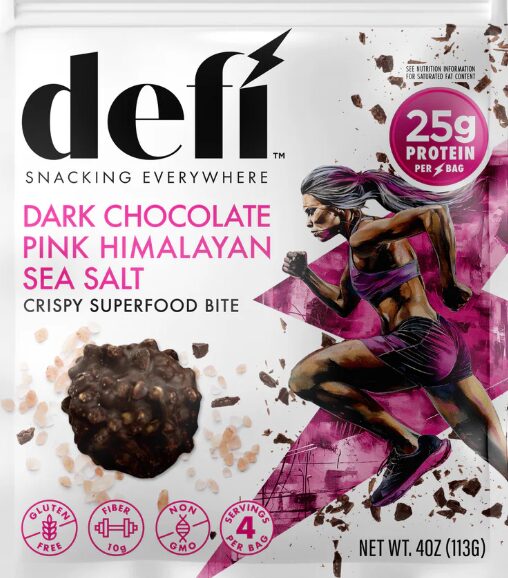
The brand, which stands for Delicious Energizing Fitness Indulgence, is Tatyana’s answer to what she saw as a white space opportunity. Each snack combines 100% real chocolate with clean functional ingredients: sprouted buckwheat, whey protein crisps for crunch and immediate energy, and slow-digesting casein protein that keeps you satisfied for hours. The result is something that actually tastes indulgent while delivering the sustained nutrition and satiety of a functional snack.
But the exciting thing about Tatyana isn’t just what she’s building. It’s how she’s creating it, and what her background reveals about the founder archetype we’ve been overlooking in the food space.
The Brand Strategy Class That Changed Everything

Tatyana studied at NYU’s Stern School of Business, where she took a brand strategy course from Scott Galloway. For those who follow the business world, Galloway’s name carries weight.
He’s known for cutting through marketing nonsense and teaching marketers to think like strategists. His Brand Strategy class is one of the most sought-after electives at Stern, and it’s become a pipeline for thoughtful brand builders.
That educational foundation is immediately evident in how DEFI is positioned. This isn’t a me-too protein snack trying to compete on margins. DEFI has a clear philosophy about what it is and who it’s for.
The brand doesn’t apologize for being indulgent or functional. It embraces the paradox. “The world isn’t black or white,” Tatyana says. “You can be both good and bad, bold and balanced.” That’s not marketing fluff. That’s the brand’s actual ethos, and it shows in everything from the product formulation to the mission to the storytelling.
This kind of strategic clarity is rare in early-stage brands, especially in CPG. It usually comes from founders who’ve spent time thinking deeply about why brands succeed. Tatyana’s education and experience mean she’s not just making a product she thinks is good; she’s making one she knows is good. She’s building a brand with conviction.
The Buckwheat Insight
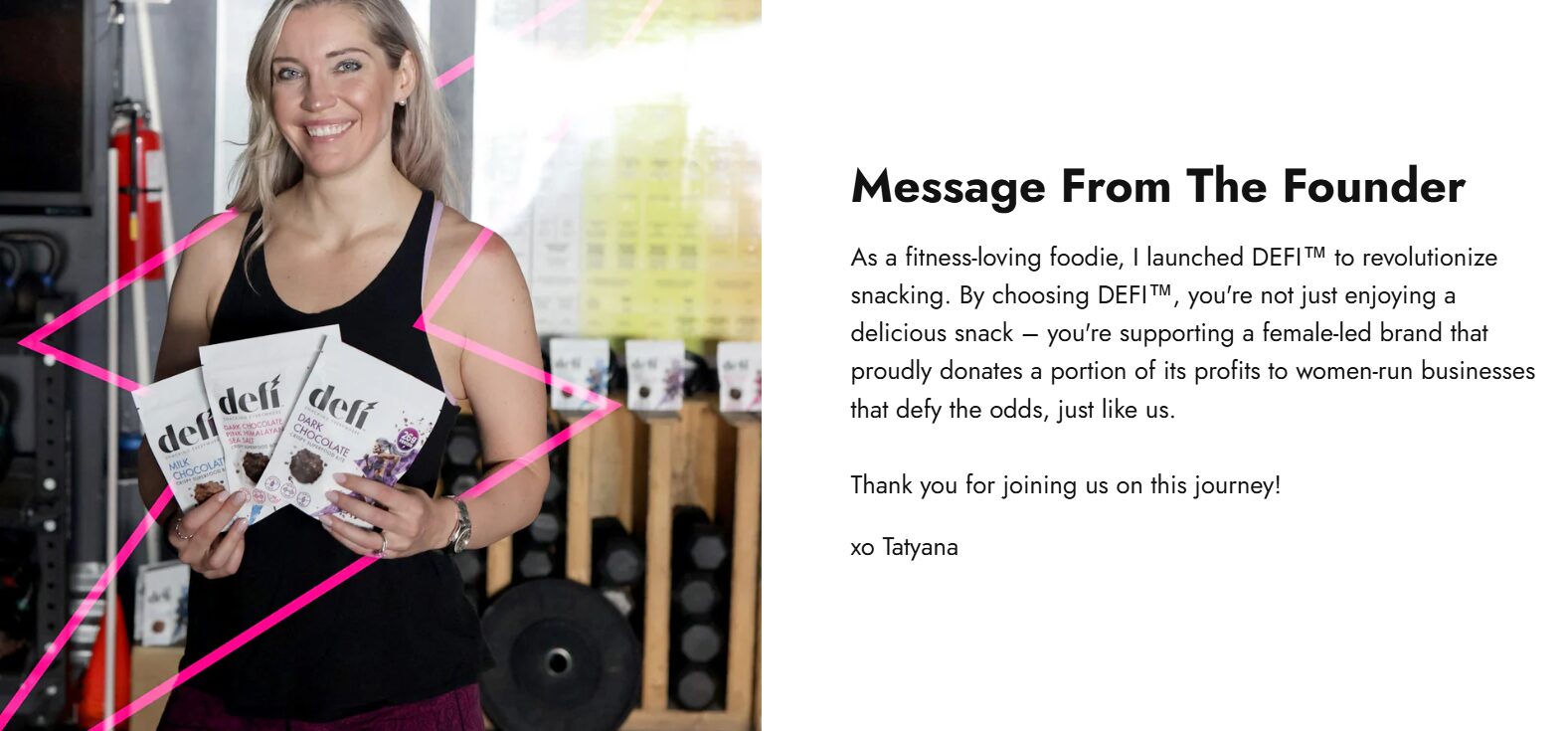
Here’s where it gets exciting.
When Tatyana was growing up in Ukraine, buckwheat was everywhere.
It was a staple, as common as rice or potatoes in the United States. But when she moved to America, she discovered that most people had never heard of it. And when they heard about it, they assumed it was wheat or some other grain because of the name. What most people don’t know is that buckwheat is neither.
Buckwheat is actually a fruit seed. Despite the word wheat in its name, it isn’t a grain.
It’s naturally gluten-free, rich in fiber and antioxidants, and phenomenal for gut health. On the environmental side, farmers love it because it improves soil fertility. It’s the kind of ingredient that checks boxes for health, sustainability, and regenerative agriculture.
But here’s the thing that makes this move particularly smart: buckwheat is essentially unknown in the functional snacking category.
Better-for-you brands rely on the same roster of trendy ingredients. Buckwheat brings something genuinely novel. It gives DEFI textural depth, hard-to-replicate nutritional benefits, and a story that sets it apart from everything else on the shelf.
When you’re trying to stand out in a competitive space, an unfamiliar yet functional ingredient is a real competitive advantage.
Going from a more manual co-man operation to a more automated manufacturing process is the next step for the brand’s growth. As the brand scales, it needs a manufacturing partner with automation and expertise to consistently meet specifications. It’s a technical detail that most founders wouldn’t think about, but it’s the kind of operational thinking that separates brands that scale from brands that plateau.
The Pricing Reality and Path to Scale
DEFI is currently priced around $10.99 for a 4-ounce bag of 8 pieces. That’s premium. It needs to be right now, because the current manufacturing setup and the costs of premium ingredients add up.
But Tatyana’s not delusional about this. She knows that to expand distribution into major retailers beyond ShopRite, she will need to gain retailers like Walmart and bring the price down to the $ 7.99 to $8.99 range. Without pricing closer to that level, she’ll have difficulty maintaining distribution and achieving the required sell-through.
This is where the seed round becomes critical. Tatyana is currently raising a $1-$1.5 million seed round to fund initiatives that unlock retail scale: display programs, promotional funding, and operational infrastructure to support new retail accounts. This isn’t money to fund a flashy marketing campaign. It’s the capital for the unglamorous but essential work of making the business possible at volume.
She’s also thinking strategically about where to prove velocity first. Instead of pursuing immediate national distribution, the strategy involves securing placement with select key retailers such as ShopRite and demonstrating strong sales performance. This success can then serve as a proof point to support broader expansion efforts.
That’s classic retail playbook, and it’s the right approach for a founder with real CPG chops.
The Women-in-Business Mission
Beyond the product itself, DEFI’s purpose matters. Tatyana has committed to donating 1% of the profits from every bag sold to support female-founded businesses. In a world where women founders receive less than two percent of all venture capital funding, that’s not a token gesture. It’s a structural part of the business.
What makes this different from the typical “female-founded brand” label is that it’s not just marketing. It’s built into the company’s actual economics. It means that as DEFI scales, the dollars flowing to support other women in business scale with it. By the time DEFI reaches a $100 million valuation (Tatyana’s five-year vision), those contributions will be substantial.
Three Key Takeaways
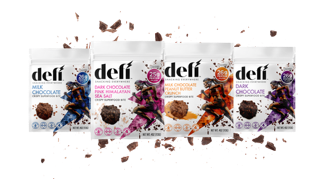
Tatyana and DEFI Snacks offer a few important lessons for anyone watching the CPG space.
First, the best founders often come from deep experience in the category they’re disrupting. Tatyana spent fifteen years learning how big food companies think about innovation, retail, and brand building. That knowledge is now her unfair advantage.
Second, true innovation in crowded categories often comes from reclaiming forgotten ingredients and putting them in new contexts. Buckwheat isn’t new, but buckwheat in functional chocolate snacking absolutely is. It’s the kind of move that only happens when someone has the cultural context to see what others are missing.
Third, building a brand with genuine purpose, woven into the business’s actual economics rather than bolted on as marketing, creates something that resonates and scales. DEFI isn’t a female-founded brand that happens to do good. Good is built into the model. That distinction matters more than most people realize.
The snacking category is ripe for disruption by someone who understands both sides: the indulgence that people crave and the functionality they actually need.
Tatyana Jones appears to be exactly that person, defying the odds.

Connect with Jeff at The Marketing Sage Consultancy. Interested in setting up a call with me? Use my calendly to schedule a time to talk. The call is free, and we can discuss your brand and marketing needs.
Would you like to read some testimonials about my work? Click here.
If you want to learn more about my new offering, The Trusted Advisor Board, click here for details. Feel free to email me at jeffslater@themarketing sage.com or text 919 720 0995. Thanks for your interest in working with The Marketing Sage Consultancy.
.
Photos courtesy DEFI Snacks and from Scott Galloway’s: ‘Prof G Micro Class: Brand Strategy’ at https://youtu.be/9gkVeDRzRhk