
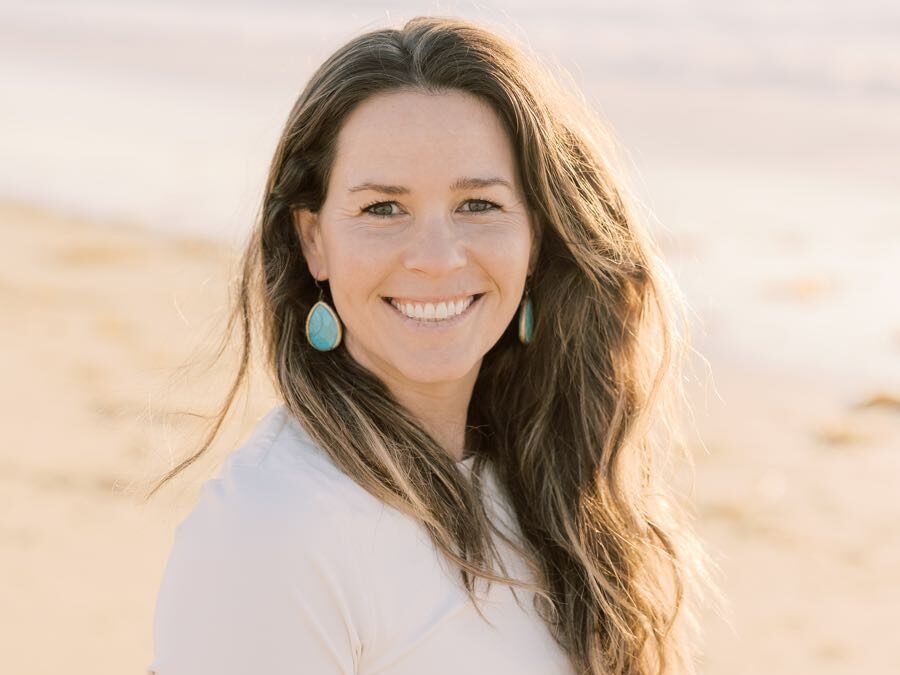

Some people have one great business idea in them. Some people have that idea, execute flawlessly, and call it a career. Morgan Zanotti? Along with her business partner Mark Sisson, she hit the exit jackpot with Primal Kitchen, sold it to Kraft Heinz for $200 million, stayed on as a leader during the transition, and then, at 41, looked around her life and thought, “Let’s do it again.” Except this time, with a family in tow, including her husband and three small kids.
That’s the kind of ambitious restlessness that defines her. Not the type that burns you out, but the kind that keeps you interested in what’s possible.
The Unlikely Path to a Billion-Dollar Lifestyle Brand
Morgan Zanotti’s journey to becoming one of the most successful female founders in natural foods didn’t follow the typical MBA-to-startup pipeline.
She grew up in Chicago, earned a degree in accounting from the University of Colorado Boulder, and then, essentially, did what many bright, curious people do when they’re not sure what comes next: she traveled. For two and a half years, she lived the vagabond life, traveling through South America, Mexico, and Costa Rica. She spent 315 hours on buses. She learned to surf in Ecuador. She waited tables at a resort in Wisconsin. By most conventional standards, she was “taking a break” or “finding herself.”
Before and after her travels she waited tables at her Aunt and Uncle’s Dirty Dancing’esque resort, Coon’s Franklin Lodge, in Northern Wisconsin.
By her own standards, she was learning how to think differently about what was possible.
When she returned to the States, she wasn’t entirely sure what a corporate career looked like for her. But she took a job at a branding and design agency, discovered she had a genuine knack for marketing, and eventually landed at KeVita as their Marketing Director.
It was there, in 2013, that she met Mark Sisson at an event his brand was hosting.
Sisson was already a legend in the ancestral health space. He’d been blogging about primal nutrition and fitness for nearly a decade on Mark’s Daily Apple, built up an audience of millions, and published several bestselling books, including The Primal Blueprint. He had the platform, the credibility, and the vision. But he didn’t have someone to help him turn that vision into a product people would actually want to buy.
When Mark mentioned wanting to start a food company, Morgan jumped at the chance. It wasn’t a sure thing. In fact, it was the opposite. Every food industry advisor told them they were insane.
When Everyone Says You’re Crazy, Maybe You’ve Found Something
In 2015, Primal Kitchen launched its first product: avocado oil mayonnaise. At $9.95 a jar. In a market where the most expensive competitor was around $3.
The reactions were predictable. “You’re crazy. No one will pay for that for mayonnaise,” the experts said.
The conventional wisdom was rock solid. Consumers don’t pay triple the price for condiments, no matter how clean the ingredients. The logic was impeccable.
The logic was also completely wrong.
Morgan and Mark understood something that many food executives missed: there’s a growing segment of consumers who don’t just want to eat better. They’re willing to pay for it. They’re not price-sensitive when the alternative aligns with their values.
They weren’t selling mayonnaise. They were selling a philosophy bottled in a jar.
They ran their first production of 18,000 units, thinking, “If we sell this out in a year, that would be good.”
It sold out in a week.
By 2016, Primal Kitchen was doing $13 million in revenue. Whole Foods started stocking it nationally. Within a few years, they’d expanded to over 70 products across sauces, dressings, condiments, and pantry staples, all built on the same principle: high-quality ingredients, no processed garbage, no artificial nonsense. By 2018, they had a buyer knocking on the door.
Kraft Heinz acquired Primal Kitchen for $200 million. Morgan and Mark didn’t just cash out and disappear. They stayed on. Morgan served as President of the brand through the transition, managing the growth and ensuring the mission didn’t get diluted by the machinery of corporate food production. That’s the part that usually doesn’t get talked about—the integrity of the exit matters just as much as the exit itself.
After five years of stewarding the brand through the Kraft Heinz acquisition, Morgan transitioned into an advisory role. She stayed on the board. She kept her hands in the business that had defined a decade of her professional life. But something was nagging at her. That familiar itch. The feeling that there was another problem to solve, another gap in the market, another thing that didn’t exist yet but probably should.
The Clear Protein Opportunity That Wasn’t in America
Here’s what Morgan observed: clear whey protein had been a massive success in Europe.
Consumers there had figured out that you could take whey protein, strip it of the heavy creaminess that comes with traditional protein shakes, and deliver something that tastes and feels more like sparkling water or juice. It was refreshing. It didn’t sit in your stomach like a brick. It actually tasted good. And it was flying off the shelves across the EU.
In America? Barely a footprint.
The market was still dominated by thick, heavy protein shakes that tasted like chocolate cement. There was a gap between what European consumers had embraced and what American consumers were drinking. It wasn’t that Americans didn’t want the product. Nobody had really brought it to them yet.
Morgan started formulating—18 months of recipe development. The challenge wasn’t just combining clear whey protein with sparkling water. The challenge was making it taste good, having real protein, and avoiding sucralose (the artificial sweetener that many functional beverages hide behind).
Many companies would have compromised. Morgan’s background in CPG meant she understood that the easiest solution is rarely the best one.
Drink WAAY launched in late 2025, first at Whole Foods in regional markets, then expanding nationally into Whole Foods and Sprouts in December and January. WAAY stands for whey. As in the clear whey protein that creates that perfect transparent color and light texture.
But it also just works as a brand name. It’s memorable. It feels a little cheeky. It matches the energy of what the product actually is: a protein drink that doesn’t taste like one. It’s a sparkling beverage that happens to have 10 grams of protein and under 45 calories.
The tagline says, “The Fizzy Little Overachiever.” That’s Drink WAAY. That’s also Morgan.
The Strategy: Aggressiveness Masquerading as Ambition
What’s striking about the way Morgan is approaching WAAY is the speed and the scope. She’s not slowly rolling this out to some niche health food stores. She’s pursuing a national rollout while simultaneously building a DTC business on Amazon and TikTok Shop.
It’s aggressive in a way that seems almost reckless, but it’s not. It’s informed by what she learned at Primal Kitchen about timing, market saturation, and the importance of moving fast in emerging categories.
Her theory is sound: clear protein is a category that’s accelerating globally. It’s still nascent in America. That window where you can own the category doesn’t stay open forever.
Once the category matures, the cost of entry rises, competition intensifies, and margins compress. You move now, or you’re playing catch-up later.
She’s also learned something about her own strengths.
At Primal Kitchen, she managed an increasingly complex portfolio of condiments, sauces, dressings, and supplements. WAAY is more focused. One product category. One problem to solve. One message to deliver.
It’s almost like she’s testing whether the thing she loves most about building brands is the early stage—that first product, that first market fit, that proving-something-is-possible moment.
Building a Business While Building a Life
One of the things Morgan is unusually candid about is that she’s doing this while being an active mom to three small children. That’s not a side note. That’s the actual context.
At Primal Kitchen, she was ambitious and successful. But she also had the kind of time and energy that growing companies tend to demand. Now, she’s set up a small, remote team built through referrals. Her sales leader is a friend. Her marketing person is someone she trusts. She’s being very intentional about who’s in the room because she doesn’t have endless hours to manage people or clean up mistakes.
She’s also been very deliberate about her own mental health and sustainability. She plays tennis. She surfs. Those aren’t hobbies. They’re forced presence.
They’re the only way to completely detach from the mental loop of building a company. She sees a therapist. Not because anything went wrong, but because sustaining this level of ambition across decades requires actual support.
She’s been open about her plan to eventually step away from operating businesses and move into advising and consulting. She doesn’t need to prove anything else to anyone. The $200 million exit already did that. But she’s got an itch right now. The opportunity in front of her feels real. And so, she’s building.
What Morgan Teaches Us About Brand Building and Entrepreneurship
Morgan’s story offers three lessons for anyone thinking about building something:
First, the market opportunity matters more than the execution burden. Primal Kitchen succeeded because there was a massive, underserved group of consumers who wanted to eat differently but couldn’t find products that reflected their values at any price.
WAAY is built on the same principle. Morgan identified a category that had already proven successful in another market and asked whether America was ready for it. That’s not revolutionary thinking. That’s pattern recognition. Look for where consumer behavior is already shifting. Look for where one market has solved a problem that another market hasn’t. Move fast.
Second, the team around you is everything, especially when you’re building a second company and managing a life outside of work. At Primal Kitchen, Morgan had Mark’s platform and credibility to lean on.
At WAAY, relationships and trust are everything. Rather than hiring an agency, she’s asking a friend. Instead of bringing in a consultant, she’s building a small, aligned team that understands the mission because she carefully selected them. Scale later. Get the right people first.
Third, don’t wait for the perfect moment. Morgan was successful at Primal Kitchen and had options—retirement was possible, part-time consulting could have been a career endpoint. Instead, she felt an itch.
She saw an opportunity. And she moved on it, even though it meant doing it differently than the first time around, even though it meant balancing it with motherhood, even though it would have been entirely reasonable to sit back and enjoy the win. The companies that matter are usually built by people who are still restless after they’ve already won once.
Finding Her WAAY
Morgan Zanotti doesn’t fit the typical founder archetype, and that’s precisely what makes her interesting.
She’s not the 25-year-old Stanford dropout who mortgaged their future on a moonshot, nor is she the serial entrepreneur chasing the next billion-dollar exit to prove something to the world. Instead, at 41, she’s already won and already proven herself—she’s building because the work is genuinely interesting and the market gap is real.
That’s a different kind of founder.
That’s someone who builds because they see something missing, not because they need the validation. WAAY might become the subsequent billion-dollar acquisition. Or it might become a solid, independent brand that does its thing in the clear protein space.
Either way, Morgan’s already figured out the part that actually matters having the clarity to know what you want to build, the wisdom to build it on your own terms, and the fizz to keep going even after you’ve already made it.
That’s not overachieving.
That’s just being awake to what’s possible.
.

Connect with Jeff at The Marketing Sage Consultancy. Interested in setting up a call with me? Use my calendly to schedule a time to talk. The call is free, and we can discuss your brand and marketing needs.
Would you like to read some testimonials about my work? Click here.
If you want to learn more about my new offering, The Trusted Advisor Board, you can click here to learn the details. Feel free to email me at jeffslater@themarketing sage.com or text 919 720 0995. Thanks for your interest in working with The Marketing Sage Consultancy.
.