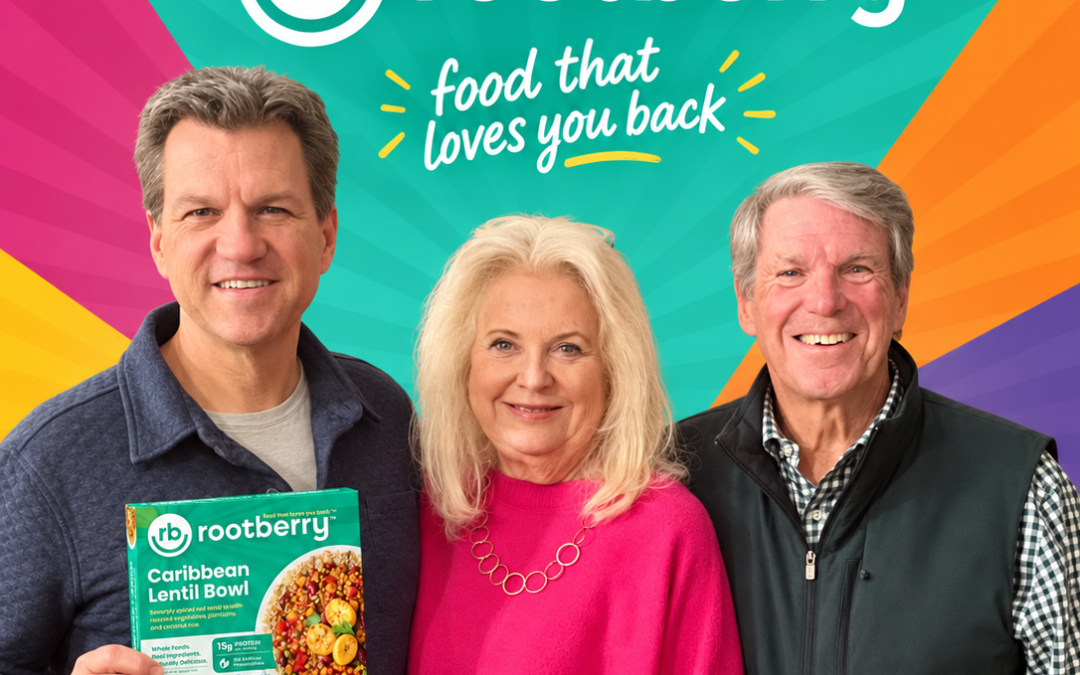
How Marc Connor is building rootberry
Some founders stumble into the food business. Marc Connor was raised in it.
I met Marc through my friend Mike Schall, who has a gift for connecting people who should know each other. Mike was right again. A few minutes into our call, I knew I wanted to tell this story.
The Son of a CPG-er
Marc jokes that he is “the son of a CPG-er.” His dad, Kevin Connor, spent his entire career in consumer-packaged goods, and the family moved every two or three years to follow the work. Marc’s mom, Nancy Connor, managed the household. They moved to Cincinnati, Columbus, Monterey, New Jersey, Rhode Island, Pittsburgh, and St. Louis, all before Marc left for college. When people heard how often they moved, they would ask if his dad was in the military. “No,” Marc would tell them. “CPG.”
If you grow up in this business, you get it.
His dad worked his way through marketing and general management at Drake’s Snack Cakes, Heinz, ConAgra, Chiquita, and others. Marc’s favorite memories are from his years at Drake’s in New Jersey. The snack cakes came with comic book cards, and Marc was a comic book kid. A Superman movie promotion let the family go to the premiere. For a young boy, nothing gets cooler than that.
Here is the detail that stopped me. In the mid-1980s, his dad ran the frozen business at ConAgra when the company launched Healthy Choice. I spent a few years at ConAgra myself, so that one hit close to home. Decades later, his son would build his own better-for-you frozen meal brand. You can’t make this stuff up.
A Detour Through Hollywood
Marc didn’t plan on a career in food. At Miami University in Ohio, he wanted to go into broadcast news. Then a professor stood in front of 250 students and told them none of them would be the next Tom Brokaw or Jane Pauley. He switched his focus to communications.
After college, he had two internship options. One was with Procter & Gamble. The other was an unpaid spot at New Line Cinema in Los Angeles. He took the unpaid one in Hollywood. He laughs about it now as an early lesson in what not to do.
Then life stepped in. His dad lost his eyesight. When he regained sight in one eye, he decided to start his own company, and Marc promised to help. In January 1994, Marc moved home to join him. The business was a sales and marketing company focused on the mass and club channels. Over time, it represented brands like Nathan’s, Cape Cod, Mrs. Fields, and Chiquita.
That was Marc’s real education. Lots of hustle. Lots of grunt work. And a front-row seat to how products actually get onto shelves and into shopping carts. He has worked in and around consumer products ever since, including leadership roles at Build-A-Bear Workshop and Midas Hospitality.
The Checkup That Changed Everything
About six years ago, Marc turned 50 and went to the doctor mostly to check a box. The news was not what he expected. He was pre-diabetic. His blood pressure and cholesterol were too high. His doctor wanted to put him on medication. His youngest child was five years old at the time.
Marc told me he still looked in the mirror and saw the guy he was at 30. He admits now that he was fooling himself.
That day, he went back to the office and vented to his boss at Midas Hospitality. His boss asked if he had ever seen the documentary Forks Over Knives. It turned out his boss was on his own health journey, about six months ahead of Marc. He kept dropping little seeds. A documentary here. A book by Dr. Michael Greger there.
Marc started to see food differently. He realized he had grown up during the era when packaged food completely redefined what food even was. He wanted to eat better, but like most busy people, he didn’t have the time to cook or the know-how. He could find fast, convenient food he loved, but it wasn’t good for him. He could find food that was good for him, but he didn’t really enjoy it. He couldn’t find both.
That gap became rootberry. (Yes, rootberry is all lower case)
Part of Marc’s job at Midas was scouting new businesses the company could enter. During COVID, he and his boss kept talking about this idea, but it didn’t fit a hospitality company. Marc had been what he calls a “wantrepreneur” for years, the guy with ideas who never leaped. This time he did, with his former boss as his partner. rootberry launched in St. Louis in 2021.
From a Mall Kitchen to the Freezer Aisle
The company started by making fresh, plant-based meals from scratch and delivering them around St. Louis—no subscription required. The team cooked everything themselves in a former Weber Grill restaurant at the end of a mall. Dierbergs, the St. Louis grocer, became the first retail partner.
I had to smile when Marc told me this. From 1975 to 1989, my wife and I built a wholesale baking business called Rachel’s Brownies. We started fresh, in the deadest shopping center in Malvern, Pennsylvania, where nobody ever walked by. We learned the same lesson Marc did. Fresh is beautiful, and it is brutal. If you don’t figure out how to make it efficiently, the economics will eat you alive. For us, the answer was frozen.
Marc reached the same conclusion. He is honest that they got some things right and some things wrong. The biggest challenge was the unit economics of a new business and how much capital it takes to scale. So rootberry moved to frozen and to a co-manufacturer.
Here is the irony. Marc had avoided frozen in the first place because he didn’t believe frozen food could taste great. Everything he tried left him disappointed. So the job became taking everything the team had learned about flavor and nutrition and proving it could live in the freezer aisle.
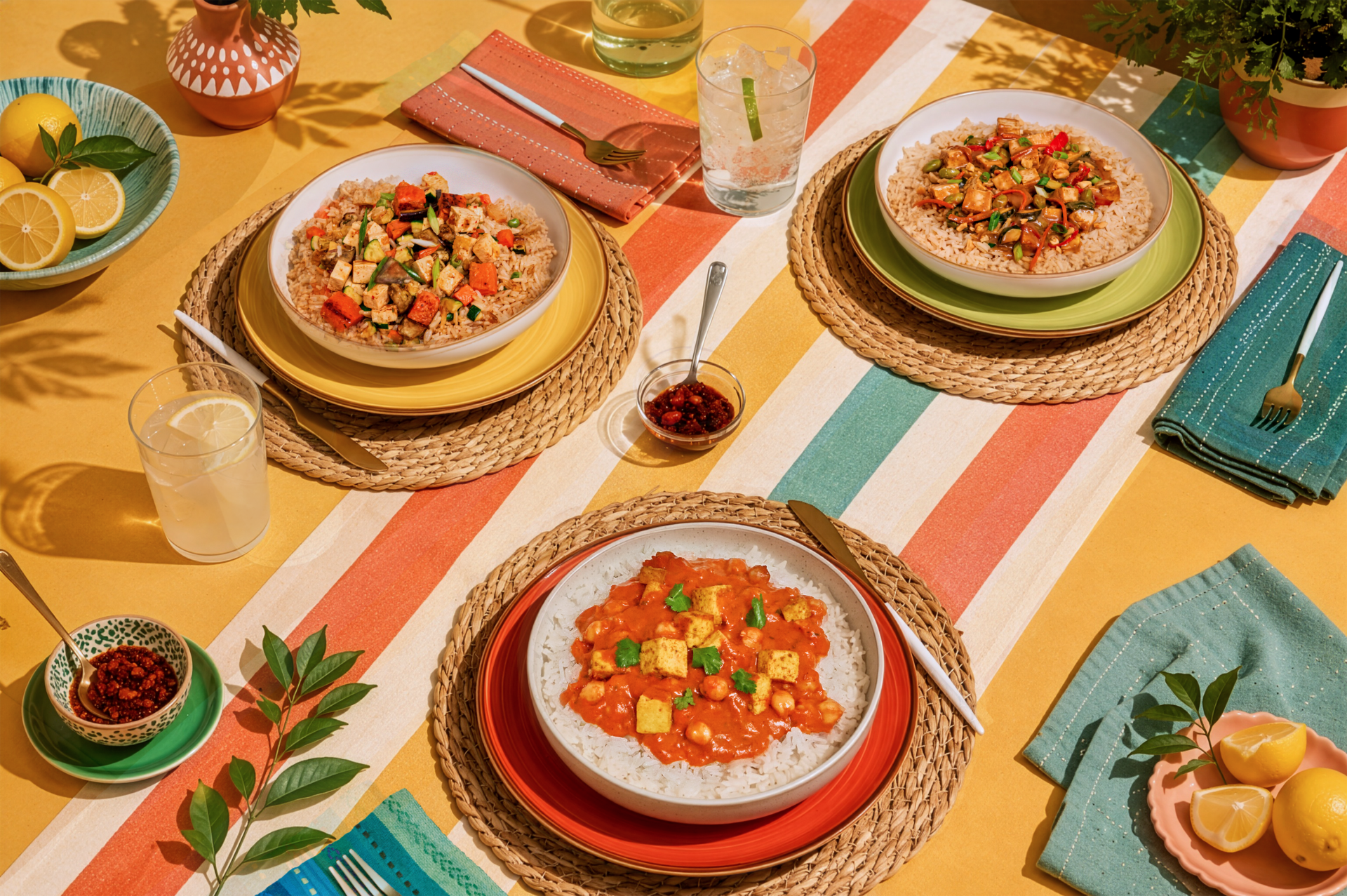
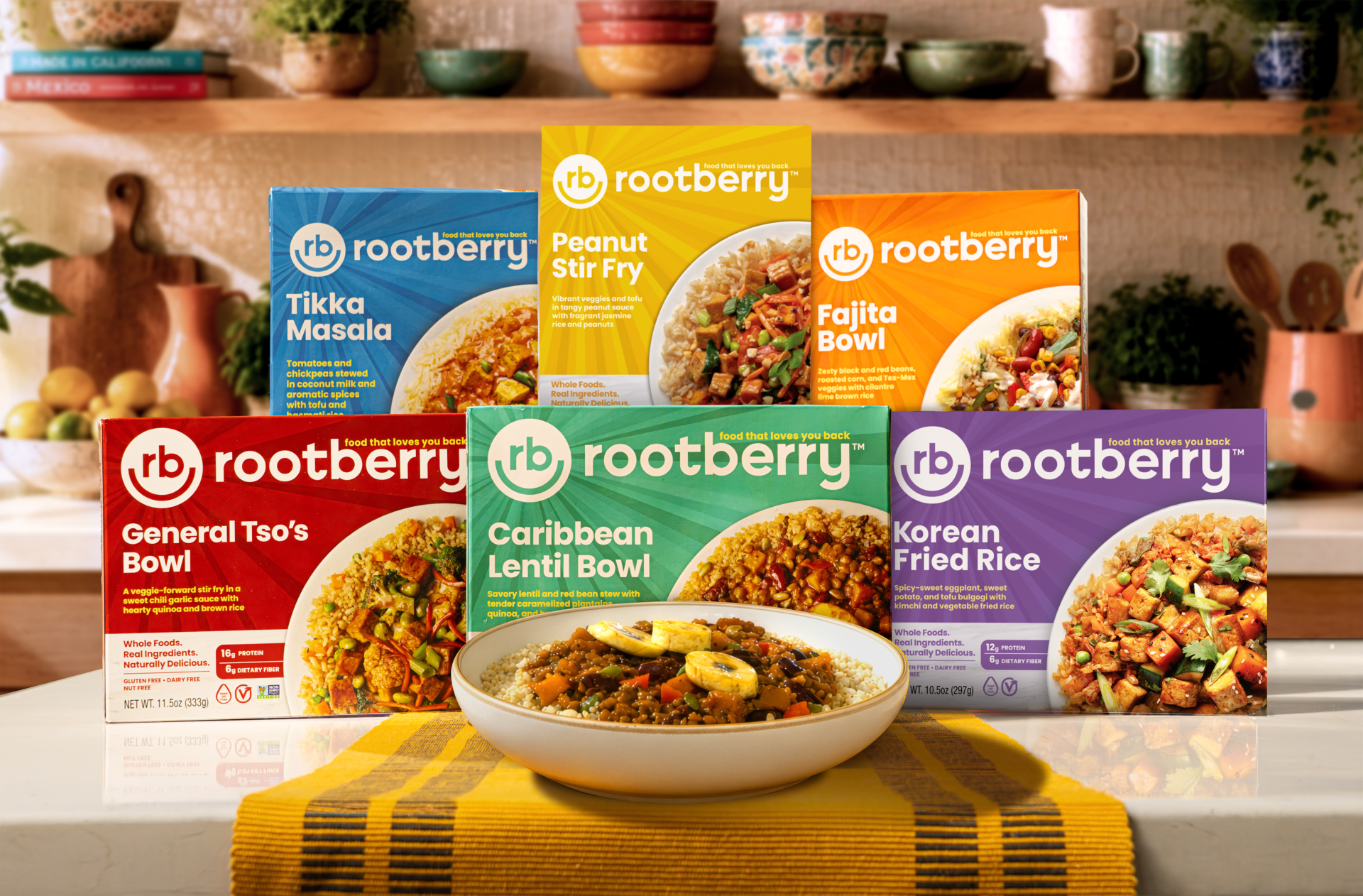
It is working. The business has roughly doubled each year. rootberry is now in about 1,600 to 1,700 stores, close to twice where it was a year ago. That includes Sprouts Farmers Market nationally plus regional chains in the Upper Midwest and on the West Coast. The meals are globally inspired, with options like Caribbean Lentil Bowl, Korean Fried Rice, Peanut Stir Fry, and General Tso’s Bowl.
My favorite number is a quieter one. At Dierbergs, where rootberry has been on shelves for two and a half years, sales velocity is up 20% this year. When people find rootberry, they stay.
Three Key Takeaways
1. Let the numbers make the hard call. Founders fall in love with their first model. Marc believed in fresh. That was why he started. But he let the unit economics decide, and that choice is why rootberry is in more than 1,600 stores instead of a few dozen. If your model can’t scale, a better ad campaign won’t save it. Fix the model first, then pour fuel on the fire.
2. Look for shared values and moments, not just demographics. Marc was candid with me. rootberry’s shoppers don’t fit a neat box. He sees college students, empty nesters, and everyone in between. What they share is that they care about what they put in their bodies. That is a great problem to have, but it means the brand can’t lean on a traditional target profile. I push founders to define their brand around the occasion and the job it does. When my daughter hands my grandson a cold Orgain protein shake at 2:30 after school, she isn’t buying a demographic. She is solving a moment. The brands that name the moment are the ones people remember and talk about.
3. Your story is your strategy. A childhood shaped by CPG. A dad who was there when Healthy Choice was born. A wake-up call at 50 with a five-year-old at home. You can’t invent a founder story like that. And Marc tells it without preaching. He still eats French fries. He believes everyone has to find their own healthy and that it changes over a lifetime. That honesty builds more trust than any health claim on a box. Too many founders hide the personal story because they think it isn’t professional. Lead it.
Getting to the Root of It
There is something poetic about this story. A kid who was uprooted every two or three years finally put down roots in St. Louis, the last stop on his family’s CPG tour. His dad sold snack cakes with Superman on the box. Marc is selling something with a different kind of superpower: a meal that tastes great and doesn’t drag you down.
They say the apple doesn’t fall far from the tree. In Marc’s case, I think it’s the root.
rootberry’s tagline is “food that loves you back.”
Next time you’re at Sprouts, grab a bowl and see if it loves you back. As for me, I’ll be rooting for rootberry.
These roots run deep.
Connect with Jeff at The Marketing Sage Consultancy. Interested in setting up a call? Use my calendly to schedule a time to talk. The call is free, and we can discuss your brand, marketing needs, and challenges.
Feel free to email me at jeffslater@themarketingsage.com or text 919 720 0995. Thanks for your interest in working with The Marketing Sage Consultancy.