How Services Companies Can Effectively Empower Employees on Relevant Social Media at Scale
It is 4:45 in the morning at a regional hospital outside Charlotte.
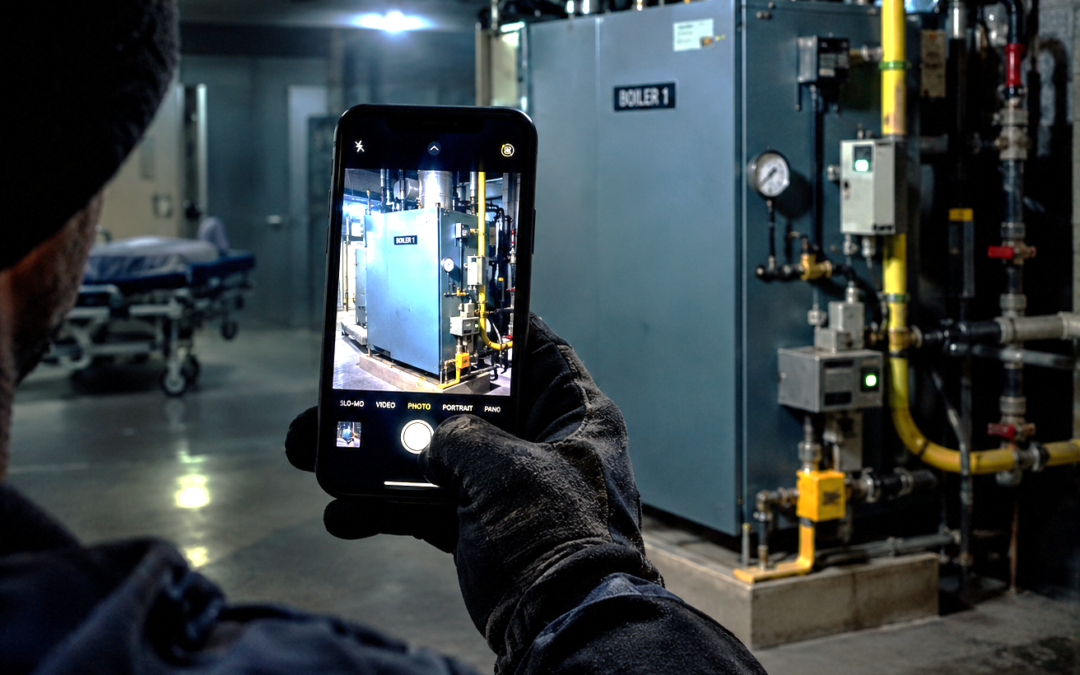
Marcus has been on site since 2 a.m. The boiler that heats the surgical wing went down overnight, and the first procedure starts at 7. He traces the problem to a failed ignition module, swaps it out, fires the system back up, and checks the pressure twice.
At 6:10, the heat comes back on.
The nurses and doctors walk into a warm building. Nobody knows anything was wrong.
That is a job done perfectly. And nobody saw it.
Marcus works for a company I’ll call Keystone Facility Services. Twelve thousand employees. Commercial cleaning, HVAC, and building maintenance across 30 states. They specialize in hospitals.
Its marketing department has nine people, and every quarter they scramble to find fresh case studies.
Meanwhile, Marcus has a phone in his pocket and a story that would sell Keystone better than anything in the sales deck.
Multiply Marcus by 12,000, and you start to see the problem. You also start to see the opportunity.
The Math Most Leadership Teams Miss
Here is the uncomfortable math. Nine marketers are trying to describe work they rarely witness. Twelve thousand employees witness it every single day and rarely talk about it.
Every facilities company says the same things on its website. Responsive. Reliable. 24/7. Those words have stopped meaning anything because everyone uses them. A prospect evaluating a new facilities partner can’t tell one claim from another.
But a 40-second video of a technician explaining how he got a hospital’s heat back on before the first surgery? That isn’t a claim. That’s proof.
This is what employee-generated content, or EGC, really is. It is not employees reposting corporate press releases. It is the people closest to the work showing what the work actually looks like. Buyers trust people more than they trust brands, and they trust the person holding the wrench more than anyone.
Why Service Companies Need This Now.
I spend most of my time with food and beverage brands, and they have a built-in advantage. They have something to photograph. A package. A shelf. A plate. A customer can see the product before they buy it. Employee-generated content can help them – but it is a bigger need in the service industry.
Service companies often work behind locked doors, after hours, in mechanical rooms, and on rooftops. Clients often only notice the service when it fails.
That changes what EGC does for you. For a product company, employee content is usually about culture and behind-the-scenes color. It’s nice to have, and most CPG firms can improve it.
But for a service company, employee content is the product demo. It makes invisible work visible.
In a service business, your employees are your packaging.
They need to show their work so the world can see the value they deliver and the benefit of reliable maintenance.
Training at Three Levels
You can’t train 12,000 people the same way. The CEO, the account executive, and the night-shift technician each have a different role, so each needs a different kind of training.
Executive and HQ: Go First
Nothing happens until leadership models it. A memo encouraging employees to share content gets ignored. A CEO who rides along with a technician for a morning and posts a 60-second clip about what she learned sends a signal no memo can match.
The executive team has three jobs. First, explain the why in plain language: we want the world to see the work you already do. Second, align legal, HR, and communications on one set of guardrails, approved once, not post by post. Third, show up. If senior leaders aren’t willing to share, nobody else will believe it’s safe.
It also helps to name one owner at HQ. Usually that’s marketing, paired with a field operations leader who knows which stories are worth telling.
Sales: Turn Field Proof Into Pipeline
Sales teams are the connectors. They hear about great work from clients, and they need proof to win new ones.
Train them to ask two questions after every strong client moment: “Who on our team made this happen?” and “Would you be comfortable with us sharing it?” Then give them a simple shared library of approved clips they can drop into follow-up emails, proposals, and LinkedIn posts. A rep who sends a prospect a real video from a similar building is having a very different conversation than one who sends a brochure.
Over time, that library becomes one of the most valuable sales assets the company owns.
Field: Make It Easy and Safe
Field employees don’t need marketing training. They need permission and a simple routine. At Keystone, it might be three steps: capture, explain, share.
Capture a before and after. Explain in 30 seconds, in your own words, what the problem was and how you fixed it. Then choose your path. Post it to your own LinkedIn, or submit it to an internal channel so marketing can use it. Some people love being on camera. Some never will. Both should have a way to participate.
Give them a few prompts so the blank screen isn’t intimidating. What was broken? What did you do? What would have happened if you hadn’t?
Video Is the Training Tool That Scales
You can’t fly trainers to 400 job sites. And nobody in the field is going to read a 22-page social media policy.
Short training videos solve both problems. Three to five minutes each, shot on a phone, featuring real employees rather than actors. Practice what you preach. If you want people to create authentic phone video, train them with authentic phone video.
Keystone could build a starter series of five: why we’re doing this, how to shoot a good 30-second clip, what to keep out of the frame, how to ask a client for permission, and where to submit. Each one is short enough to watch in the truck between jobs. Add a three-question check at the end of the guardrails video, and you have a record that everyone posting has been trained. That’s exactly what legal will want to see.
Video is especially powerful for teaching the guardrails a senior leadership team cares about. Show a clip with a client’s logo clearly visible on the wall, then show the same clip reframed to avoid it. That five-second comparison teaches more than a paragraph of policy ever will. Here is what a solid set of guardrails might cover.
The dos:
- Show the work and explain the problem and the fix in plain language.
- Give credit to your teammates.
- Wear your safety gear on camera, every time.
- Ask permission before filming at any client site.
- Be yourself. Polish is optional. Honesty isn’t.
The don’ts:
- No client names or logos without written approval.
- No faces of client staff, patients, tenants, or the public.
- No screens, badges, documents, or addresses in the frame.
- No pricing, contracts, or complaints about clients or competitors.
- Nothing from sensitive areas, like patient floors or secure facilities, without clearance.
Notice what isn’t on that list: pre-approval for every post. The goal is guardrails, not gates. If every clip needs three sign-offs, the program will die in a week. Train people well, trust them, and handle the rare mistake when it happens.
Voluntary Is the Whole Point
I’ll admit I was skeptical of employee advocacy programs for a long time. Most of the ones I saw amounted to HR emailing pre-written posts and asking everyone to share them. That isn’t employee content. That’s a press release with more signatures.
Mandate this work, and you get compliance content. Stiff, forced, and easy to spot. Make it voluntary, and you get pride content. That’s the kind people actually stop scrolling for.
So recognize it instead of requiring it. Play the best clips at company meetings. Name the technician. Feature a story of the month. Let people see that leadership notices.
And don’t worry about participation rates. If just 5 percent of Keystone’s employees take part, that’s 600 storytellers. That’s more than 60 times the size of the marketing department, and each one has firsthand proof.
There’s a bonus most leaders don’t expect. This content recruits. The next great technician is far more likely to apply after seeing Marcus explain his work with real pride than after reading a job posting.
Three Key Takeaways
- Your workforce is your proof. Every service company makes the same promises. Employee-generated content replaces claims with evidence from the people who actually do the work.
- Train by level, and train with video. Executives model it, sales turns it into pipeline, and the field captures it. Short phone-shot training videos teach the dos and don’ts faster and better than any written policy.
- Guardrails, not gates, and always voluntary. Approve the rules once, then trust your people to follow them. Recognition builds momentum. Mandates build eye rolls.
Marcus will keep fixing boilers at 4:45 in the morning whether anyone notices or not. That’s who he is.
The only question is whether your company lets the world see it.
Connect with Jeff at The Marketing Sage Consultancy. Interested in setting up a call? Use my calendly to schedule a time to talk. The call is free, and we can discuss your brand, marketing needs, and challenges.
Feel free to email me at jeffslater@themarketing sage.com or text 919 720 0995. Thanks for your interest in working with The Marketing Sage Consultancy.