
How Chomps Took a Bite Out of the Slim Jim’s Market by Taking the Opposite Approach.

When I was VP of Marketing at GoodMark Foods in the 90s, we were the company that owned Slim Jim.
I thought we owned portable protein space—shelf-stable meat snacks with an attitude.
We had the iconic “Snap into a Slim Jim” campaign with Randy Savage, AKA Macho Man, over a billion-unit annual production and $250 million in revenue.
We were the undisputed king of meat sticks; we didn’t see disruption coming.
Slim Jim generated around $575 million in revenue in 2015, with more than a billion Slim Jim snacks produced annually in at least 21 varieties.
When we were sold to ConAgra, I stayed on for a short time, and the brand continued to grow.
However, ConAgra doesn’t typically break out individual brand revenue in its public financial reports.
What we do know from the recent economic data is that:
- ConAgra Brands generated fiscal 2024 net sales of more than $12 billion, with $12.27 billion in fiscal year 2023
- As of April 2025, ConAgra’s trailing twelve months’ revenue is $11.73 billion
- The company has been experiencing declining sales, with recent quarterly reports showing net sales falling 6.3% to $2.84 billion in Q3 2025
Given that the 2015 figure of $575 million is nearly a decade old and ConAgra has been facing challenging market conditions with declining sales in recent quarters, it isn’t easy to precisely estimate Slim Jim’s current revenue.
However, considering inflation and market growth over the past decade, even with recent challenges, Slim Jim likely still generates somewhere in the $600-800 million range annually, though this is an educated estimate rather than confirmed data.
My hunch is that Slim Jim’s revenue is fast approaching $1B. Slim Jim remains one of ConAgra’s most valuable properties, and it is still positioned as the “#1 brand of meat sticks.”
Then Pete Maldonado and Rashid Ali showed us how to lose a category you thought you owned forever.
The Founders Who Saw What We Missed
In 2012, while we were doubling down on our edgy marketing and familiar formulations, two friends with business backgrounds but zero meat industry experience were doing something that should have terrified us: they were reading ingredient labels.
Pete Maldonado, who ironically grew up riding his bike to 7-Eleven for burgers and Slim Jims, had discovered the paleo diet and couldn’t find a clean, portable protein option.
Rashid Ali, a business operations consultant from Des Moines, saw the same white space.
After months of sampling hundreds of jerky sticks in stores, they realized what we at Slim Jim had ignored: consumers were evolving faster than we were.
“Chomps didn’t just enter the market; they earned their place with an authentic story, not a manufactured response to a trend.” Ron Mills, Industry Expert
Here’s what’s brilliant about their approach: They went to stores, bought all the meat sticks they could find, looked at the USDA labels, found the co-packers, and reached out to them directly.
While we were focused on defending our market share using the same old tactics, they reverse-engineered our entire supply chain to create something better.
The Clean Label Revolution We Ignored
At Slim Jim, we knew our ingredient list wasn’t pretty—sodium nitrite, corn syrup, mechanically separated chicken, and a parade of preservatives that required a chemistry degree to pronounce. We used to joke about mechanically separated chicken all the time.
Our agency friends (the Steves), from North Castle Partners once created a brilliant ad that said, that Slim Jim’s was fat-free, but you pay for the rest.
We thought our brand equity was strong enough to weather any clean-eating trends.
We were wrong and we missed the opportunity for a new brand, like Chomps.
Chomps didn’t just create a product—they built a new category. As they outgrew their Slim Jim consumption, our consumers now had a place to go for portable protein with clean ingredients.
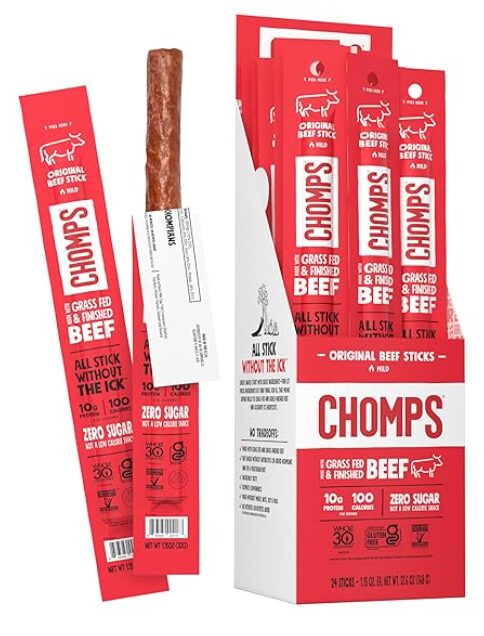
Their snack sticks are 100% grass-fed, finished beef, venison, paleo, and Whole30-approved and certified gluten-free.
Where Slim Jim delivers 6 grams of protein per 32-gram serving, Chomps provides 10 grams. More importantly, they did it without the laundry list of chemicals our R&D team insisted were “necessary for shelf stability.”
The positioning was surgical: “like a healthy Slim Jim” but definitively a better Slim Jim alternative.
They weren’t trying to reinvent the wheel but perfecting it for a consumer base that had grown on our products but outgrown our ingredients.
Building Purpose Through Opposition
This is where Chomps taught the entire CPG industry a brand-building masterclass. Instead of trying to compete with us on our terms—loud marketing, broad distribution, lowest everyday denominator appeal—they positioned themselves as our philosophical opposite.
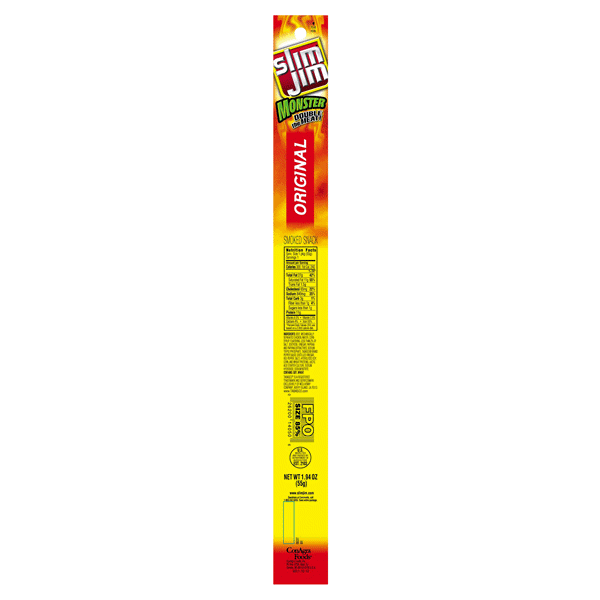
While we marketed to the “Macho Man” Randy Savage demographic with aggressive, testosterone-fueled messaging, Chomps spoke to health-conscious consumers who wanted portable protein without compromise.
While we prioritized shelf stability and cost efficiency, they prioritized ingredient transparency and sustainable sourcing. While we chased mass market appeal, they built a passionate community of advocates.
Their consistent emphasis on strong unit economics and profitability and an ambition to thoughtfully and patiently develop a billion-dollar brand showed a strategic discipline we lacked in our pursuit of quarterly growth targets.
The Market They Created While We Watched
The numbers tell the story we didn’t want to see coming.
Chomps is poised to bring in close to $500 million in sales, but it can’t keep up with demand despite producing two million meat sticks daily. It was bootstrapped from a $6,500 investment to a brand worth over $800 million.
“With bold, benefits-forward packaging and strategic retail wins at Trader Joe’s and Costco, Chomps scaled smart, not fast.” Ron Mills, Industry Expert
But here’s what stings: they didn’t steal our customers—they created new ones and, lapsed Slim Jim consumers.
They tapped into the crossover between the fitness community, paleo dieters, busy professionals, and health-conscious parents. These weren’t people choosing between Chomps and Slim Jim; they had written off the entire meat stick category until Chomps gave them a reason to reconsider.
They started as a mail-order service similar to Omaha Steaks. Then, they shifted to individually wrapped meat sticks, showing the pivot agility that large CPG companies struggle with. While we were locked into our manufacturing processes and retail relationships, they were experimenting, iterating, and optimizing.
The Lesson for Every Established Brand
Chomps succeeded because they understood something we missed: being the opposite of a dominant brand isn’t a weakness but a strategy. They didn’t try to out-Slim Jim Slim Jim. They became the anti-Slim Jim, and that positioning was worth hundreds of millions of dollars.
“When inflation pushed consumers from jerky to sticks, Chomps was already there with a clean-label portfolio ready to fill the shelf space.” Ron Mills, Industry Expert
Every ingredient we couldn’t remove became their competitive advantage. Every demographic we couldn’t reach became their target market. Every value we couldn’t embody became their brand pillar.
Chomps turned our Slim Jim legacy
into their launch pad.
The most painful part? We had all the resources, distribution, and brand recognition to do precisely what they did. We couldn’t see past our success to recognize that the market was moving without us.
Three Key Takeaways
1. Your brand legacy can become your blind spot. When you’re the dominant player, it’s easy to assume that consumer preferences will always bend toward your strengths. Chomps succeeded because they identified the growing gap between what Slim Jim offered and what modern consumers wanted. Don’t let your historical success prevent you from seeing present-day opportunities.
2. “Clean” beats “cheap” in the premiumization economy. Consumers are increasingly willing to pay more for products that align with their values and health goals. Chomps proved that transparent ingredients, sustainable sourcing, and higher protein content could command premium pricing while building massive scale. Quality and clean labels aren’t just niche trends but the new table stakes. According to Ron Mills, “In a world waking up to the risks of ultra-processed food, Chomps positioned themselves perfectly—and out-marketed everyone else doing it.”
3. Opposition positioning is a viable path to billion-dollar brands. Instead of trying to compete directly with established players, Chomps built their entire brand identity around being everything Slim Jim wasn’t. This wasn’t just product differentiation—it was philosophical differentiation. When you can’t outspend the incumbent, you can outposition them by becoming their principled opposite.
The author, Jeff Slater served as VP of Marketing at Slim Jim and has since worked with emerging CPG brands on positioning and growth strategy. Ron Mills was the National Accounts Manager at GoodMark Foods/Slim Jim and a fractional sales and marketing leader at Evolution Mills. You can reach Ron at evolutionmills@gmail.com
This post is written by a food entrepreneur who built a successful multi-million-dollar business from scratch, It took my wife and I thirteen years to get to a successful exit. I have done what I am recommending. If you need help, let’s talk. Connect with Jeff at The Marketing Sage Consultancy. Interested in setting up a call with me? Use my calendly to schedule a time to speak. The call is free, and we can discuss your brand and marketing needs.
If you want to learn more about my new offering, The Trusted Advisor Board, you can click here to learn the details. Feel free to email me at jeffslater@themarketing sage.com or text 919 720 0995. Thanks for your interest in working with The Marketing Sage Consultancy.