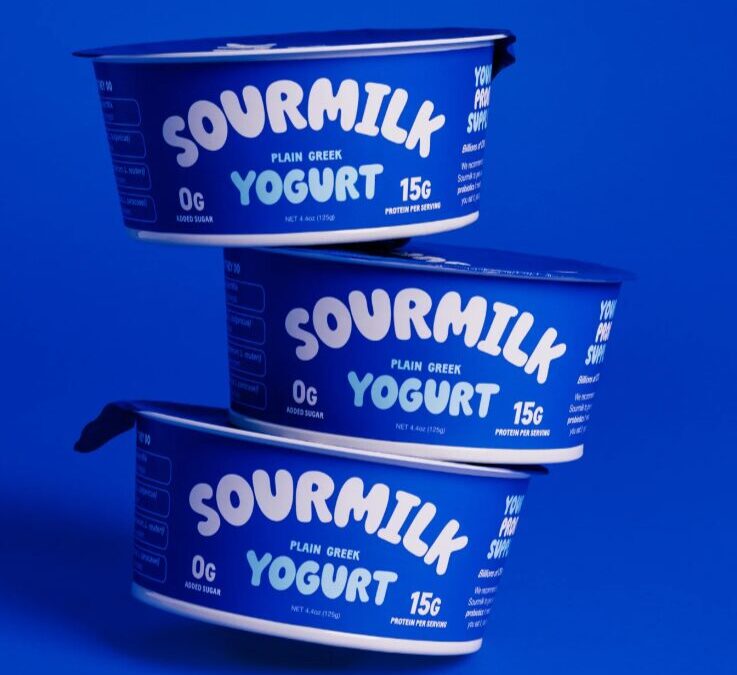
When Elan Halpern and Kiki Couchman set out to solve a problem they kept running into, they didn’t envision themselves launching a probiotic yogurt company.
But that’s precisely what happens when you’re obsessed with gut health, frustrated with existing options, and stubborn enough to believe there’s a better way.
The problem was persistent but straightforward: Greek yogurt, despite being loved by millions of Americans, is basically broken as a delivery mechanism for probiotics. Most yogurts on the shelves don’t contain the right bacterial strains or quantities actually to make a meaningful difference in your gut health.
If you want real probiotic benefits, you’re typically stuck buying expensive supplements that taste like cardboard and feel like a chore to take every morning.
That’s where Sourmilk comes in.
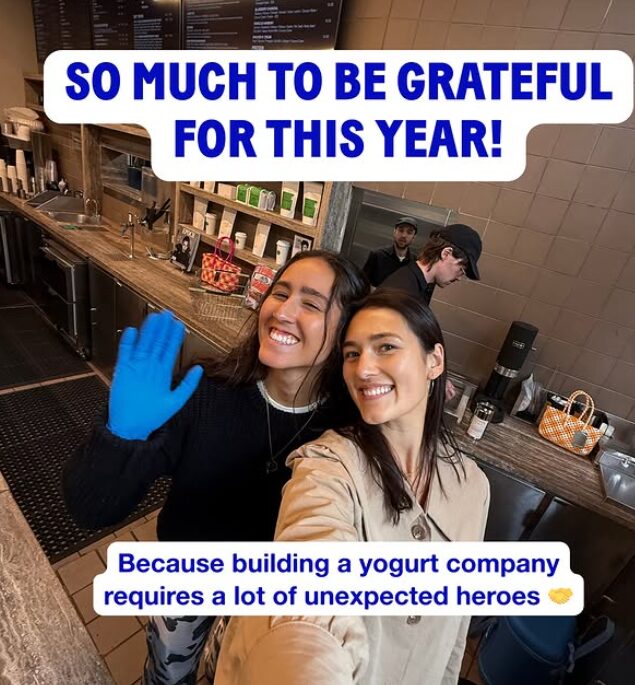
Instead of forcing consumers to choose between a yogurt they enjoy eating and a supplement they need to take, Elan and Kiki decided to create something that could be both.
They engineered a Greek yogurt explicitly designed as a functional food, built around Lactobacillus reuteri, a probiotic strain typically found in clinical supplements. Except this time, it’s in a yogurt that tastes good and costs less than buying a bottle of probiotics.
“Yogurt is consumed by 92 percent of US households,” Elan told me during a recent meeting. “Why are we making people buy their gut health in a bottle when they could just have a yogurt they actually want to eat?”
It’s the kind of obvious insight that somehow nobody else acted on.
Building Demand Before Launch
One of the smartest things Sourmilk did was resist the urge to go straight into retail.
Instead, they tested the market through what they call “drop sales,” a decidedly low-tech approach to a high-concept product. Over the summer, they hit the streets in New York with hand-stickered cups of yogurt, selling 8,000 units directly to consumers through pre-order-style transactions.
This wasn’t a growth hack or a trendy marketing stunt.
It was a deliberate strategy to validate demand and gather direct feedback before committing to the complexities and costs of retail distribution. It worked, too. Every cup sold by hand came with a conversation, a genuine interaction with someone who wanted what they were building.
There was another practical benefit hiding in the drop sales model: it helped them sidestep the traditional manufacturing bottleneck.
Custom packaging usually comes with a three-month lead time. But when you’re hand-stickering cups and moving fast, you’re free to get to market before the machinery of typical food business bureaucracy can slow you down.
“We gathered insights we never would have gotten sitting in a focus group,” Elan explained—real people, honest feedback, real momentum.
Now they’re in 10 NYC grocery stores, self-distributing to understand better how their product moves through retail before they scale up with a traditional distributor. It’s a measured approach from two founders who understand that moving fast doesn’t always mean scaling fast.
The Brand That Doesn’t Lecture You
Walk down the supplement aisle at any health food store and you’re confronted by a very specific brand aesthetic: clinical, sterile, aggressively focused on science in a way that feels more pharmaceutical than food. Some products make you feel like you’re taking your medicine rather than enjoying a meal.
Elan and Kiki made a deliberate choice to go in the opposite direction.
Sourmilk is playful. Friendly. The kind of brand that describes itself as “your favorite Greek yogurt…disguised as a probiotic supplement.”
It’s approachable in a way that existing probiotic brands aren’t. The goal isn’t to make you feel like you’re doing something medical. It’s to make you feel like you’re eating something you actually want.
This positioning matters more than it might seem.
If Sourmilk becomes just another health supplement disguised as food, it stays niche. But if they can genuinely be the Greek yogurt people reach for because they like it, with the probiotic benefit as a bonus, they’ve cracked something bigger—mass appeal rather than supplementing-aisle obscurity.
“Health food companies always trend toward this sterile aesthetic,” Elan said. “We wanted to be different. We wanted to be normal.”
This brand philosophy will likely evolve as they expand beyond NYC, but the foundation is clearly intentional. These aren’t founders who are trying to trick people into taking probiotics. They’re trying to make gut health accessible without feeling like a sacrifice.
Three Gutsy Takeaways
One: The Right Problem Is Already Half the Solution
Sourmilk didn’t emerge from a brainstorming session about yogurt trends or a gap analysis of the probiotic market. It came from noticing something broken in plain sight.
Ninety-two percent of American households buy yogurt.
Probiotics are becoming more recognized as essential to health. Those two things weren’t connected. Once you see a mismatch that clear, the actual solution becomes obvious.
Two: Go-to-Market Strategy Matters as Much as Product
For a food company, manufacturing and distribution are typically complex parts.
Sourmilk’s founders understood this early and built their launch strategy around learning rather than maximizing short-term sales. The drop sales model wasn’t just a brilliant marketing move. It was a way to validate product-market fit before the company became trapped by retail commitments or distributor contracts.
They’re now in retail, but they got there only after proving the demand was real.
Three: Brand Positioning Can Be Your Competitive Advantage
In a market saturated with functional foods and probiotic products, everything can start to look and sound the same.
Sourmilk’s decision to be playful, accessible, and consumer-friendly rather than clinical and supplement-like is a fundamental differentiator. It’s not just about marketing. It’s about creating permission for people to care about gut health without feeling like they’re doing something medicinal. That resonance is what drives repeat purchases and word-of-mouth growth.
What’s Next
Right now, Sourmilk is at an interesting inflection point.
They’re bootstrapped and considering a friends-and-family funding round in the next three to six months. They’re self-distributing in New York to understand their product’s retail dynamics. They have a clear vision: Northeast ubiquity within a year, then national expansion.
But like any early-stage company, their most significant constraint isn’t marketing or brand awareness. It’s production capacity, specifically the cost and availability of quality organic milk. Sourcing will likely be the deciding factor in how fast they can scale, which is why Elan is actively working its network to find reliable, cost-effective suppliers.
It’s the kind of unglamorous challenge that separates the founders who can really scale from those who can’t. And based on everything I’ve seen, Elan and Kiki seem well-equipped to solve it.
Sourmilk started as a simple observation about a broken system.
It’s turning into something that could genuinely change how Americans think about probiotics and gut health. And it’s doing it not by lecturing people about their health, but by making the right choice the easy choice.
I can feel, deep within my gut, that Sourmilk will be a remarkable success story.
Schedule a Call with Jeff Slater to Unlock Growth
Connect with Jeff at The Marketing Sage Consultancy. Interested in setting up a call with me? Use my calendly to schedule a time to talk. The call is free, and we can discuss your brand and marketing needs.
Would you like to read some testimonials about my work? Click here.
If you want to learn more about my new offering, The Trusted Advisor Board, you can click here to learn the details. Feel free to email me at jeffslater@themarketing sage.com or text 919 720 0995. Thanks for your interest in working with The Marketing Sage Consultancy.
.