How NewGem Have to Unwrap the CPG Maze
Wrapping Up Innovation
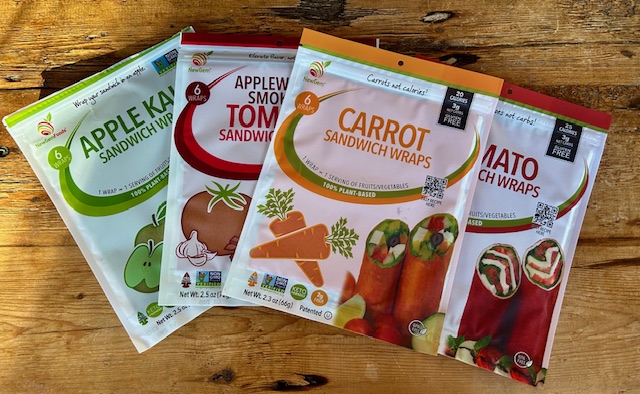
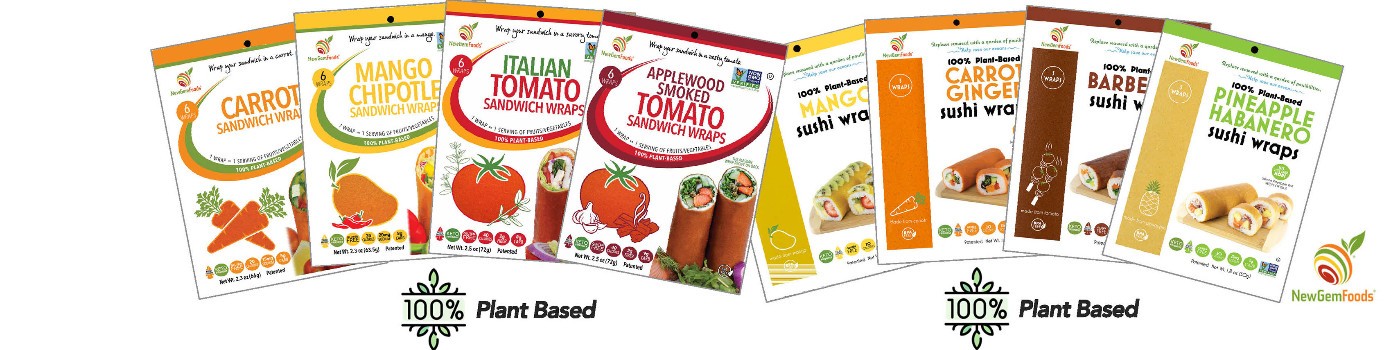
Matthew deBord’s vegetable wraps are genuinely innovative. They are made from real fruits and vegetables, not grain flour. They are low in calories, gluten-free, and deliver a whole serving of produce in every wrap. On paper, that should be enough.
In practice, it rarely is.
I recently spent time with Matthew talking about NewGem Foods and the long road behind what, from the outside, appears to be a simple product. His comment stuck with me. “I thought if we built something that tasted good and was healthy, retailers would get it.”
That assumption is one many founders make. It is also where real education begins.
What Matthew has learned, the hard way and over decades, is that innovation is only the opening move. The real work starts after the product exists. Bringing a truly novel food to market means solving a series of interconnected problems that most entrepreneurs never see coming until they are already waist-deep in them.
This is not a story about one company. It is a case study in how the food system quietly filters out innovation.
Who Matthew deBord, Innovator and Head Wrapper?

Matthew did not come up through food manufacturing or brand management. His background is in finance, economics, and business management. In the mid-1990s, inspired by time spent in Japan and the quality of fresh, convenient food available even in convenience stores, he started experimenting with an idea that felt obvious to him.
Why should wraps be made from refined flour when they could be made from vegetables and fruit?
The early experiments failed. Repeatedly. The first attempt happened in his sister’s kitchen. Over time, those experiments evolved into a partnership with the USDA’s Agricultural Research Service and eventually into patented, 100 percent plant-based NewGem.
That origin story matters because it explains both the strength and the struggle behind NewGem. This is not a brand built by chasing trends. It is the result of sustained problem-solving around a single idea that never reasonably fit the existing system.
The Manufacturing Problem No One Warns You About
For most founders, manufacturing feels like a checkbox to be checked off. Find a copacker. Hand over the formula. Focus on sales and marketing.
That approach works when the product is an iteration of something that already exists.
It does not work when the product itself breaks the mold.
NewGem’s wraps are made from pureed fruits and vegetables. No flour. No traditional binders. No existing production line is designed to handle that process on a scale.
Matthew quickly learned that no copacker could make the product. Not because they did not want to, but because they physically could not.
So, he did what many innovators never anticipated having to do. He built his first facility in Stockton, CA, and the current one is in Allyn, Washington. This is one of the hidden costs of genuine innovation.
Incremental products can borrow existing infrastructure. A new salsa flavor, a different chip shape, another yogurt variation. Truly new products often cannot.
Building manufacturing means capital before revenue. Equipment before customers. Food safety certifications, regulatory approvals, specialized staff, and the daily reality of running a production operation.
At that point, the founder is no longer just building a brand. They are running a factory.
Many innovative food ideas die right here. Not because they are bad ideas, but because the manufacturing leap is too expensive, too complex, or too far outside the founder’s skill set.
The Category Problem
Solving manufacturing only unlocks the next challenge. Where does the product live?
NewGem wraps are made from vegetables and fruit. They replace bread and tortillas. They can be used for sandwiches, wraps, sushi, and more.
So where do they go in a grocery store?
Produce sees vegetables, but not a core produce item. Deli sees a sandwich component, but not prepared food. Grocery sees wraps but not bread as they know it.
Each department is managed separately, with its own buyers and profit goals. Each buyer is measured on their own performance, not on what might be best for a new product that spans categories.
This is not dysfunction. It is how retail is designed.
For a novel product, that design creates paralysis. There is no obvious benchmark. No comparable set. No historical data to lean on.
When buyers cannot easily answer the question, “Will this sell in my department?” the safest answer is no.
The Velocity Trap
Even when a retailer is intrigued, the conversation eventually lands in the same place.
Show me velocity.
Retailers want proof that a product sells. They want to see it working somewhere else before they commit their shelf space. For established brands, this is reasonable. For innovators, it creates a hard-to-break loop.
You need distribution to prove velocity. You need to get distribution.
Historically, this problem has been solved through Direct Store Delivery. Brands that control their own delivery can manage inventory, placement, restocking, and education at the store level.
DSD is powerful. It is also an expensive path to market.
Most emerging brands cannot afford a delivery fleet, drivers, and logistics infrastructure. Without it, products rely on store staff who may not understand them or prioritize them.
Poor placement leads to slow movement. Slow movement reinforces retailer skepticism. The product gets cut, not because consumers rejected it, but because the system never gave it a fair shot.
NewGem has shown promising velocity where it is stocked but scaling that success requires solving distribution challenges that have little to do with product quality.
Why Infrastructure Often Matters More Than Ideas
At this point, it becomes clear that these are not individual mistakes. They are structural barriers.
A founder bringing something new to market must simultaneously be a food scientist, manufacturer, retail strategist, logistics operator, and brand builder.
Most people excel at one or two of those roles. Very few can do all of them at once.
Established players already have these systems in place. They can afford to innovate incrementally because the complex parts have already been solved.
Consider Egglife, a high-protein, low-carb wrap made primarily from egg whites. Like NewGem, Egglife broke with tradition. They built their own manufacturing. They solved category placement by living in the refrigerated section. They built national retail relationships.
The difference is not vision. It is backing.
Egglife was developed with the support of Rose Acre Farms, the second-largest egg producer in the country. That backing provided capital, infrastructure, and patience. Once the concept was proven, Egglife scaled rapidly and now sits in over 15,000 retail locations.
Matthew is solving similar problems primarily on his own.
The Path Forward
The food industry likes to talk about innovation. In reality, it is optimized for efficiency and predictability. The system does not intentionally block innovation, but it does filter it.
Products that do not fit existing manufacturing, distribution, or category structures face higher costs, longer timelines, and greater risk. Many never make it far enough to fail publicly. They disappear quietly.
That is a loss for consumers and for industry.
Matthew is building a team, including experienced sales and business advisor Jerry Goldberg from J. Goldberg Consulting, as well as several other industry experts.
What stands out about Matthew is not just the idea, but the persistence. Decades in, he is still solving, still refining, still pushing forward. The product works. Consumers respond to it. The remaining challenges are structural, not conceptual. With the right capital partner, one who understands food, retail, and the patience required to build infrastructure, the path forward is clear.
NewGem is not an overnight story. It is a long game. And those are often the ones worth paying attention to.
Three Takeaways About Innovation
1, Innovation is not just about the product. It is about building or accessing the infrastructure that enables the product to scale.
2. Category-breaking ideas face category-breaking resistance. If something does not fit neatly, expect friction and plan for it early.
3. Persistence is a competitive advantage. In food, especially, staying power often matters as much as originality.
To make a successful product, you’d better have both innovation and persistence wrapped up.
Connect with Jeff at The Marketing Sage Consultancy. Interested in setting up a call with me? Use my calendly to schedule a time to talk. The call is free, and we can discuss your brand and marketing needs.

Would you like to read some testimonials about my work? Click here.
If you want to learn more about my new offering, The Trusted Advisor Board, you can click here to learn the details. Feel free to email me at jeffslater@themarketing sage.com or text 919 720 0995. Thanks for your interest in working with The Marketing Sage Consultancy.
.