Every Sunday morning in the early 1960s, I sat in a classroom at Temple Sha’aray Shalom in Springfield, New Jersey, learning Hebrew.
I don’t remember much about those lessons anymore.
But I do remember Mrs. Asher giving us halva as a treat. It showed up on a plate somewhere between the alphabet drills and discussions about the Ten Commandments.
I believe the brand was Joyva, and it was a crumbly, sweet, sesame block that tasted like nothing else in my kitchen at home. I have no idea who brought it or why, but I think it was Mrs. Asher’s way of motivating us to pay attention.
And then, as far as I can recall, I ate it only one other time in the last sixty years, when my wife and I traveled to Turkey, and it was everywhere from the spice market to the restaurants and small shops. That product tasted different, and I recall it having pieces of pistachio and other nuts in it.
Halva is one of those foods that lives only in memory, filed away next to Hebrew school and a temple that sadly doesn’t exist today.
It took a meeting with an entrepreneur named Eric Hebel to bring it all back.
Eric, and his brother Scott, runs Hebel & Co, a Los Angeles halva company, they co-founded with Scott’s wife Katie. It started at a farmers’ market in 2017 and is now in more than 1,000 stores.
I spoke with Eric to learn about his growth strategy, and the more I learn about his business, the more I think halva’s story is really a lesson in how you introduce Americans to something old and turn it into something new.


The oldest snack nobody knows
Halva is one of the oldest confections in the world. Historians trace it back thousands of years to Mesopotamia, Ancient Egypt, and Greece. It’s a staple across the Mediterranean and the Middle East today, sold everywhere from corner markets in Tel Aviv to bakeries in Athens. Yet in the United States, almost nobody has heard of it. Awareness sits somewhere between one and three percent. Hebel & Co may be one of only a few companies in the country actually manufacturing it. Everyone else imports. And Eric’s is organic, vegan, gluten-free, and non-GMO.
That combination, ancient pedigree and total obscurity, is rare in food.
Most category openings involve inventing something new. Eric’s opportunity is different. He’s not creating a snack. He’s opening a door that’s been closed to American consumers for generations.
Open sesame, if you’ll forgive the pun.
Because that’s literally what halva is: ground sesame seeds, or tahini, transformed through a slow, hands-on cooking process into something between fudge and cotton candy. Crispy in places, silky in others, and completely unlike anything most Americans have ever put in their mouths. Their six flavors are scrumptious and a joy to enjoy.
And they use Soom tahini, which is the finest quality tahini available. I wrote about Amy Zitelman and her sisters here in 2021.
From farmers market to 1,000 stores
Eric grew up eating halva and loving it. And like me, he hails from New Jersey. So extra credit for his Jersey roots.
Years later, the three of them asked a simple question: why isn’t anyone making really good halva in the U.S.?
So, they started making it themselves, first selling it at the Hollywood Farmers’ Market in 2017. Word spread. Today Hebel & Co is family-owned, made entirely in Los Angeles, and the only organic halva producer in the country.
It’s also vegan, gluten-free, and kosher, which gives it a shelf story that fits neatly into how modern grocery shoppers actually make decisions.
Manufacturing in-house turns out to be a real advantage, not just an operational detail. And I shared with Eric that my wife and I took the same path in the 70s and 80s with our brownie business.
There are no halva co-packers in the U.S.
If you want to make halva at scale here, you have to build the capability yourself, the way Hebel did. That’s a hard thing for a competitor to copy quickly, and it’s part of why Hebel & Co have been able to gain distribution in 1,000 stores, mostly on the West Coast.
The problem hiding in the price tag
Here’s the challenge.
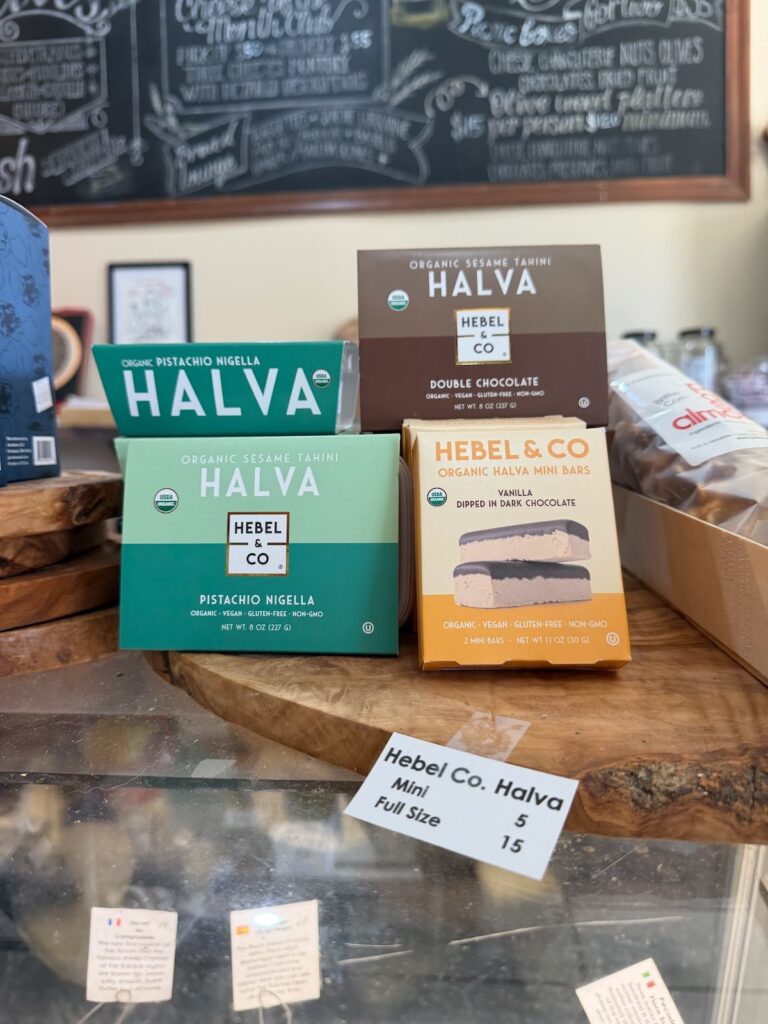
Hebel & Co’s core product is an 8-ounce tub that retails for about $15.
For a shopper who already loves halva, that’s a fair price for a handcrafted, organic product. But for the majority of Americans who have never tasted it, $15 is a steep price to pay to try something they can’t picture, don’t know how to eat, and have never seen a friend order.
Trial is the whole game with an unfamiliar product, and a $15 price point is a wall most people won’t climb over on a whim.
Eric learned this the hard way.
Tests in conventional grocery chains like Harris Teeter and Publix didn’t work.
Price sensitivity killed it.
What has worked is placing the product in natural and organic retailers like Erewhon and Whole Foods, where shoppers already expect to pay a premium, and positioning it in specialty sections like the cheese counter or the premium chocolate aisle rather than burying it in an ethnic foods aisle where it gets compared to cheap imports instead of appreciated on its own terms.
The fix is a smaller, cheaper door


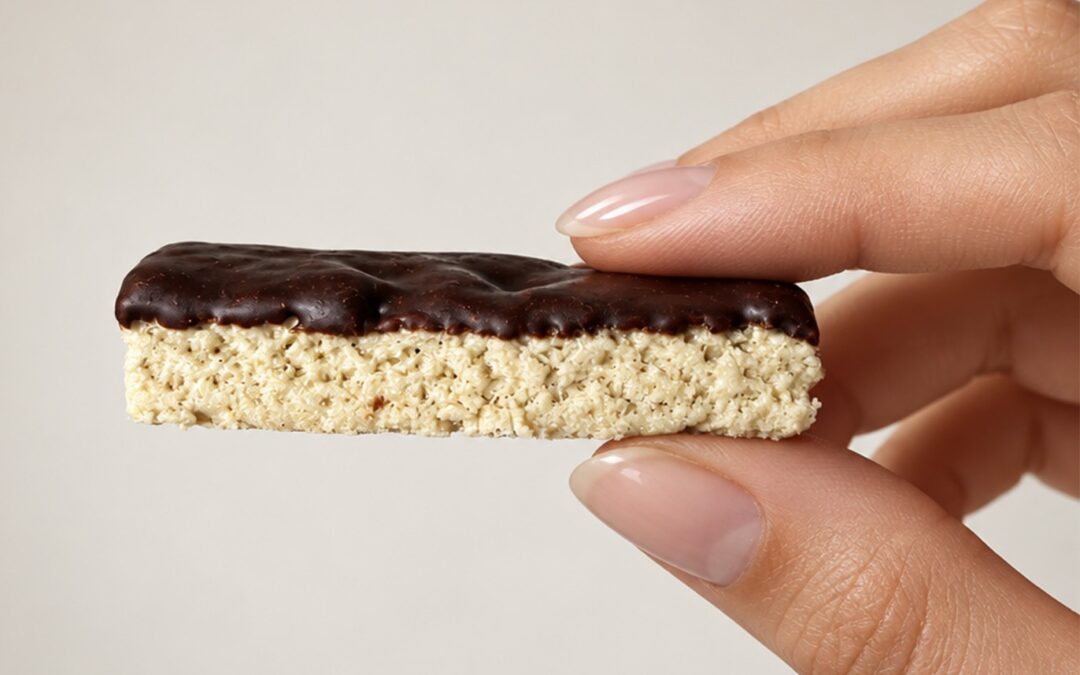
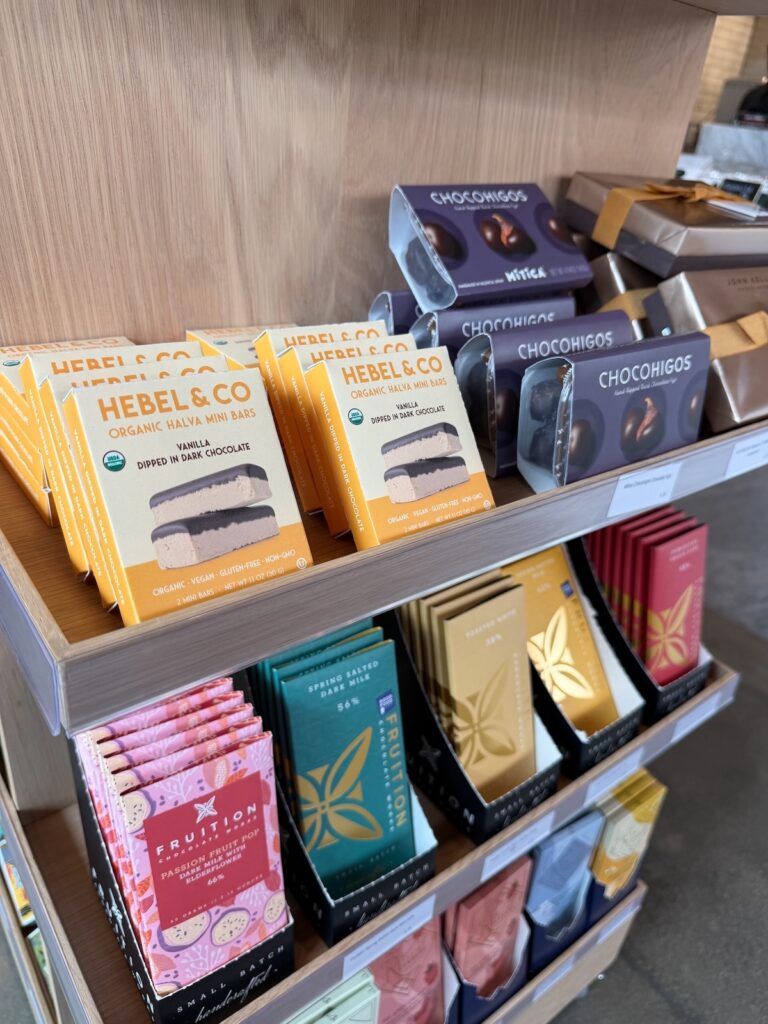
The real unlock, though, is something Eric just launched: a $5, two-bar mini pack designed purely for trial and impulse buys.
It’s a small enough investment that a curious shopper will take the risk. It launched last week with no marketing behind it and has already earned a re-order. Costco and Whole Foods in California have both expressed interest, although Eric knows he isn’t ready for Costco-size volume.
Eric expects this mini pack to eventually drive the bulk of the company’s revenue, because it opens entirely new channels that the $15 tub never could, places like airports and convenience stores where people buy on impulse, not out of loyalty to a category they already understand.
This is a pattern worth remembering if you’re building any brand in an unfamiliar category.
You don’t convince skeptical consumers with a bigger message. You lower the cost of curiosity.
A $5 mini pack does more to build a category than any amount of advertising, because it lets the product do the convincing.
At some point, I expect that a single-serve bar will be his hero product, driving growth and revenue by being seen as a better-for-you, plant-based bar that is distinctive and delicious.
But like most smart entrepreneurs, Eric is taking things one step at a time.
Slice it, spread it, scoop it.
Once someone tries halva, the next challenge is figuring out what to do with it.
This is where Eric’s marketing gets smart. Instead of leading with the name halva, which research suggests may actually be a barrier to mainstream adoption, Hebel & Co leads with how people use it.
- Slice it and eat it plain, on its own, the way you’d eat a good piece of fudge.
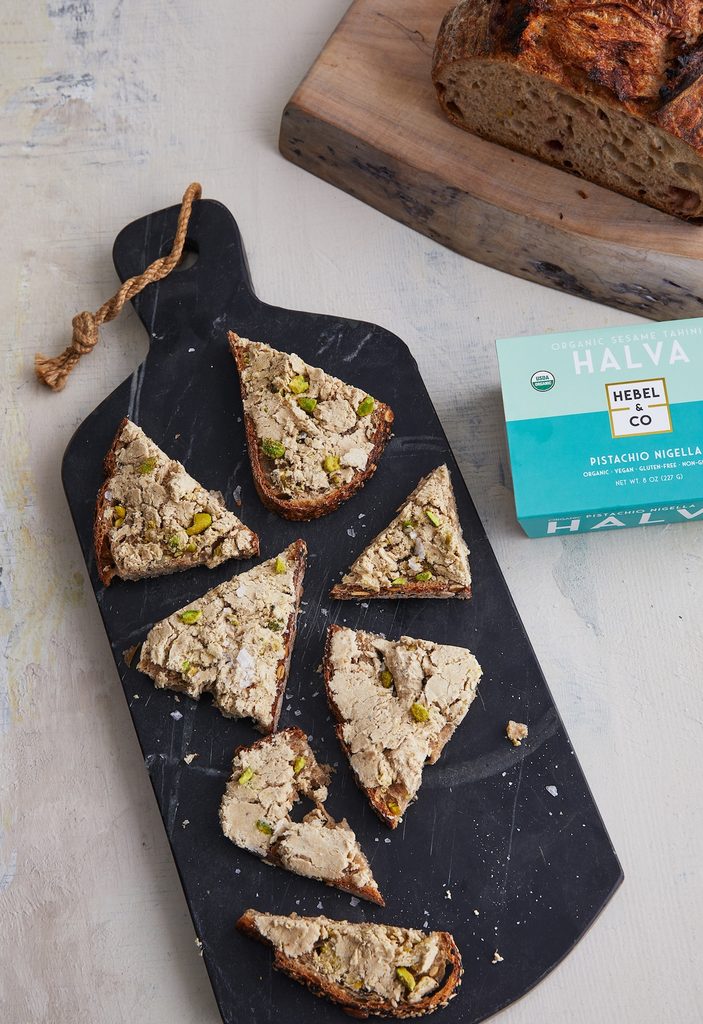
- Spread it on a baguette, a bagel, or a warm crepe.
- Scoop it straight from the tub with a spoon.
- Sprinkle it, crumbled, over ice cream, yogurt, or an açaí bowl.
- Bake it into cookies, brownies, or bread.
It even works beautifully on a charcuterie board, sliced next to cheese and dried fruit, where its texture and sweetness make sense to a palate that has no idea what halva traditionally is.
That’s a smart pivot.
You’re not asking someone to learn a new food. You’re asking them to add one more ingredient to things they already do. Nobody has to understand the word halva to put a crumbly, nutty, not-too-sweet spread on their morning yogurt.
Saying no to easy revenue
One thing that stands out about Eric is his willingness to walk away from sales that don’t fit the strategy. Hebel & Co is scaling back on Amazon, a channel that looks like free growth on paper but has caused real problems in practice.
Halva melts if it isn’t handled carefully, and Amazon’s fulfillment network doesn’t treat a delicate, handmade product the way a specialty grocer does.
Unauthorized resellers have also been buying and reselling the product outside of Eric’s control, which undercuts pricing and quality at the same time. So, the plan is to shift Amazon listings to fulfilled-by-merchant and pull back from Amazon’s own warehousing during the hot summer months.
Direct-to-consumer sales through Shopify may be paused too, because the cost of acquiring a customer online has gotten too expensive to justify for a product this new to most shoppers.
It would be easy to chase every channel that offers a sale, but Eric is a fast learner and is staying focused on the channel that makes sense today – specialty retailers with organic and better-for-you brands.
Eric is doing the harder thing, choosing the channels that protect the product and the brand, even if it means smaller numbers in the short term. That discipline matters more in an unfamiliar category than in an established one.
A bad first experience with halva, a melted bar, or an inflated price from a reseller might be the only experience a new customer ever has with the category. Eric seems to understand that the cost of losing that first impression is higher than the cost of turning down easy revenue.
The bigger swing
Eric’s real ambition goes beyond growing distribution.
He wants to reposition halva entirely, away from a small ethnic category and into the $12 billion better-for-you confection market in the U.S., competing for shelf space with premium chocolate bars and protein snacks.
He’s thinking through several strategies toward that opportunity.
To fund the next phase, Hebel & Co is raising funds from angel investors to prove out the mini pack and de-risk a larger raise for national scaling and automation down the line.
The company is also working with Hatcheri Foods, a food industry accelerator, to help make the jump from current revenue to 10-fold growth.
What this means for anyone building a category
Eric’s situation is a useful case study for any founder sitting on a product that’s genuinely good but unfamiliar. The instinct is usually to explain the product harder, to tell its history, to lean on authenticity.
Eric is doing something smarter.
He’s lowering the price of trial, letting the product’s versatility do the talking, and rethinking whether the name itself is helping or hurting.
As for me, I finally had halva again a few weeks ago, sixty years after that Sunday school plate in Springfield. It tasted better than I remembered, and this time I knew exactly what to call it and exactly what to do with it.
Open sesame indeed.
Three Key Takeaways From My Conversation with Eric
- Lower the cost of trial before you try to change minds. The $5 mini pack will do more to open up halva as a category than years of storytelling ever could, because it lets curious shoppers take a small risk instead of a big one.
- Let the product’s uses sell it, not its name. Nobody has to understand or even like the word halva to reach for a spread that works on a bagel, a bowl of yogurt, or a charcuterie board. His phrase spread it, slice it, sprinkle it “ will help consumers see usage occasions.
- Protect the brand experience even when it costs you sales. Walking away from Amazon and pausing DTC wasn’t about giving up growth. It was about making sure a new customer’s first bite of halva is a good one.
Put those three together, and you get a simple playbook for launching anything unfamiliar.
Make it easy to try, let the packaging explain itself through everyday use, and guard the experience closely until the category shows the momentum necessary to accelerate growth.
It has taken 3,000 years to get here. A little more time can’t hurt.
Connect with Jeff at The Marketing Sage Consultancy. Interested in setting up a call? Use my calendly to schedule a time to talk. The call is free, and we can discuss your brand, marketing needs, and challenges.
Feel free to email me at jeffslater@themarketing sage.com or text 919 720 0995. Thanks for your interest in working with The Marketing Sage Consultancy.