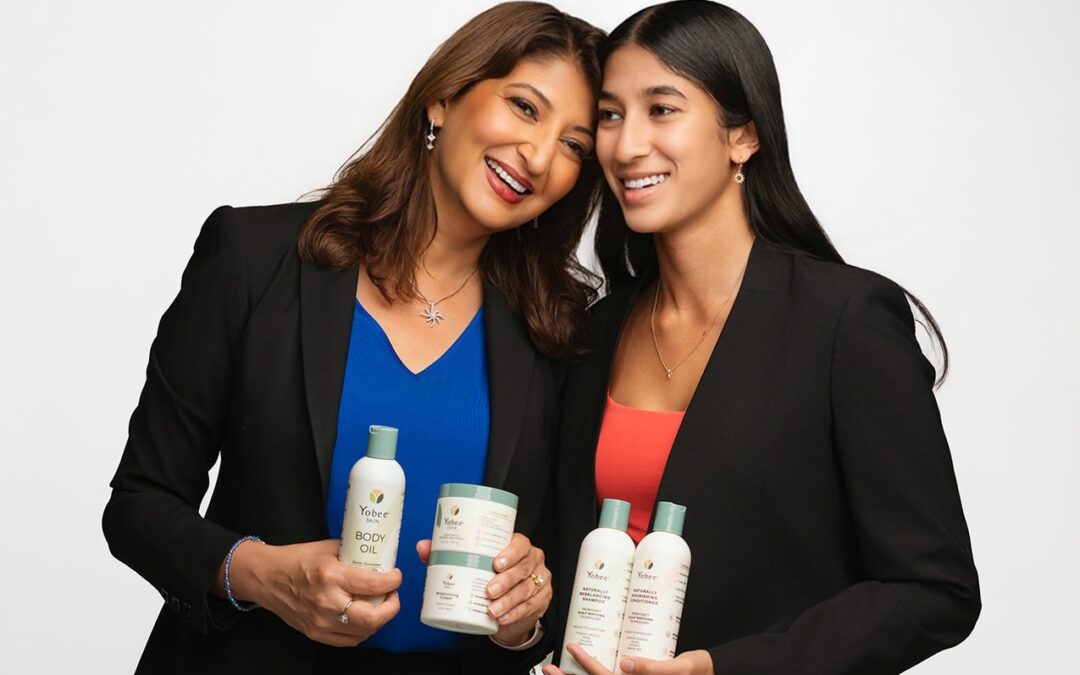
Ruchi Gupta was not supposed to become a skincare founder.
As a child, she enjoyed science in middle school and high school. Her parents, first-generation immigrants, came to the U.S. when she was 2, and they wanted her to become a doctor.
Through college and medical school, Ruchi found her strengths and wanted to make change happen.
She was active in programs to make that change happen, including visiting underserved schools in Louisville, Kentucky, to share her passion for science and medicine with those students and to teach about health issues. She was President of the American Medical Women’s Association.
Eventually, she became a pediatrician, trained in Seattle, Boston’s Children’s and Harvard, and a professor at Northwestern. She is the director of a research lab at Northwestern & Lurie Children’s Hospital and leads groundbreaking research in eczema and food allergies.
She had built a serious academic career around understanding why children’s immune systems go haywire, why skin barriers break down, and why the body sometimes attacks itself.
Then her daughter, Riya Jain, was born with severe eczema and cradle cap, and everything Ruchi knew professionally collided with what she was experiencing personally.
She found herself reaching for the same products she’d been prescribing and recommending for years. Steroids. Chemical-heavy formulations. Things that worked, technically, but that she wasn’t entirely comfortable putting on her newborn’s skin over and over again.
So, she did what researchers do. She started looking for a better answer.
The Problem With the Standard Playbook
Eczema affects roughly 31 million Americans. For babies and young children, it is one of the most common chronic skin conditions. The standard treatment options have been more or less the same for decades. Topical steroids to manage flare-ups, moisturizers to maintain barrier function, and a long list of things to avoid.
The problem is not that these treatments don’t work. It’s that they manage the condition rather than address its cause. Steroids reduce inflammation, but they don’t fix the underlying imbalance that made the skin vulnerable in the first place.
And for parents who repeatedly apply these products to a baby’s skin, the long-term picture is uncomfortable.
Ruchi understood this from her research. The body’s relationship with its own microbiome, the ecosystem of bacteria that lives on and in us, is central to how skin behaves. A disrupted microbiome doesn’t just mean digestive issues. It means inflammation. It means a compromised skin barrier. It means eczema, psoriasis, cradle cap, and the itchy, miserable cycle that follows.
The market was full of products treating symptoms. She wanted to build something that treated the cause, without steroids, and safe enough for anyone to use, from newborns to adults with compromised immune systems.
Building Science From Scratch
Ruchi assembled a team. Dermatologists. Allergists. Microbiologists. People who spent their careers studying how the skin’s ecosystem works and what disrupts it. They weren’t trying to reformulate an existing product category. They were trying to develop something that didn’t exist yet.
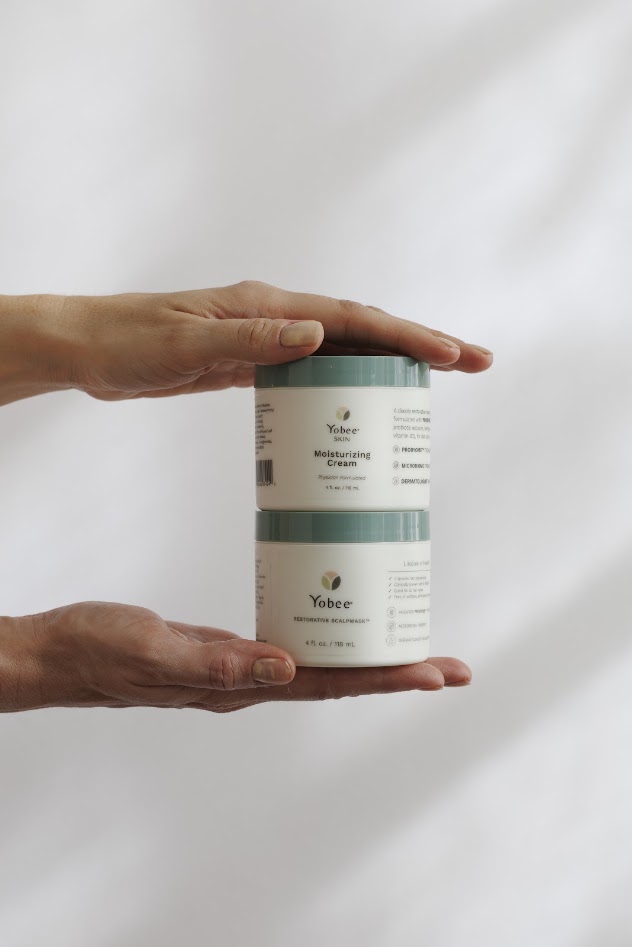
The result was PROBYOME, a patented blend built around probiotic extracts from healthy Lactobacillus strains, combined with organic honey, organic turmeric, and vitamin B12.
Every ingredient earns its place. Probiotic extracts restore the microbiome and rebuild the skin’s protective barrier. Honey has anti-inflammatory and antioxidant properties. Turmeric neutralizes free radicals. B12 supports cell regeneration and reduces inflammation.
No steroids. No zinc. No salicylic acid. No coal tar. No sulfates, phthalates, parabens, or synthetic fragrance.
The formula cleared her daughter’s skin.
That’s when Ruchi knew she wasn’t just solving a personal problem. She was sitting on something that could help millions of families who were navigating the same impossible choices she had been making.
Yobee was born.
From Kitchen Formula to Published Clinical Trials
The leap from a working formula to a credible brand is where most founders stumble. Ruchi did not stumble.
She ran clinical trials. Two of them, published in peer-reviewed journals, confirm the safety and effectiveness of PROBYOME in both adults and children. The research was conducted at Northwestern, which gave the findings academic rigor rather than the kind of self-reported testimonials that fill most skincare brands’ websites.
This is not a small thing. Most consumer brands in the skincare space make claims that range from unverified to outright misleading. The bar for what counts as “clinically tested” or “dermatologist-approved” is low enough that it has lost almost all meaning for consumers trying to make informed decisions.
Yobee is different because the science actually exists and is publicly accessible. That combination is rare. It gives Ruchi a credibility advantage that is genuinely hard to manufacture.
Yobee originally was a portmanteau of yogurt and bee (honey).
The brand is also protected.
Yobee holds two U.S. patents on the PROBYOME formulation, which means competitors can’t simply reverse engineer and replicate what took years of research to develop.
A Line Built for Every Age
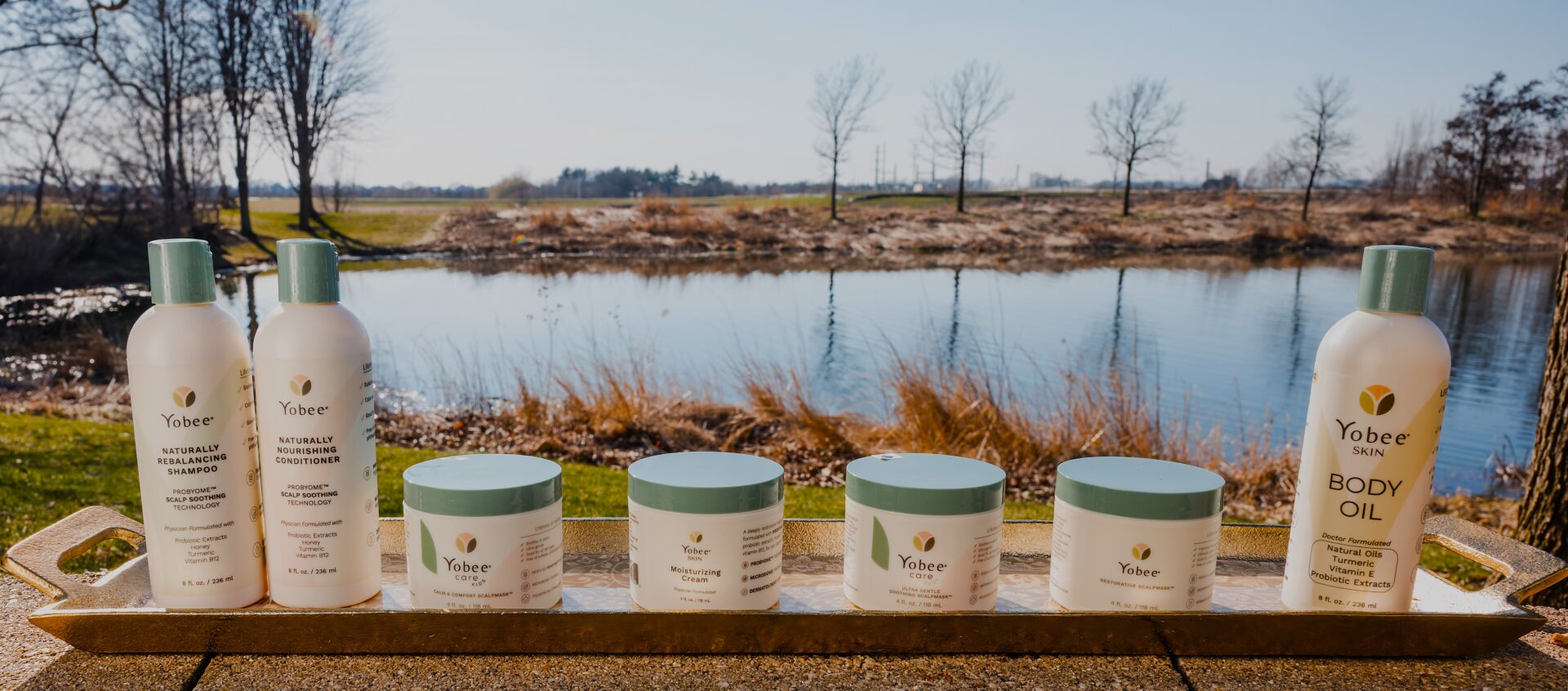
One of the more interesting strategic choices Ruchi made was to build Yobee as a family brand from the beginning. The product line spans babies, kids, and adults, with formulations scaled appropriately for each.
It started with one product: a scalp mask built for cradle cap.
Everything has grown since listening to customers. The shampoo, conditioner, moisturizing cream, and probiotic body oil were all added because people using the mask kept asking for more ways to use the formula on the rest of their skin and hair.
For babies, there is the Cradle Cap Scalp Mask.
For kids, a Calm and Comfort Scalp Mask.
For adults, a Restorative Scalp Mask,
For the entire family, there is the shampoo, conditioner, probiotic body oil, and moisturizing cream.
The breadth matters because eczema and scalp conditions don’t discriminate by age. But more than that, it positions Yobee as a household brand rather than a niche pediatric product.
A parent who discovers Yobee for their baby’s cradle cap may become a long-term customer for their own scalp issues. That’s a customer acquisition flywheel most beauty brands spend millions trying to engineer, and Yobee gets it almost naturally from the brand’s story.
The products have been featured in USA Today, CNN, the New York Times, NBC, and NPR. A recent NPR segment alone drove a noticeable spike in sales, a sign of how much room this brand has to grow once more people hear about it.
Yobee is used at the Ritz-Carlton, Hilton, Kohler, and Gaylord Hotels. It has won beauty awards and built a loyal following with a 4.98 average rating across several hundred reviews. That’s not a small thing either.
The Channel Strategy Most Beauty Brands Get Wrong
Most skincare founders chase retail shelf space as fast as they can. Ruchi has done the opposite, and it is the smartest decision in this entire story.
Retail looks appealing from the outside. Big stores, big volume, instant legitimacy. In practice, it is one of the hardest channels to make money in. Margins are thin, payment terms are slow, and a brand can spend a fortune to keep its spot on the shelf.
For a founder trying to protect a premium, science-backed brand, retail can quietly erode the very thing that makes the product special.
So instead of racing into stores, Yobee built its business around places where trust is already established. Luxury spas, including the Ritz-Carlton and Kohler. Medical offices, where dermatologists and pediatricians recommend the product directly to patients. These are B2B relationships, not consumer transactions, and they do something retail can’t. They lend Yobee a halo of credibility before a customer ever picks up the bottle.
There’s a story from Yobee’s own customers that captures why this works.
A patient managing eczema saw the product used at a Ritz-Carlton spa, then went home and moved her own bottle of Yobee to the front of her shelf. She had owned and loved the product for a while. Seeing it used in a premium, trusted setting validated her own feelings about it. That is brand building in its purest form, and it costs nothing close to what a national retail rollout would.
The Branding Decision Behind the Products
Here is a detail that says a lot about how well this brand is being built. Yobee avoids putting terms like “eczema” or “dandruff” front and center on its packaging and marketing materials.
It would be an obvious move. Those are the conditions the product treats, and science backs it up.
But leading with a medical label turns a product into a treatment, and treatments carry stigma. Nobody wants to feel like they are buying a medical product off a shelf next to their moisturizer.
Instead, Yobee is positioned as a desirable, premium skin health product, one that happens to be remarkably effective for specific conditions.
That framing lets the product live comfortably in a spa, in a bathroom next to high-end skincare, and in the hands of someone who has never had a flare-up in their life. The people who need clinical benefit still get it. Everyone else gets a great product too. That is a harder positioning to execute than it looks, and Yobee is doing it well.
What This Brand Gets Right About Marketing
I pay attention to how founder-led brands tell their stories because the story is usually their most powerful asset.
Yobee’s story has almost everything.
A credentialed founder with genuine expertise. A personal problem that became a mission. Real science behind the product. A clear villain, steroids, and chemical-heavy formulations that parents are asked to use on newborns without great alternatives.
And a product that actually works, validated by research rather than influencer testimonials.
The brand also benefits from what I’d call a trust transfer.
When Ruchi says she made this product for her daughter and then decided to share it with the world, that’s not marketing language. It’s just the truth. And when people learn she is a Harvard-trained, Northwestern professor with two decades of eczema research behind her, they listen differently than they would to a celebrity putting their name on a moisturizer.
The same trust transfer is what makes the spa-and-medical-office strategy work. A dermatologist recommending Yobee, or a five-star hotel using it, carries the same kind of borrowed credibility as the founder’s own story.
The category she is playing in is growing fast. Consumers are scrutinizing ingredient lists more carefully than they ever have. The microbiome has gone from a fringe concept to mainstream health literacy. And parents of children with eczema, who often feel like they’ve been handed a set of options they’re not comfortable with, are actively looking for something better.
Yobee is something better. The challenge now is making sure the right people find it.
The Growth Challenge Ahead
Right now, Yobee’s marketing runs on a small, part-time team, some Northwestern staff, Ruchi’s daughter, a handful of students, and a separate agency handling TikTok.
It has worked well enough to land the brand in USA Today, CNN, the New York Times, NBC, and NPR, and to earn a devoted following almost entirely through word of mouth and organic press.
But that setup has a ceiling.
It is not built to scale, and Ruchi knows it.
The NPR spike is the clearest evidence of what happens when this brand reaches a large audience. Sales jump. The challenge is that the brand doesn’t have a reliable, repeatable way to make that happen.
What Yobee needs now is not a bigger marketing budget so much as the right amplifier, a way to turn the story that already works into consistent, scalable reach.
It is worth noting how Yobee has funded its growth so far.
The company has raised close to two million dollars, and the investors are not a typical venture list. They are patients, dermatologists and pediatricians who understand science and believe in what Ruchi has built.
Rather than chase another round of funding, the company is now focused on finding a strategic partner with real experience scaling consumer products, someone who can bring the marketing and operational muscle that a small, founder-led team can’t build on its own.
That is the next chapter of this story. The product works. Science is real. The brand has a credibility advantage most companies would kill for.
What Yobee needs now is not a better story. It needs more people to hear the one it already has.
Four Key Takeaways
1. Personal experience is the most credible brief a founder can have. Ruchi didn’t spot a market gap in a category analysis. She was a mother applying steroid cream to her daughter’s skin and hating every minute of it. That kind of motivation is hard to fake and nearly impossible to replicate. The best brands often start not with an opportunity but with a problem that someone lived through and refused to accept.
2. Clinical proof is a durable competitive advantage. In a category crowded with vague claims, two published peer-reviewed studies and a pair of U.S. patents are not small assets. They create a credibility gap that competitors with similar ingredient lists cannot close by reformulating or rebranding. Ruchi built science first and let marketing follow, which is the right order.
3. The channel you choose shapes the brand you build. By skipping retail and building through spas and medical offices, Yobee turned trusted relationships into a marketing engine. Every recommendation from a dermatologist or every bottle spotted at a five-star spa does the selling that a retail endcap never could, and it protects the premium positioning that retail tends to wear down.
4. A family brand has a longer lifetime customer value than a niche product. Building babies, kids, and adults from the beginning ensures that each new customer has the potential to become a household customer. The parent who buys the baby cradle cap mask has a reason to stay with the brand for years. That’s not a minor strategic choice. It’s the difference between a product and a platform.
Ruchi Gupta set out to help her daughter. She ended up building something that could help millions of families who’ve been quietly frustrated with the same choices she refused to accept.
The product and the story are ready.
The next step is finding a partner who can help the world find them.
Connect with Jeff at The Marketing Sage Consultancy. Interested in setting up a call? Use my calendly to schedule a time to talk. The call is free, and we can discuss your brand, marketing needs, and challenges.
Feel free to email me at jeffslater@themarketing sage.com or text 919 720 0995. Thanks for your interest in working with The Marketing Sage Consultancy.