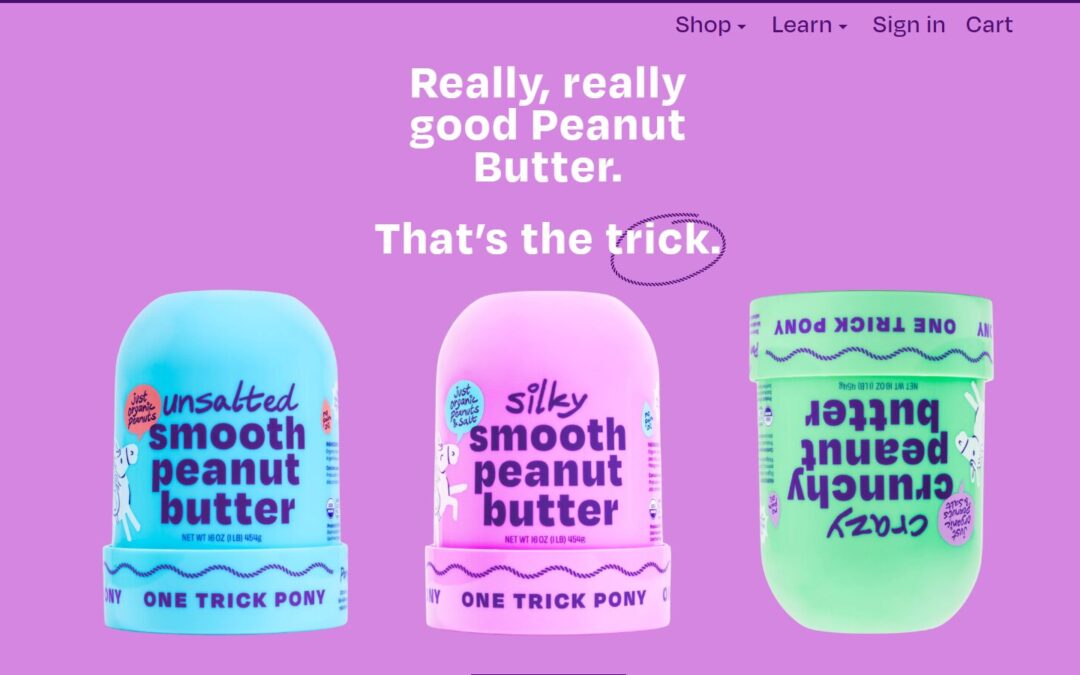
In the crowded world of natural peanut butter, where countless brands vie for shelf space with their earnest brown jars and wholesome messaging, One Trick Pony has done something remarkable. They’ve taken what many consider a category weakness. This annoying oil separation required vigorous stirring, but it transformed into their greatest strength through brilliant design thinking and distinctive brand assets.
The result? A pink, upside-down jar that doesn’t just stand out on shelves fundamentally reframes the entire peanut butter experience.
The Minds Behind the Magic
One Trick Pony was founded in 2022 by the sibling duo Lucy Dana and Andrew Dana, along with Daniela Moreira. Lucy Dana brings corporate expertise as the former Chief of Staff to the CEO at Blue Bottle. At the same time, her brother, Andrew, is the accomplished founder of Call Your Mother Deli and Timber Pizza, and Andrew’s wife, Daniela Moreira, is a James Beard-nominated chef. This powerhouse combination of food industry experience, business acumen, and hospitality expertise provided the perfect foundation for reimagining peanut butter.
The brilliant packaging and brand strategy were developed by design studio Polygraph, which was enlisted to design the logo, label, and branding for the updated jars that address the oil separation issue. Working with what Polygraph describes as “the brilliant duo behind Call Your Mother & their talented sisters,” they developed a visual brand that feels less ‘natural nut butter’, and more reminiscent of the iconic PB’s we grew up with.
Polygraph’s innovation included creating “a container to be stored upside down to reduce oil separation” with “no internal lip and (voluptuous) curves for maximum PB scooping.” The collaboration between founders who understood the functional challenges and a design team willing to think unconventionally resulted in the distinctive pink, inverted packaging that has become the brand’s signature.
The Problem Everyone Ignores
Natural peanut butter has a dirty little secret that the industry has primarily chosen to ignore or apologize for: oil separation. Open any jar of natural peanut butter, and you’re greeted with a layer of oil that requires several minutes of awkward stirring to redistribute. It’s messy, it’s annoying, and it’s precisely the kind of friction that sends consumers running back to processed alternatives loaded with stabilizers.
Most brands treat this as an unfortunate side effect of being “natural” and “healthy.” They might include a half-hearted suggestion to stir, perhaps with a small disclaimer about oil separation being standard practice. But they’ve fundamentally missed the opportunity to own this challenge and turn it into a competitive advantage.
One Trick Pony saw what others couldn’t: this wasn’t a problem to apologize for—it was a design challenge waiting to be solved.
The Upside-Down Revolution
The solution is elegantly simple yet brilliantly executed. By designing their jar to be stored upside down, One Trick Pony leverages gravity to do the work for consumers. The oil naturally rises to what is now the bottom of the jar, meaning when you flip it right-side up to use it, the oil is precisely where it needs to be for easy mixing.
But here’s where the genius really shows: they didn’t just solve the functional problem. They created a distinctive asset so memorable and ownable that it becomes impossible to ignore or replicate without looking like a copycat.
The upside-down design is inherently distinctive. There’s no other product in the peanut butter aisle that requires storage in this manner. It creates what brand strategists call “mental availability”—the likelihood that consumers will think of your brand when they’re in a buying situation. When someone walks down the peanut butter aisle and sees a sea of traditional jars, the upside-down orientation creates an immediate pattern interrupt.
Pink: The Color of Courage
If the upside-down design is the functional hero of this brand story, then pink is the emotional protagonist. In a category dominated by earth tones, craft paper aesthetics, and the predictable visual language of “natural” foods, pink is a bold choice. It’s unexpected. It’s memorable.
Pink in the peanut butter category isn’t just different—it’s a strategically different choice. Color psychology tells us that pink conveys playfulness, approachability, and confidence. It suggests a brand that doesn’t take itself too seriously, that’s willing to have fun with convention. In a category that can feel earnest and preachy about health benefits, Pink says, “We’re here to solve problems and have a good time doing it.”
More importantly, pink creates what researchers refer to as “implicit differentiation.” Even if consumers can’t articulate why One Trick Pony feels different, the distinctive color creates a subconscious association that separates it from competitors. It becomes a mental shortcut that helps the brand break through the noise.
The Power of Single-Minded Focus
The brand name itself—One Trick Pony—is a masterclass in owning your positioning. Most brands would shy away from such a seemingly limiting moniker, worried about appearing one-dimensional or lacking versatility. But One Trick Pony embraces it, and in doing so, claims ownership of their single, powerful innovation.
The name works because it manages expectations while simultaneously elevating the importance of that one trick. It suggests mastery and specialization rather than limitation. It implies that this one trick is so good, so perfectly executed, that it’s worth building an entire brand around.
This kind of single-minded focus is increasingly rare in a world where brands feel pressure to be everything to everyone. One Trick Pony demonstrates the power of being remarkable at one thing rather than mediocre at many things.
Beyond the Jar: A System of Distinctive Assets
What makes One Trick Pony truly exceptional isn’t just the individual elements—the pink color, the upside-down design, the cheeky name—but how these elements work together as a system of distinctive assets. Each element reinforces the others, creating a cohesive and memorable brand experience.
The upside-down storage solution creates a functional ritual that keeps the brand top of mind. Every time consumers put the jar back in their pantry, they’re reminded of the brand’s unique value proposition. The pink packaging ensures the product remains visible and distinctive even when stored in unconventional locations. The name ties it all together with a narrative that makes the whole experience feel intentional and clever.
This systematic approach to distinctive assets is what separates good branding from great branding. It’s not enough to have one memorable element—you need multiple touchpoints that work together to create a distinctive brand world.
The Ripple Effects of Smart Design
One Trick Pony’s success demonstrates something crucial for other brands: distinctive assets aren’t just about aesthetics or memorability. When done right, they create business advantages that compound over time.
The upside-down design doesn’t just solve the oil separation problem—it creates a conversation starter. It turns every purchase into a story worth sharing. It transforms the mundane act of buying peanut butter into something notable enough to mention to friends or post about on social media.
The pink packaging doesn’t just stand out on shelves—it creates emotional connections. It signals a brand personality that’s confident enough to be different, playful enough to use an unexpected color, and smart enough to make functionality beautiful.
Together, these elements create what marketing professionals call “earned media”—free publicity that comes from people talking about your brand because it’s genuinely interesting or remarkable.
Lessons for the Brave
One Trick Pony offers a blueprint for brands willing to think differently about their challenges. Instead of apologizing for category weaknesses or trying to minimize them, innovative brands figure out how to own them, solve them, and turn them into competitive advantages.
The brand proves that in crowded categories, functional innovation combined with distinctive design can create breakthrough positioning. It shows that consumers are hungry for brands that solve real problems in clever ways, especially when those solutions come wrapped in distinctive, memorable experiences.
Most importantly, One Trick Pony demonstrates that being different isn’t enough—you need to be distinctively, systematically, and purposefully different in ways that matter to consumers.
Three Key Takeaways for Brand Builders
1. Transform Problems into Positioning Opportunities. Don’t apologize for category challenges—own them. One Trick Pony turned the universal frustration of oil separation into their core value proposition. Look for the friction points in your category that everyone else ignores or minimizes. These often represent your most significant opportunities for differentiation and customer delight.
2. Create Systems, Not Single Assets. Distinctive assets work best when they reinforce each other. One Trick Pony’s pink color, upside-down design, and cheeky name create a cohesive system that’s greater than the sum of its parts. Audit your brand touchpoints to ensure they work together to create a distinctive, memorable experience, rather than competing for attention.
3. Embrace Strategic Constraint The “One Trick Pony” name could have been seen as limiting, but instead it became liberating. By owning their single-minded focus, they created clarity for both their team and their customers. Sometimes the best way to stand out is to deliberately narrow your focus and become exceptional at solving one crucial problem, really, really well.
It is still early days for this brand, with distribution in 300 stores, but this is one of those brands to watch as they gain awareness and momentum.
If you are looking to be disruptive and create a distinctive asset, think about seeing things upside down.
Connect with Jeff at The Marketing Sage Consultancy. Interested in setting up a call with me? Use my calendly to schedule a time to talk. The call is free, and we can discuss your brand and marketing needs.
If you want to learn more about my new offering, The Trusted Advisor Board, you can click here to learn the details. Feel free to email me at jeffslater@themarketing sage.com or text 919 720 0995. Thanks for your interest in working with The Marketing Sage Consultancy.