Indulgence Without Regret

Recently, I had the pleasure of meeting with Jacob Tubis and Jack Davis, the founders behind Byte’m Brownie Bites—friends from college who both have families with entrepreneurial roots.
Jacob’s family, specifically Allen Tubis, helped found the Giant National Capital Barbecue Battle (BBQ Battle) in Washington D.C., a major annual summer food & music festival on Pennsylvania Ave, known for BBQ contests, celebrity chefs, bands, and charity, continuing as a huge D.C. tradition with family-friendly fun and world-class barbecue. Jacob’s mother, Suzanne, also played a significant role along with other family members.
Jack family (his second cousins) also has roots in the food industry. Birch Benders offers various pancake, waffle (mixes & frozen), baking mixes (muffins, brownies), and syrups, focusing on quality, organic, keto, paleo, and protein options for convenient, delicious breakfasts and treats.
Having built Rachel’s Brownies with my wife in the ’70s and ’80s, I was genuinely excited about what they’re creating, not because of brownie nostalgia or shared passion.
But because they are working to solve a problem I intimately understand.
The problem is this: consumers don’t want less indulgence. They want indulgence without regret.
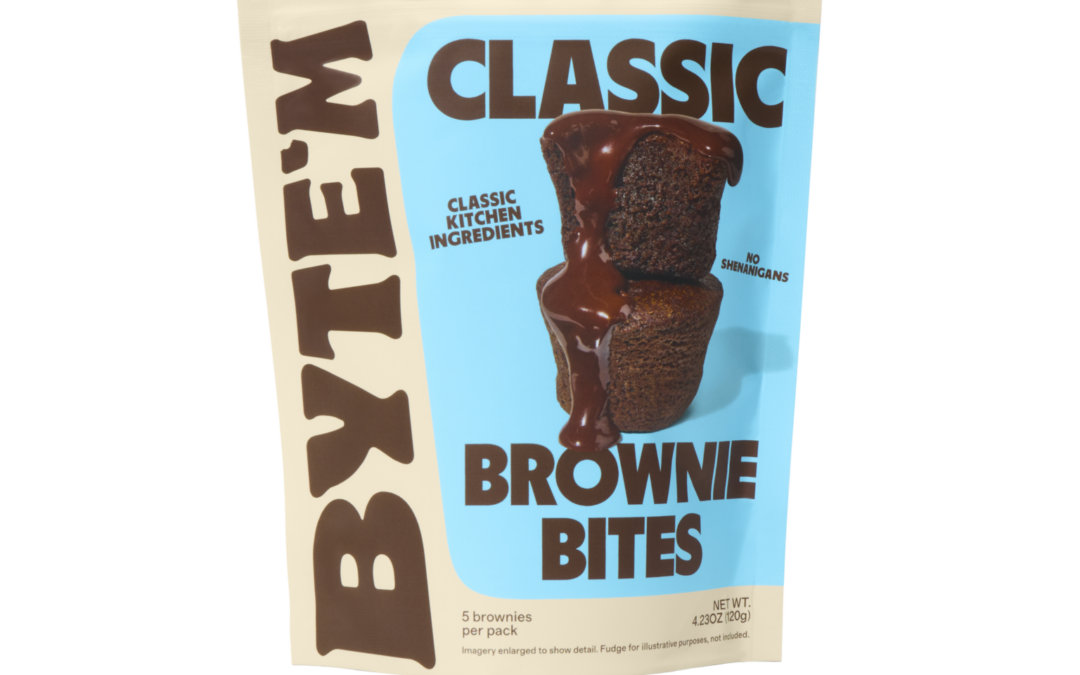
For those unfamiliar with Byte’m, imagine biting into a brownie with crispy, caramelized edges and an impossibly fudgy center—the kind that sticks with you long after you’ve finished eating.
That’s exactly what Jack’s mom’s legendary recipe delivers, and that’s what inspired the founding of Byte’m.
But this isn’t a nostalgia play or a lifestyle brand fantasy. It’s a strategically sophisticated entry into the CPG market that targets a real gap in the indulgence landscape.
The Founding Insight Worth Repeating
Every food business starts somewhere, but Byte’m’s origin matters because it reveals something about how the founders think.
They craved the perfect brownie, and after exhausting local options, they turned to Jack’s mom’s time-tested recipe.
Jacob and Jack smelled an opportunity.
But here’s what separates their execution from countless other founder stories: they didn’t jump straight into opening a retail location or launching a complete direct-to-consumer platform.
They started with pop-ups and test markets. Pop Up Grocer gave Byte’m an early shot at retail. They let the market speak first. Test and try ideas with real-world consumers and listen, listen, and listen.
What they discovered was profound in its simplicity.
The strategic leap wasn’t just commercializing a recipe. It was reframing the entire positioning.
Rather than creating a “better for you” brownie, a diet brownie, or a functional brownie, and asking consumers to feel guilty about indulgence, they decided the best version of indulgence today might be smaller, not lighter.
This single decision changed everything. Don’t sell a large brownie, but give consumers an indulgence hit.
By reducing the unit size rather than reformulating the recipe, they kept the indulgence intact while adjusting the portion. That transforms the brand positioning from a dessert you shouldn’t eat to a bite you can enjoy without regret.
Its permission is embedded in the design. This is their hypothesis for the product and building their brand.
Focus on Velocity not Doors
The original plan was ambitious: build a DTC business, leverage existing family retail connections, and eventually go national. That plan changed when reality intervened—in the best possible way.
After Pop-Up Grocer, Butterfield Market in New York became their first permanent retailer.
And something remarkable happened.
Customers came back.
Butterfield Market reordered twenty times in just eight months, with single orders reaching 120 units. For a fresh brand with zero national marketing engine, that’s not a trial.
That’s adoption.
Most founders struggle to read these signals correctly. They chase the romance of DTC, seduced by margins and direct customer connection. Byte’m did the harder thing: they listened. They pivoted toward retail distribution, abandoning the narrative they loved for the one the market was telling them. DTC is a secondary channel and not their focus today.
Today, Byte’m is in approximately 500 stores through Gold Coast, Faire, and Airgoods Distributors.
But here’s what separates them from many growing brands: they’re not celebrating door count. They’re obsessed with velocity—how many units move per store per week. That’s the metric that determines whether a brand survives or becomes shelf decor.
This discipline is rare and signals maturity well beyond the company’s age.

Premium Mass Market Without Pretension
Byte’m occupies a fascinating and powerful positioning.
At $6.99 for a six-pack—roughly one dollar per bite—the math is elegant.
In NYC, an artisanal brownie from a local bakery costs $8 to $15. They tend to be oversized to get that kind of premium pricing.
Most people won’t pay that regularly.
Mass-market brownie products like Little Bites have trained consumers to expect convenience, but at the cost of quality. Byte’m bridges that gap.
Premium enough to compete with brands like Tate’s. Accessible enough to drive repeat purchases.
This is premium mass-market positioning executed through portion control rather than ingredient theater. No functional claims. No nutritional justifications. Just a genuinely great brownie in a size that fits modern consumption habits.
The flavor strategy reinforces this approach.
Beyond classic chocolate, they offer Cookies and Cream and Smokey S’mores.
These aren’t random options; they reflect deliberate cultural relevance. The influence of Crumbl’s rotating excitement and Insomnia Cookies’ indulgence-first ethos is visible but adapted for shelf stability and repeat retail behavior.
The Operational Sophistication That Matters
Behind every successful food brand is an unglamorous operational reality, and Byte’m is grappling with theirs head-on. They’ve partnered with Boston Baking, an experienced co-packer with an impressive track record, to scale manufacturing without compromising quality.
The shelf-life engineering is awe-inspiring: nine months without compromising texture. That quietly solves one of the most complex problems in baked goods. It’s the kind of operational decision that separates brands that scale from brands that remain boutique.
What struck me most during our conversation was the founders’ sophistication about their own business model.
They understand that an acquirer won’t be buying brownies.
They’ll be purchasing a brand that owns a specific consumption moment and delivers predictable retail performance. Every decision—from flavor innovation to sampling programs to social media strategy—is laser-focused on brand building toward that eventual outcome.
They’re also being strategic about what they’re not doing. Direct-to-consumer might seem appealing, but customer acquisition costs are often unsustainable. Better to build in retail, prove the model, and let the brand assets speak for themselves.
Why This Matters Now
In a market obsessed with functional claims and nutritional justifications, Byte’m is betting on something almost contrarian: indulgence is back, and great taste wins when paired with discipline.
The brilliance isn’t in making brownies better. It’s about redefining what constitutes enough brownies. It’s understood that modern consumers don’t want to consume less. They want to consume differently.
Three Takeaways for Builders and Investors
1. Indulgence doesn’t need to be diluted to be modern. Portion control can be a more powerful strategy than reformulation. Think of indulgence, not overconsumption. The future of premium snacking isn’t about apologies.
2. Early velocity signals matter more than scale. Reorders reveal truth faster than marketing spend. Units per store per week beats door count every time. Focus on the metrics that predict survival, not the vanity metrics that predict announcements. Velocity, not the number of doors matters.
3. The strongest early-stage brands are built around behavior, not just a product. Byte’m isn’t selling brownies. They’re selling permission to indulge, one bite at a time. Start with an authentic problem, build a business around solving it, and let the brand equity compound.
Byte’m is still small and in its early stage. But the idea behind it is large.
It’s the kind of brand that looks obvious in hindsight and dangerous to ignore in the meantime.
Schedule a Call with Jeff Slater to Unlock Growth
Connect with Jeff at The Marketing Sage Consultancy. Interested in setting up a call with me? Use my calendly to schedule a time to talk. The call is free, and we can discuss your brand and marketing needs.

Would you like to read some testimonials about my work? Click here.
If you want to learn more about my new offering, The Trusted Advisor Board, you can click here to learn the details. Feel free to email me at jeffslater@themarketing sage.com or text 919 720 0995. Thanks for your interest in working with The Marketing Sage Consultancy.
.