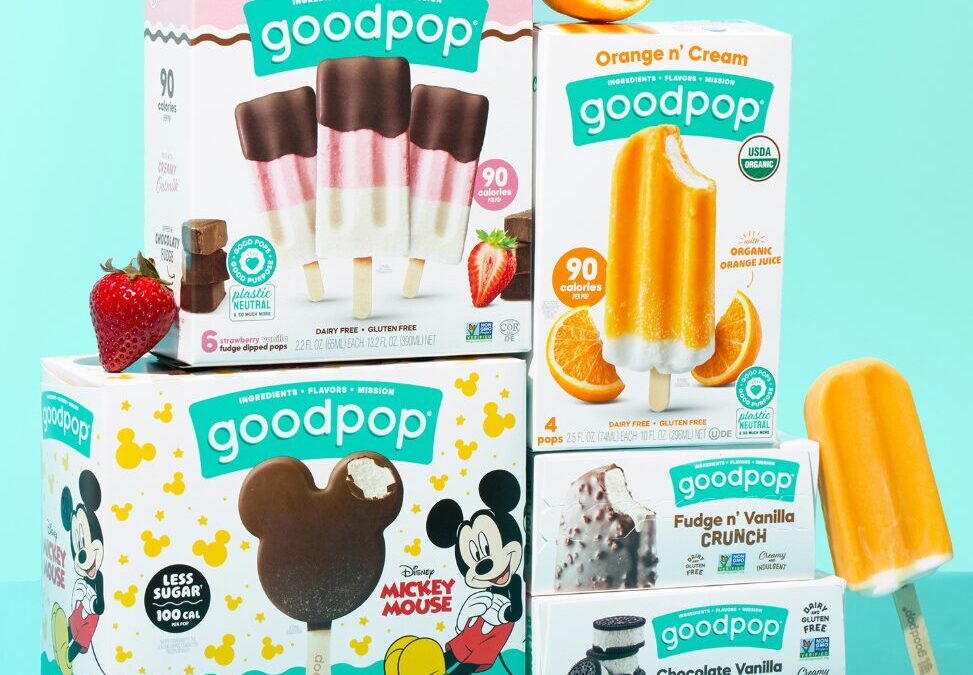
I’ve spent four decades in consumer-packaged goods, and I’ve watched thousands of founders chase venture capital, scale recklessly, and sacrifice their core values the moment profitability dipped. So when I got the chance to learn from Daniel Goetz, founder of GoodPop, I found something rare: a 15-year-old bootstrap success story that never wavered on its principles, even when the math didn’t add up.
His journey is instructive for anyone in marketing trying to build a brand that actually means something.
The Day Everything Went Wrong (and Right)
Daniel’s origin story doesn’t start with a well-funded pitch deck or a business school case study. It begins with a brutally hot Austin summer day in 2009, a sno-cone, and a shrug from someone who couldn’t tell him what was in the syrup.
That moment of disconnection bothered him enough to make something different.
Two months later, he was handmaking 80 popsicles per hour in a friend’s paleteria after hours, sleeping on couches to save money, and manually delivering products to Whole Foods at six in the morning with nothing but $3,500 from his lawn-mowing business in his pocket.
Here’s where most founders would have a turning point story. Daniel does too. But it’s not the one you’d expect.
The Austin City Limits Music Festival in 2009 was supposed to be GoodPop’s big launch. Daniel and his team spent three straight weeks handmaking 18,000 popsicles.
Then the rain turned the festival into a mud fest, and they sold four pops.
Not four hundred.
Four.
Most people would have quit. I’ve seen it a hundred times.
But Daniel’s reflection on that moment reveals something important about how he thinks:
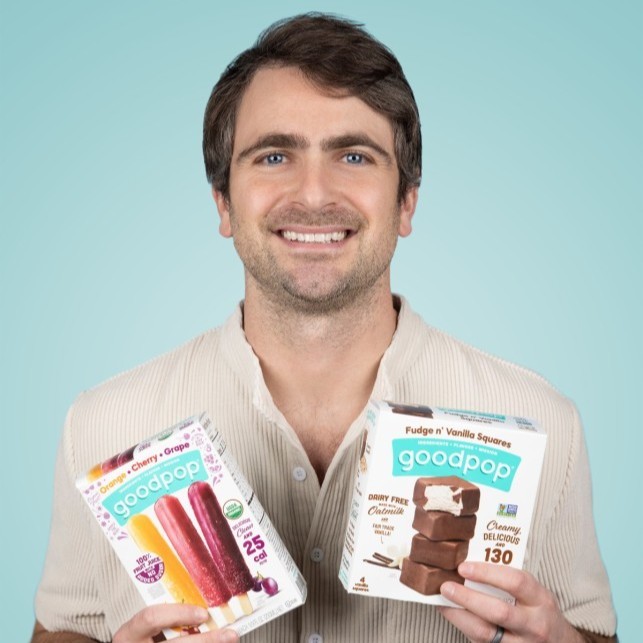
“That experience was a microcosm for my entire entrepreneurial journey. Nothing worthwhile is easy and handed to you. And the challenge makes the journey and the reward that much more meaningful.”
He didn’t run from failure.
He wrapped up the same cart, found more, and kept showing up.
Years later, those same carts came back to Austin City Limits with long lines and a brand that had earned its place.
The Three Things Philosophy
What struck me most is how clearly Daniel articulated GoodPop’s mission through what he calls “The Three Things”: good ingredients, good flavors, and a good mission.
But here’s the critical insight he shared that I think applies to every CPG brand trying to stand out today:
“When that’s your why, you don’t question sacrificing on ingredient standards.”
This isn’t motivational speaking.
This is an operational reality. When GoodPop discovered that popsicle production lines were designed to mass-produce sugar water, not to handle real fruit, Daniel didn’t outsource the problem or find a cheaper way around it.
He built new equipment. DIY. No budget. No engineering background. Just determination to maintain the standard.
In a world where margins are razor-thin and competitors offer lower prices by cutting corners, most brands compromise. GoodPop’s entire scaling strategy has been the opposite.
As Daniel explained:
“Our aim has always been for our products, ingredients, and quality to improve as we scale. Oftentimes, that’s the opposite of the traditional CPG playbook.”
That philosophy was tested in 2024 when GoodPop launched Mini Cans, a clean-label beverage with only 6 grams of sugar, compared to competitors’ 23 grams. Kids didn’t think it was sweet enough. The conventional wisdom in CPG is clear: add sugar, increase juice percentage, or both. Daniel’s response? Discontinue the line. Protect the mission.
“We refused to compromise on our values by adding sugar or increasing the percentage of juice within the product and instead, decided to discontinue the line and remain focused on our core frozen portfolio.”
That’s not just integrity. That’s clarity about what you are and what you’re not.
Bootstrap Growth in a Funded World
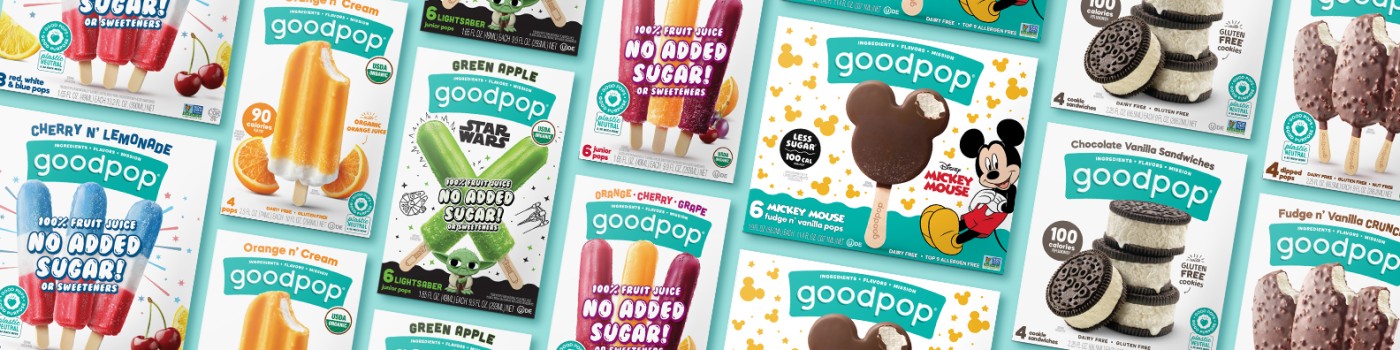
By 2024, GoodPop had hit $63 million in gross sales without taking a single dollar of external funding. In an ecosystem obsessed with venture capital and unicorn valuations, this is remarkable. But Daniel’s perspective on bootstrapping is worth examining carefully.
“Funding is a ‘grass is always greener’ topic,” he told me. “If you’ve raised money, you miss the simplicity and pace of being able to make your own decisions quickly without too much bureaucracy. When you’re bootstrapped, every decision can be life or death.”
He’s right. There are tradeoffs. Bootstrapping is harder.
Slower in some ways.
More stressful.
But it preserves something that venture capital often erodes: autonomy over mission. Daniel chose the more challenging path because, in his view, the alternative wasn’t worth the cost.
“Bootstrapping as a choice will certainly be tough, but the reward in the end, protecting your mission, products, and being able to operate independently to do the right thing, was always worth it.”
The Crowded Grocery Aisle Problem
Daniel’s most candid moment came when he mentioned his biggest marketing challenge today. His answer reveals something important about the state of food marketing that goes beyond GoodPop:
“Families are navigating a very crowded and often confusing grocery environment. Unhealthy products marketed by food companies to children remain both a business challenge for us and the consumer’s largest challenge. It takes time, energy, and effort that parents do not have to decode and filter through products.”
This is the real competitive landscape. It’s not other premium frozen treat brands. It’s confusion. It’s decision fatigue. Its parents are making quick choices in a store stacked with marketing that prioritizes profit over health.
GoodPop’s role, as Daniel sees it, isn’t to sell a healthier alternative. It’s to simplify the choice and make it joyful. “Our job is to make the better choice easier and joyful.”
That’s a brand positioning that actually means something.
Three Takeaways for CPG Leaders
One:
Purpose and profit aren’t enemies; they’re partners. GoodPop did $63 million in revenue by building a company around solving a real problem, not by trying to maximize margins at every step. Yes, the path was more challenging. Yes, there were seasons when profitability dipped. But the brand built genuine equity with consumers because the mission was never negotiable.
Two:
Bootstrapping teaches clarity. When every decision is consequential, and your own money is on the line, you make fundamentally different choices than venture-backed companies operating on other people’s expectations. Daniel’s constraint became his advantage. He built deep relationships with retailers instead of chasing market share. He improved product quality as he scaled, rather than diluting it. Constraints clarify purpose.
Three:
In a confusing marketplace, simplicity wins.
Daniel didn’t try to be everything to everyone. Three things. Real ingredients. Good flavors. Good mission. He repeats this constantly. In a grocery store where parents are exhausted and overwhelmed, this clarity stands out. The brand doesn’t need to prove it’s better than Unilever or Nestlé. It just needs to be obviously better than confusion.
GoodPop’s story isn’t finished. Daniel’s still pushing forward with the same goal he had in college: get the product into as many new hands as possible. But the blueprint he’s created for getting there shows that in CPG, integrity and growth aren’t actually at odds. They’re aligned. You have to be willing to build them on your own terms.
That’s a lesson worth remembering in any industry, any market, any year.
Schedule a Call with Jeff Slater to Unlock Growth
Connect with Jeff at The Marketing Sage Consultancy. Interested in setting up a call with me? Use my calendly to schedule a time to talk. The call is free, and we can discuss your brand and marketing needs.
Would you like to read some testimonials about my work? Click here.
If you want to learn more about my new offering, The Trusted Advisor Board, you can click here to learn the details. Feel free to email me at jeffslater@themarketing sage.com or text 919 720 0995. Thanks for your interest in working with The Marketing Sage Consultancy.
.