When most teenagers are figuring out what to wear to prom, Starr Edwards was in her Oregon kitchen blending almonds, nutritional yeast, and Bragg’s Liquid Aminos into what would become a food category pioneer.
That teenage experiment, born from her quest for better vegan options, has evolved into Bitchin’ Sauce—a brand now generating approximately $50-55 million in annual revenue and sitting on shelves in over 17,000 stores worldwide.
But the journey from that first blend to becoming “The American Dip” wasn’t just about having a great product. It was about making smart strategic decisions at every inflection point, staying focused when competitors enter their space, and having the courage to maintain premium positioning in a commodity-driven category.
The Accidental Empire
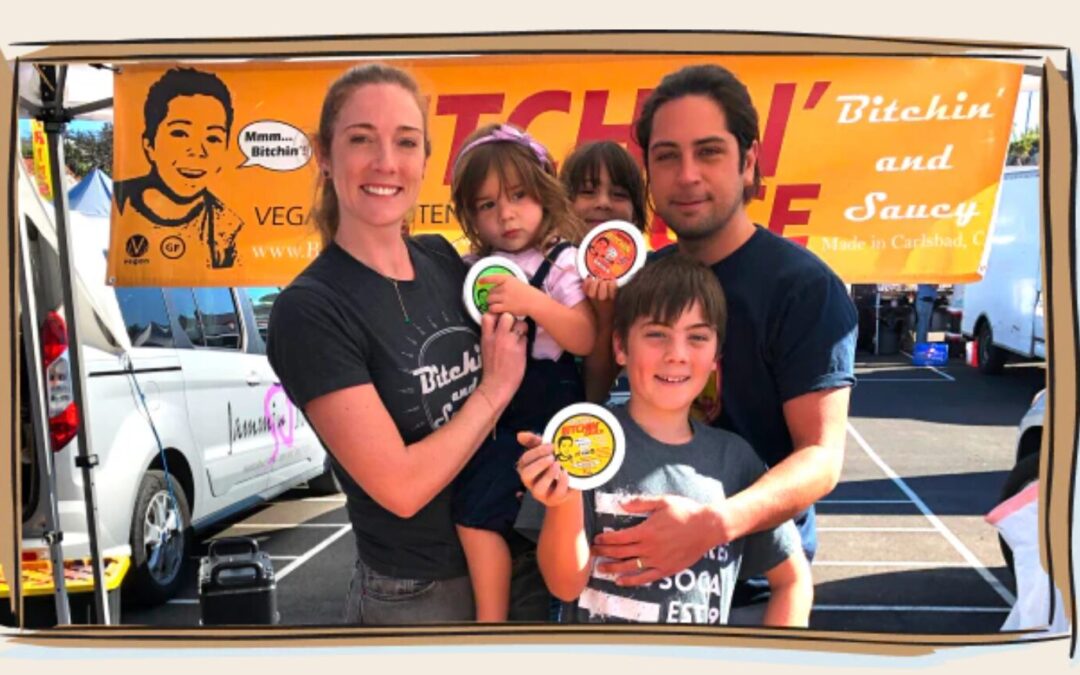
Edwards didn’t set out to build a sauce empire. At 22, newly married with a one-year-old, she was trying to launch a personal chef business. Her plan was straightforward: sample her various vegan creations at the local San Diego farmers’ market to attract clients.
The market had other plans.
“At my very first market, I sold out of Bitchin’ Sauce,” Edwards recalls.
By the third market, the message was unmistakable. People weren’t just being polite about her samples—they wanted to buy the product itself.
Edwards pivoted immediately, transforming her aspirations as a personal chef into a sauce company with a $200 gift from her cousin and a second-hand blender.
This moment is critical because it demonstrates a foundational entrepreneurial skill: recognizing what the market wants, not what you planned to sell.
Edwards could have stubbornly pursued her vision for a personal chef, but she listened to the signal the market was sending her.
The almond-based dip wasn’t just another SKU in the dip aisle—it was creating an entirely new category.
Before Bitchin’ Sauce, nut-based dips weren’t a thing in mainstream retail. This category creation gave them a first-mover advantage but also required them to educate both retailers and consumers about the product and its use.
The farmers market phase wasn’t just a launching pad—it became a testing ground and growth engine. The family expanded to 26 different San Diego-area markets, selling directly to consumers who became brand evangelists.
At their peak, they generated $1 million in annual sales from farmers’ markets alone. This direct-to-consumer foundation gave them something invaluable: real-time feedback, passionate early adopters, and proof of concept that would matter when approaching retailers.
The Retail Leap and Category Creation
In 2011, after a year of farmers-market hustle, Edwards and her family began pursuing retail distribution. They started with local mom-and-pop stores before landing their first major win: Whole Foods Southern California.
But Costco’s discovery of Bitchin’ Sauce at the farmers’ markets opened an unconventional path. Rather than just placing the product on shelves, Costco invited them to do road shows, those in-store sampling events that many brands avoid due to cost.
Edwards saw them differently: “It was like having a farmers’ market indoors!”
This decision reveals strategic thinking that would define Bitchin’ Sauce’s growth. Instead of viewing demonstrations as an expense, they recognized them as their core competence, the very thing that built their business. The family would relocate for months at a time to conduct in-store demos in new markets, building brand awareness through the same personal connection that worked at farmers’ markets.
The Power of Focus and Proliferation
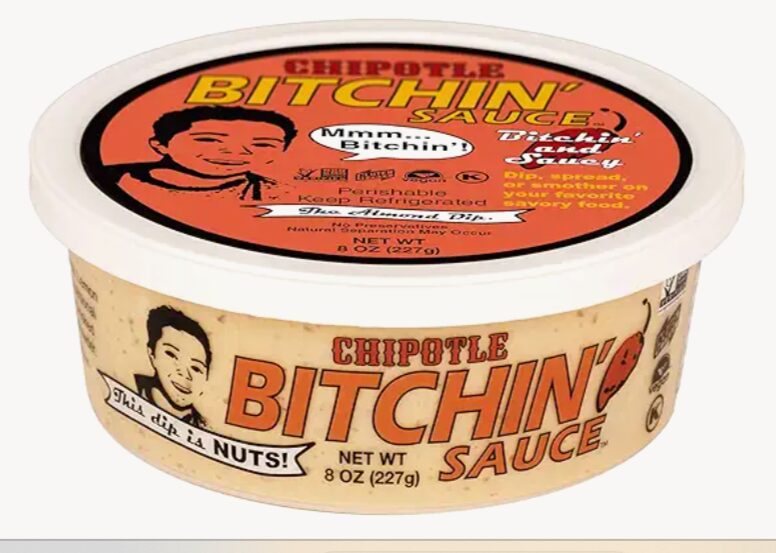
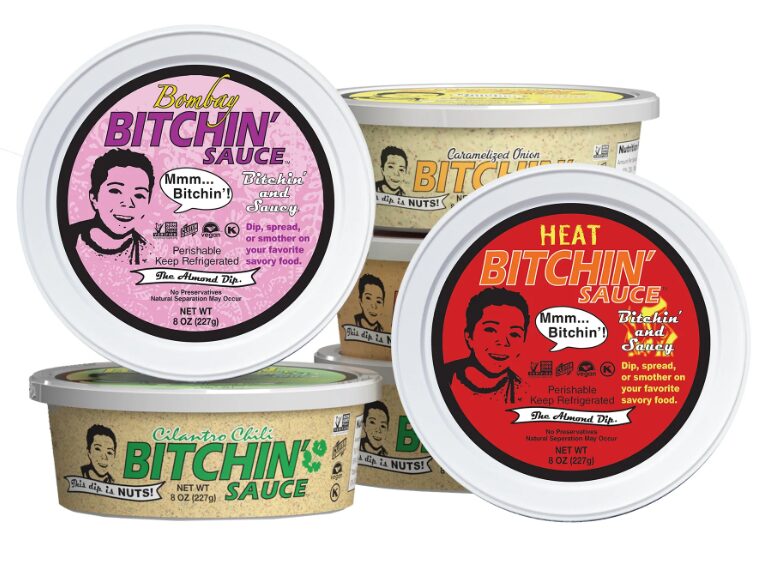
Walk into a Costco or Whole Foods today, and you might see Chipotle, Original, Panang Thai, or any of the 20+ rotating flavors Bitchin’ Sauce offers.
But look closer, and you’ll notice something: every single one has the same base —California almonds blended with the original recipe Edwards created as a teenager.
This is a strategic focus masquerading as variety.
The company has mastered one core product exceptionally well, then created flavor variations that appeal to different palates and use cases. Chipotle flavor, Edwards’ personal favorite, has become the brand’s flagship and the one chosen for their Starbucks partnership—the Original works as a versatile sandwich spread. The Panang Thai attracts consumers looking for international flavors.
This approach solves multiple problems simultaneously.
From a manufacturing standpoint, the base production process remains consistent, creating efficiency.
From a marketing perspective, it gives consumers reasons to try multiple products and prevents flavor fatigue. And strategically, it makes the brand harder to knock off—copying one flavor is easy, but replicating an entire flavor system is far more complex.
Like other brands I recently wrote about on The Marketing Sage Blog—Nothing Bundt Cakes, Crumbl, and Insomnia Cookies—a hyperfocus on one product category has laid the foundation for success.
The brand now sells approximately 30 tubs per minute, a staggering acceleration from Edwards’ early days when selling 30 tubs at a single farmers market felt like a victory.
Breaking Into Starbucks: The Strategic Partnership
When Bitchin’ Sauce landed a deal with Starbucks to showcase its chipotle flavor in over 10,000 stores, it represented more than just distribution growth—it was validation of the brand’s evolution from refrigerated dip to versatile condiment platform.
The partnership, launched in early 2025, centers on single-serve 1.75-ounce Chipotle Bitchin’ Sauce packages, perfectly positioned to complement Starbucks’ expanding food menu. The timing was strategic: Starbucks was actively seeking more customizable food options to expand its offerings beyond beverages.
But there’s a deeper story here about solving distribution challenges.
The refrigeration requirement that made Bitchin’ Sauce expensive and logistically complex to scale suddenly became less of a barrier in the foodservice channel, where cold chain infrastructure already exists.
The single-serve format also addressed a key pain point—portability and convenience—that the traditional tub format couldn’t solve.
This partnership opens an entirely new revenue stream beyond retail. The company has now entered the foodservice market through alliances with Dot Foods and secured placements at Meta’s corporate canteens and at UNFI.
Each channel has different economics, but together they create a diversified business model that isn’t dependent on any single distribution strategy.
The Values That Scale
One of the most unconventional aspects of Bitchin’ Sauce’s story is what Edwards chose to prioritize as the company grew.
Rather than focusing purely on margin optimization, she invested heavily in company culture and employee benefits that seemed extravagant for a food startup.
The crown jewel: Bitchin’ Kids, an on-site childcare program that has provided over $1.6 million in free childcare services since 2019.
Edwards, drawing on her own experience as a working mother, saw the impossible choice many parents face between being physically present and providing financially. The program isn’t just generous—it’s strategic retention. In an industry notorious for turnover, keeping experienced employees engaged and loyal provides compounding returns.
“I think you have to fall into this weird understanding that giving is receiving,” Edwards explains. “You give to your team to get back a team that works hard and is happy. You’re not spending money having to hire and train new people, because they are delighted to be there.”
The company also offers paid volunteer time with partner organizations, reinforcing a culture that extends beyond profit. These aren’t typical food-industry practices, especially for a company that’s still relatively small, with around 100-115 employees. But they’ve become part of the Bitchin’ Sauce brand identity, resonating with consumers who care about how companies treat their people.
What Others Can Learn
The Bitchin’ Sauce story isn’t just about almond dip—it’s a masterclass in scaling a food brand without losing the essence of what made it special in the first place.
From farmers markets to Starbucks, from family operation to professional enterprise, every growth phase maintained the core elements: quality ingredients, bold flavors, and an authentic connection with consumers.
The brand’s success comes from compounding smart decisions: listening to early market signals, leveraging sampling as a superpower, creating a category rather than competing in one, maintaining focus while appearing diverse, and investing in a culture that retains talent, each decision built on the previous one, creating momentum that’s difficult for competitors to replicate.
And the growth continues.
Bitchin’ Sauce is now available in over 17,000 stores worldwide, expanding internationally into Canada, Mexico, Korea, and Australia. Edwards wonders if this quintessentially American product—made from California almonds, citrus, and garlic grown near their Carlsbad headquarters—will resonate globally. If it does, she jokes, they might need to rebrand as “The International Dip.”
Three Key Learnings
1. Listen to Your Market, Not Your Business Plan.
Edwards planned to be a personal chef but recognized that customers wanted to buy her sauce, not her cooking services. Too many entrepreneurs fall in love with their original idea and miss the signals telling them to pivot.
The market is always smarter than your business plan—your job is to pay attention to what customers do, not what you hoped they’d do. This requires ego management and adaptability, but it’s the difference between building what you want versus what people will actually buy.
2. Sampling and Demonstration Aren’t Expenses—They’re Your Competitive Advantage.
While other brands viewed road shows and in-store demos as costly obligations, Bitchin’ Sauce recognized them as its secret weapon.
They built the entire business on face-to-face customer education and conversion. When competitors try to save money by skipping sampling, companies like Bitchin’ Sauce gain market share through personal connections and trial generation. If your product requires explanation or converts dramatically better when people taste it, sampling isn’t a marketing tactic—it’s your core go-to-market strategy.
3. Category Creation Beats Category Competition
Bitchin’ Sauce didn’t try to make a better hummus or a healthier ranch dip. They created the almond-based dip category and owned it.
Category creation is more complex initially because you must educate the market, but it provides first-mover advantages, premium pricing power, and defensibility that you’ll never achieve in crowded categories. When you create the category, you define its standards, own the narrative, and force competitors to play catch-up on your terms, rather than the other way around.
The next time you see Bitchin’ Sauce on a shelf—or paired with your Starbucks lunch—remember that it started with a teenager in Oregon who wanted better vegan options.
What began as kitchen experiments has become proof that the best businesses aren’t always born from elaborate plans, but from paying attention when customers tell you what they want.
Sometimes the most revolutionary thing you can do is listen, adapt, and dare to create something the market didn’t even know was missing.
Connect with Jeff at The Marketing Sage Consultancy. Interested in setting up a call with me? Use my calendly to schedule a time to talk. The call is free, and we can discuss your brand and marketing needs.
If you want to learn more about my new offering, The Trusted Advisor Board, you can click here to learn the details. Feel free to email me at jeffslater@themarketing sage.com or text 919 720 0995. Thanks for your interest in working with The Marketing Sage Consultancy.