
I met Steve Mark in the early 1990s when I was the EVP of Marketing for GoodMark Foods, the parent company of Slim Jim. Steve worked at North Castle Partners, our Stamford, Connecticut-based agency of record.
Steve was a part of a dynamic duo called “The Steves”, a four-legged creative creature with hilarious child-like superpowers to help make teens want to eat Slim Jims and scream, “Snap Into A Slim Jim.” And “Eat me”.
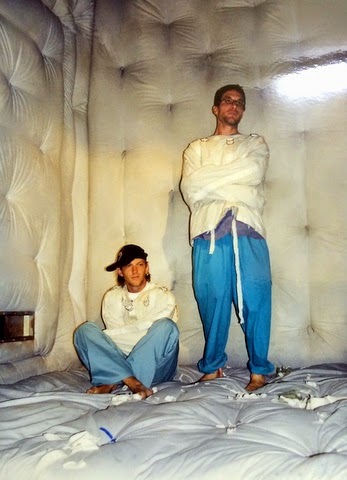
The Steves were geniuses. Guided by their Yoda, Hal Rosen, they helped curate the evolving Macho Man Slim Jim commercials and the iconic Snap Into a Slim Jim tagline. And along with their strategic Sherpa, Jo McKinney, they then anthropomorphized Slim Jim into “The Slim Jim Guy” to bring the brand to life. That was some wild and crazy stuff getting the CEO to approve the tagline, “Eat Me.”
I earned my salary that year.
Gifts for my Grandson
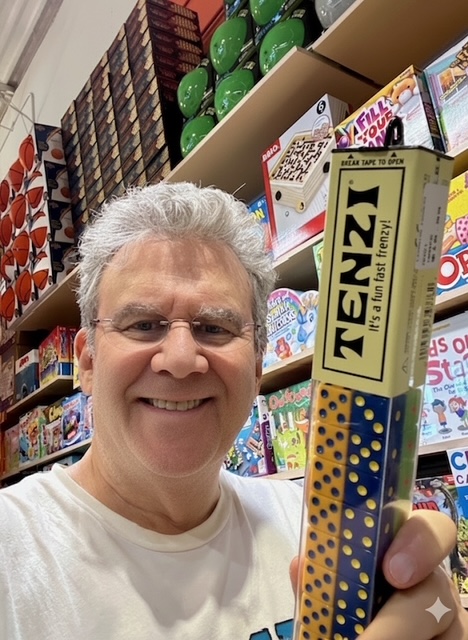
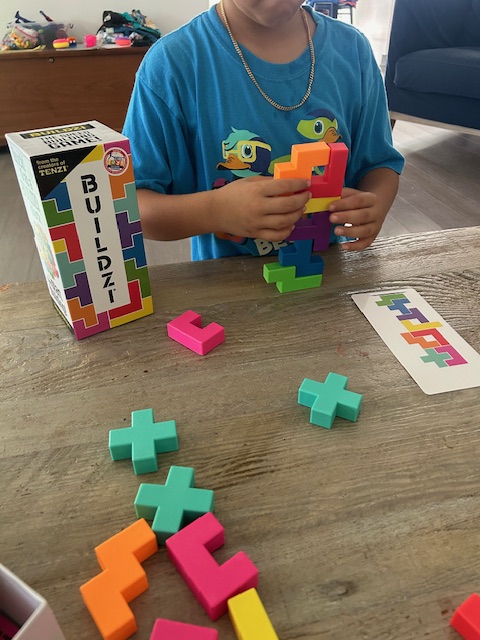
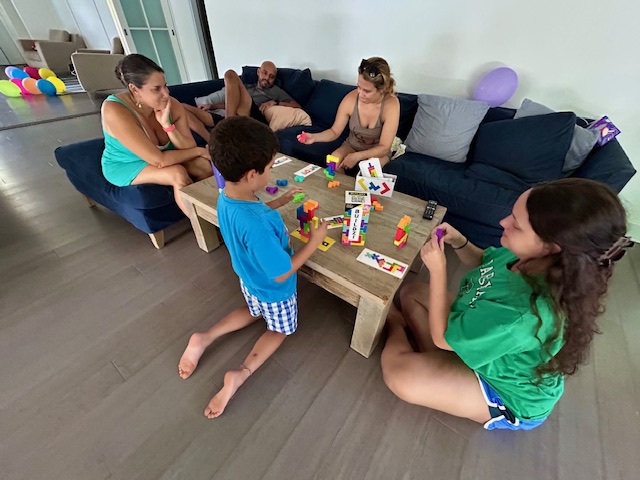
Every time I travel to Hawaii to visit my daughter, son-in-law, and my almost 7-year-old grandson, Bodhi, I stop by The Learning Express in Raleigh to buy a bunch of games and art projects to give Bodhi every few days to keep him busy.
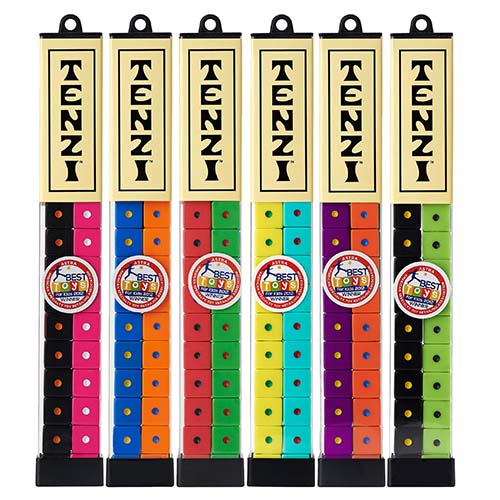
When I saw TENZI on the display rack, I knew I had to buy it for Bodhi. It was a game that Steve and his business partner, Kevin Carroll, had created and marketed together.
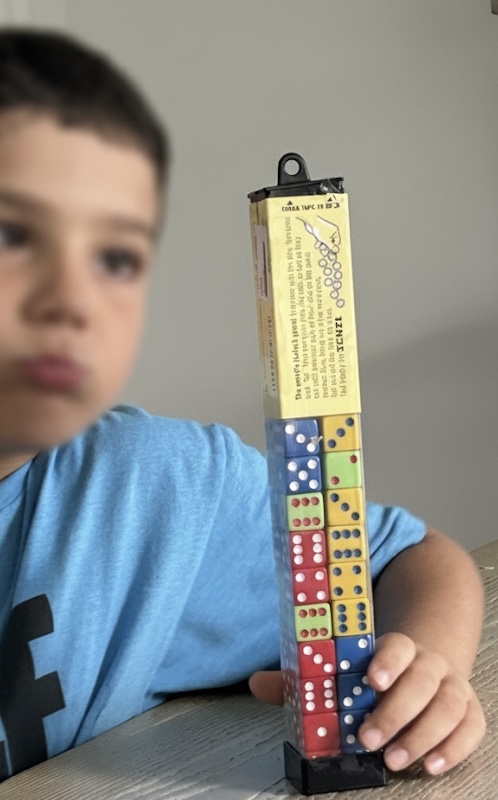
I asked the young guy how to play the game, and in ten seconds, he explained it to me. Roll the Dice. Whoever gets the same number on the ten dice wins. Then you yell, Tenzi!
The Serendipitous Beginning
Kevin and my friend Steve hadn’t seen each other in years. They’d worked together at North Castle Advertising, but life had taken them in different directions.
When they bumped into each other while holiday shopping, Steve asked what Kevin was up to these days. Kevin’s response was unexpected: “Thinking up board game ideas.”
Steve’s reply was half-joking: “Sounds interesting. We should put our heads together and come up with something fun.”
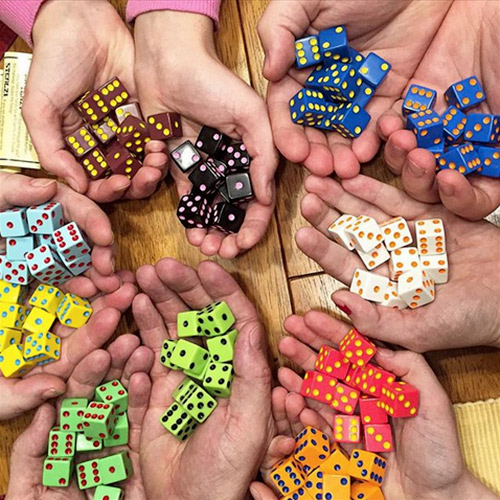
But Kevin wasn’t joking at all. A few months later, he handed Steve a bag of dice with a straightforward proposition: “Let’s come up with a dice game.”
Steve returned the following week with an idea.
After explaining the rules of what they initially called TENSI, Kevin reacted skeptically: “That’s it?” The concept seemed almost too simple.
But Steve insisted they play. Game after game, the dice rolled, and the rules evolved. By the end of that day, TENSI had become TENZI, and both inventors were convinced they had created something special, a fun, fast, addictive game.
Now they just had to convince everyone else, and they knew nothing about the toy industry.
The Power of Persistence and a 30-Second Pitch
With a dozen TENZI prototypes in hand, Kevin and Steve hit the streets.
Their first attempt to sell the game ended with a polite “No thanks.” The second toy store manager was equally uninterested.
But at the third store—HobbyTown in Fairfield, Connecticut—they met Celeste Vanderlip, a store manager who would change their trajectory.
Celeste had one condition: “If you can explain it to me in less than 10 seconds, I might be interested.”
This 10-second challenge proved to be a blessing in disguise. It forced Kevin and Steve to distill their game to its purest essence, a discipline that would serve them well in marketing TENZI.
They could explain it in just 10 seconds, and Celeste was interested.
In fact, she sold two TENZI games to a delighted customer before Kevin and Steve had even left the store.
The game’s simplicity became its greatest strength.
The rules are elegantly straightforward: each player gets ten dice and rolls as fast as possible, gathering like numbers until all their dice show the same number. The first person to finish shouts “TENZI” and wins.
A game that can be explained in seconds and played in minutes removes all barriers to entry.
Explosive Growth Through Word of Mouth
What happened next exceeded anyone’s expectations.
Over the next two months, Celeste sold more than 300 TENZI games, making it her fastest-selling new game ever. From that single store in Connecticut, Kevin and Steve built distribution throughout New England and then across the entire United States.
The numbers tell a remarkable story.
Less than two years after rolling out nationally, TENZI had sold well over 500,000 games.
By 2018, that number had climbed past 3 million games sold, distributed through over 5,000 specialty retailers nationwide.
The game has won prestigious awards, including the Best Toys for Kids Award by ASTRA and the Best Toy Award by Learning Express.
Steve and Kevin both claim the title of Executive Dice President at Tenzi on their LinkedIn profiles.
I’m a sucker for a great pun.
The Decision That Made All the Difference
One of the most critical decisions Kevin and Steve made was choosing not to sell out to a major toy company. Instead, they decided to manufacture and distribute the game themselves, maintaining complete control over their creation.
This independence allowed them to build what they envisioned without compromise and capture the full value of their success.
This choice wasn’t without challenges.
Self-manufacturing meant taking on inventory risk, managing production, handling distribution logistics, and building their own sales channels.
But it also meant they kept all the profits and could make decisions quickly without the constraints of corporate bureaucracy.
Expanding the TENZI Universe
Success with TENZI opened the door to innovation.
The team launched “77 Ways to Play TENZI,” a set of cards offering dozens of creative twists on the original game, extending its playability and appeal. Kevin’s son Collin even got involved, designing SLAPZI, a card game that captures the same fast-paced, simple gameplay philosophy.
What started as a father-son challenge—with Collin’s initial “If my dad can do it, anyone can!” attitude—evolved into careful design work that stayed true to TENZI’s core appeal.
Carma Games (Their company name) has since expanded its portfolio to include SLAPZI, ITZI, PAIRZI, BUILDZI, and CHIPZI, each maintaining the company’s signature approach: simple rules, fast gameplay, and maximum fun.
Every game can be explained quickly and played immediately, making them accessible to families and multiple generations.
Lessons from the TENZI Journey
The TENZI story offers several valuable marketing lessons for aspiring game designers and entrepreneurs:
Simplicity Sells: In a world of increasingly complex games with lengthy rulebooks, TENZI proved that sometimes less really is more. A game that can be explained in under 10 seconds has universal appeal.
Test the Market Small: Kevin and Steve didn’t sink their life savings into massive production runs. They made a dozen prototypes and tested them with local retailers, validating demand before scaling up.
Persistence Pays Off: Two rejections didn’t stop them. Finding the right partner —someone willing to take a chance —made all the difference.
Maintain Control When Possible: By choosing to self-publish rather than sell to a major toy company, Kevin and Steve built significant equity in their creation.
Create Multiple Revenue Streams: The “77 Ways to Play” cards and the expansion into new games demonstrated innovative thinking in extending a successful brand.
Keep It Fun: Throughout their journey, Kevin and Steve maintained their sense of humor and playfulness, admitting their “biggest challenge has been trying to avoid cheesy dice puns.”
As Steve set up Carroll for the punchline: “We’re on a roll.”
My Takeaway
From a chance encounter to a multimillion-dollar company, the TENZI story demonstrates that great ideas don’t have to be complicated.
Sometimes the winning formula is refreshingly simple: two friends, a bag of dice, and the determination to turn a concept into reality. Kevin and Steve proved that with the right idea, persistence, and a willingness to take control of your own destiny, extraordinary success is possible—even in the competitive world of games and toys.
Their journey reminds us that innovation doesn’t always mean reinventing the wheel. Sometimes it means taking something familiar—in this case, dice—and finding a new way to bring joy, excitement, and connection to people’s lives.
And when you can explain your winning idea in less than 10 seconds, you might be onto something special.
Sometimes, with a bit of luck and persistence, your business is more than a roll of the dice.
Listen to a podcast Interview with Steve and Kevin here.
Connect with Jeff at The Marketing Sage Consultancy. Interested in setting up a call with me? Use my calendly to schedule a time to talk. The call is free, and we can discuss your brand and marketing needs.
If you want to learn more about my new offering, The Trusted Advisor Board, you can click here to learn the details. Feel free to email me at jeffslater@themarketing sage.com or text 919 720 0995. Thanks for your interest in working with The Marketing Sage Consultancy.