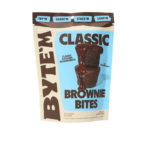
I’m living proof that what I’m writing about is valid. For 13 years, my wife and I owned a bakery specializing in brownies. Rachel’s Brownies.
One SKU – hyper-focused on one type of baked good but made exceptional through our focus. We built a successful brand, without investors and had a successful exit selling it to a larger food company.
Focus was our secret ingredient.
So, when I stumbled upon this chain called Nothing Bundt Cakes, I wanted to sing their praises, celebrate their focus, and learn more about their strategy.
Two moms in Las Vegas. Two home kitchens. One ridiculously specific product idea.
That’s how Nothing Bundt Cakes started in 1997. Dena Tripp and Debbie Shwetz began baking bundt cakes in their Las Vegas home kitchens, driven by friendship and entrepreneurial spirit.

Not a full bakery menu.
Not cakes, pastries, muffins, cookies, or bread.
Just bundt cakes.
Today, they have over 600 stores.
Sales over $750 million to reach 1 billion by the end of 2027.
EBITDA margins are around 20%, generating about $ 300,000 per location.
Avoiding Conventional Wisdom
I find this fascinating because it contradicts conventional retail wisdom. When you’re trying to maximize revenue per square foot, the instinct is always to add more SKUs, more variety, more reasons for customers to come back.
But Tripp and Shwetz did the opposite. They looked at the bundt cake—a single, somewhat old-fashioned format—and said, “What if this is enough?”
And here’s what makes their story so instructive: they weren’t just stubborn about the product format. They were strategic about it.
The Genius of Constrained Creativity
The bundt cake is a weird choice when you think about it. It’s not exactly having a cultural moment. It’s your grandmother’s dessert. The pan itself dates to the 1950s. But that’s precisely what made it brilliant.
Because here’s what a bundt cake is: it’s a highly standardized format that can be infinitely customized. Same shape, same basic structure, but you can adapt the flavors, the frosting, the decoration for literally any occasion. Birthday? Bundt cake. Wedding? Bundt cake. Tuesday? Bundt cake.
The original story involves one founder having the frosting recipe and the other having the cake recipe—and that collaboration created something that could scale precisely because it was so focused. They perfected one thing instead of doing ten things adequately.
Compare this to the typical bakery that tries to do everything: croissants, cookies, custom cakes, wedding cakes, breakfast pastries, and bread. Each of those requires different skills, ingredients, equipment, and timing. It’s operationally complex and challenging to maintain quality at scale.
Nothing Bundt Cakes avoided all of that. One product. Multiple sizes. Rotating flavors. Done.
The Modern Playbook: Hyper-Focus Meets Hyper-Scale
This strategy isn’t unique to Nothing Bundt Cakes, and that’s what makes it so compelling. Look at what’s happened in the specialty bakery space over the last two decades:
Sprinkles Cupcakes pioneered this model with cupcakes in 2005. The company’s niche focus on doing cupcakes well, combined with a simple aesthetic design, caused it to grow wildly popular quickly. They even introduced the world’s first cupcake ATM: one product, premium positioning, obsessive quality control.
Insomnia Cookies took a different angle: not just cookies, but warm cookies delivered late at night. Started in 2002 by two University of Pennsylvania students, the company specializes in delivering warm cookies, baked goods, and ice cream. The brand focuses specifically on late-night delivery, creating a unique position in the industry with little direct competition. They built an entire business model around a single occasion and a specific product format.
Crumbl Cookies is perhaps the most aggressive execution of this strategy. The founders draw inspiration from the fashion industry by organizing weekly drops, during which they announce new, limited-edition cookie flavors on TikTok, creating hype and excitement. The same product format is offered every week, but the rotating flavors develop a sense of urgency. It’s operationally simple but experientially complex. And it’s approaching a billion dollars in annual revenue.
What do all of these things have in common?
They picked one thing. They got incredibly good at it. And they found ways to make that one thing work for multiple occasions, seasons, and customer needs.
Why This Works (And Why Most Startups Get It Wrong)
The counterintuitive insight here is that focus isn’t limiting—it’s liberating.
When Nothing Bundt Cakes committed to only making bundt cakes, they didn’t limit their market opportunity. They limited their operational complexity. And that freed them up to perfect their recipes, standardize their processes, train staff more effectively, maintain quality on a larger scale, and, most importantly, offer franchise opportunities starting around 2007, about 10 years after the founders first started baking together.
Think about what happens when you try to franchise a full-service bakery. You need bakers who can do everything. You need massive recipe books. You need quality control across dozens of products. It’s a nightmare.
You can train someone to excellence on a handful of recipes. Your inventory is simpler. Your equipment needs are standardized. Your quality control is manageable. Your supply chain is streamlined.
This is why these hyper-focused bakery concepts have scaled so aggressively in the franchise model while traditional bakeries remain mostly independent or small chains.
The other thing these brands understand is that customers don’t actually want unlimited choice. They want something consistently great that can flex to their needs. A bundt cake works for birthdays, office parties, thank-you gifts, or just because it’s Thursday. The product is focused, but its application is flexible.
Three Key Takeaways for Startups
If you’re building something new, here’s what you can learn from the Nothing Bundt playbook:
1. Operational Simplicity Is a Competitive Advantage
Every product you add multiplies complexity. Every format, every customization option, every variant creates more things that can go wrong. The businesses that scale fastest often have the simplest operations. Pick one thing. Get obsessive about it. Perfect the hell out of it. Your operations team will thank you, your franchise partners will thank you, and your customers will appreciate the consistency.
2. Flexibility Within Constraints Is More Powerful Than Unlimited Options
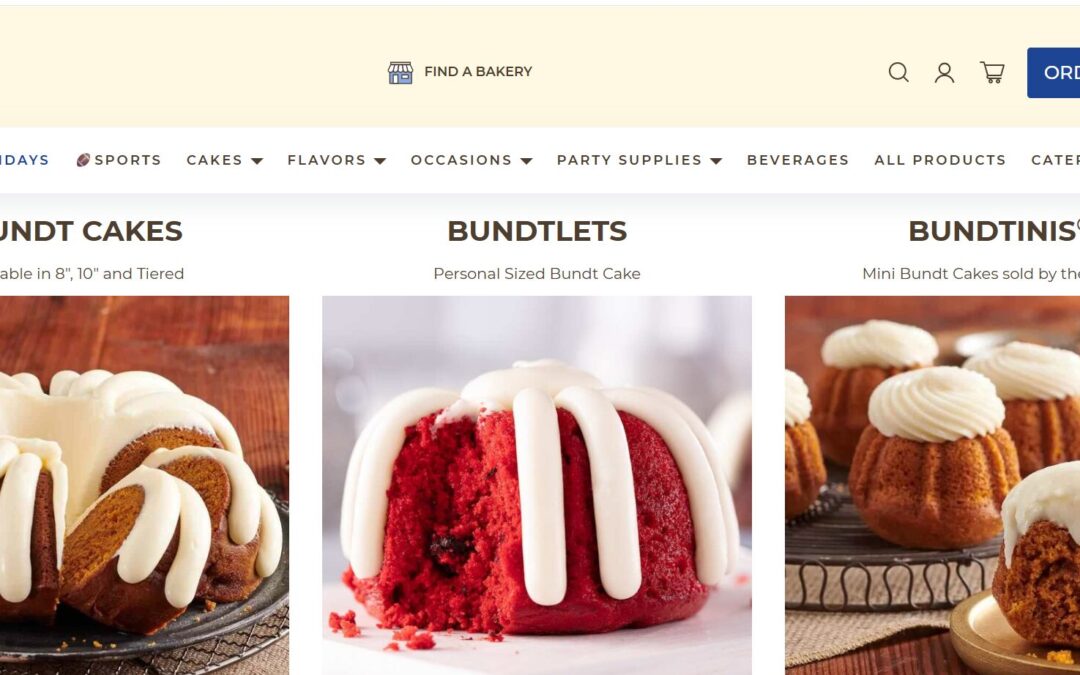
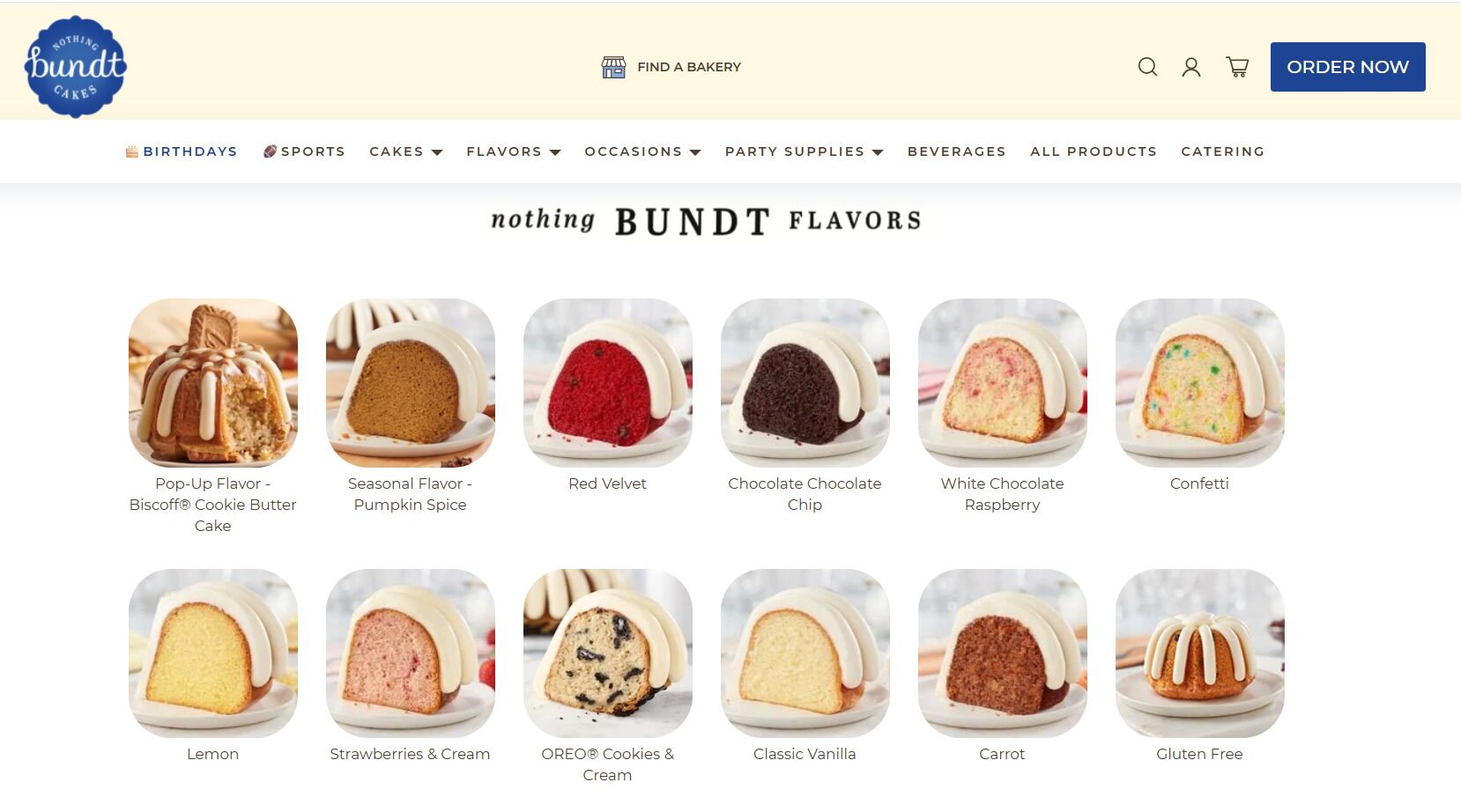
The bundt cake format is completely standardized, but Nothing Bundt Cakes offers different sizes (from individual bundtlets to whole cakes), different flavors, different occasions, and different decorations. They created flexibility within tight constraints. This is so much more scalable than trying to be everything to everyone. Define your format, then find ways to make it work for multiple use cases. Don’t expand the format—broaden the applications.
3. Cultural Positioning Matters More Than Product Category
Bundt cakes weren’t fabulous in 1997. They still aren’t particularly trendy. However, Nothing Bundt Cakes didn’t try to reinvent the bundt cake; they made it accessible and appropriate for modern occasions. They took something nostalgic and made it work for today. You don’t need a product that’s having a cultural moment. You need a product you can position effectively for the moments your customers are already having.
The real lesson from Nothing Bundt Cakes isn’t “make bundt cakes.” It’s “find your bundt cake”—that one thing you can do better than anyone else, that can scale, that can flex to multiple occasions without losing its essential identity.
Because sometimes the journey to 600+ stores doesn’t require doing more things.
It requires doing one thing exceptionally well, repeatedly.
Most startups die from doing too little of the right thing.
But plenty die from doing too much of everything.
Nothing Bundt Cakes succeeded by doing nothing but bundt cakes.
Sometimes the best growth strategy is to refuse to expand your product offerings.
KISS – Keep it simple, sugar.
Connect with Jeff at The Marketing Sage Consultancy. Interested in setting up a call with me? Use my calendly to schedule a time to talk. The call is free, and we can discuss your brand and marketing needs.
If you want to learn more about my new offering, The Trusted Advisor Board, you can click here to learn the details. Feel free to email me at jeffslater@themarketing sage.com or text 919 720 0995. Thanks for your interest in working with The Marketing Sage Consultancy.