

How The CRUMBL Cookie Crumbles into a Billion Dollar Brand
I want to walk you through one of the most irresistibly instructive origin stories I’ve come across in the food and beverage world: the rise of Crumbl, the cookie company that baked its way into modern brand stardom.
This is as much a tutorial on building a business with clarity, creativity, and viral magnetism as it is a tribute to two cousins who dared to dream—and bake differently. And did I mention valued at more than $1 Billion?
Origin Story
Cousins Jason McGowan and Sawyer Hemsley launched Crumbl in 2017 in Logan, Utah. Today, it is a privately held LLC with both founders firmly in control—Jason running strategy and operations as CEO, Sawyer leading branding and innovation as Chief Branding Officer.
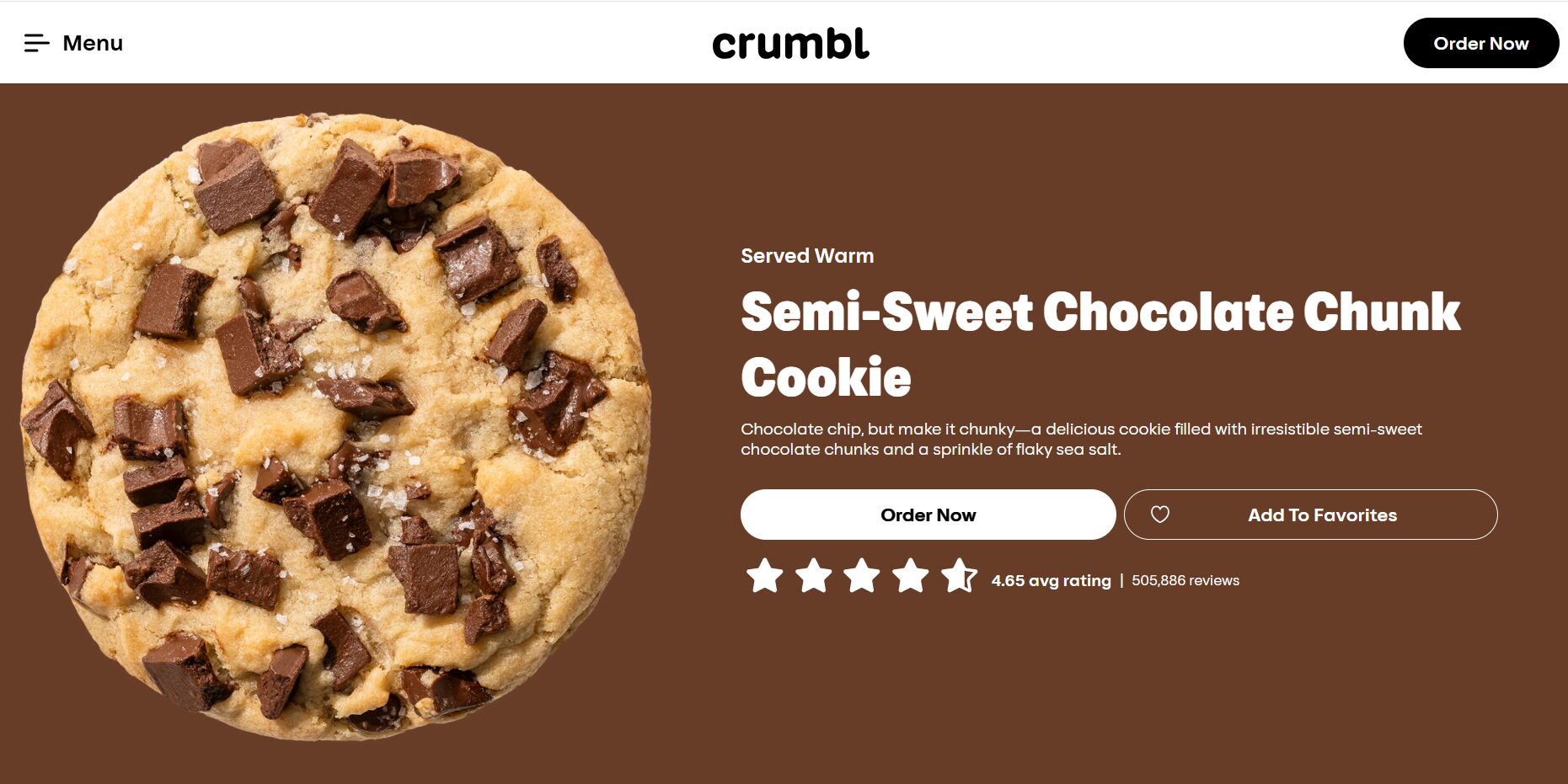
They started with zero baking background but plenty of hustle. As Guy Raz uncovered on How I Built This, this journey began in a small kitchen where Jason and Sawyer experimented obsessively with cookie recipes—and not just any cookie, but the most perfect chocolate-chip cookie imaginable. They leaned on a version of A/B-testing—tweaking one ingredient at a time—tasting, iterating, and refining until they nailed the recipe.
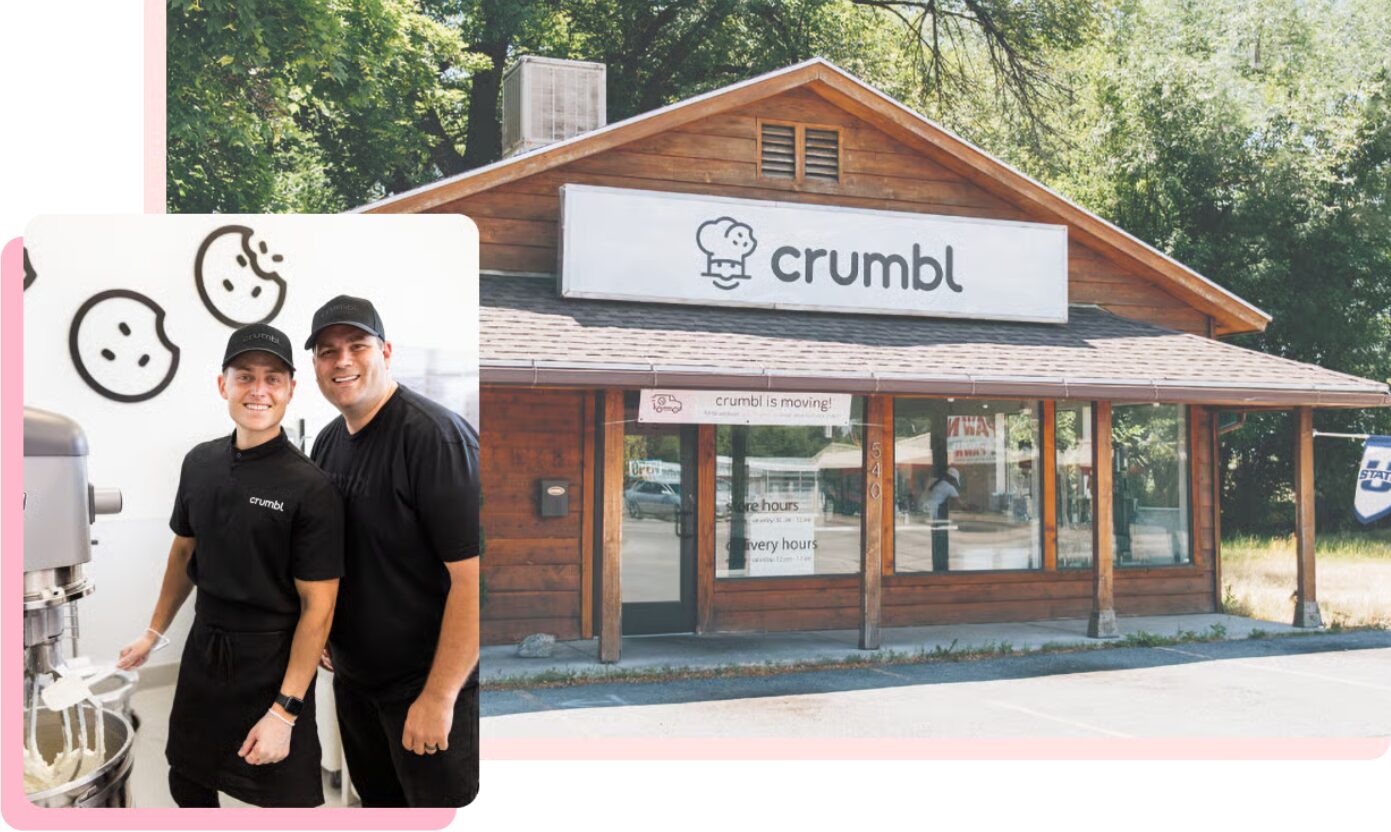
Their first Crumbl shop in Logan wasn’t hidden behind a closed kitchen wall. Instead, it was designed as an open-concept bakery where curious customers could watch dough being mixed, cookies being rolled, and trays going into the oven (Crumbl Cookies). From day one, this was about experience, transparency, and creating memories as much as cookies.
They had no pedigree in baking but came armed with tech sensibility, branding ambition, and grit. Baskin-Robbins had flavors, but Jason and Sawyer decided to bake the unexpected—and let people in on the magic.
And, they wanted to build a home delivery system, leveraging Jason’s tech background. This business is like INSOMNIA Cookies, built around the simple notions that for decades you could get pizza delivered to your home, why not cookies?
Weekly Product Rotation
As the brand grew, a crucial decision shaped Crumbl’s identity: a rotating weekly menu. Every Sunday—yes, Sunday—the company announces six new cookie flavors through its social media channels.
This weekly “flavor drop” is styled and timed like a product launch. It brings anticipation, urgency, and shareability. Customers don’t just show up to buy—they check in for the reveal. If you’re a food-and-beverage startup and you see any opportunity for scarcity or novelty even in something as simple as flavor variation, lean into it hard—that’s lesson number one.
The social media mechanics around that Sunday reveal are meticulously executed. Crumbl’s internal social-media team—reportedly more than 30 people—produces slick visuals, reveal posts, and behind-the-scenes teasers each week.
They repost customer reviews—good or bad—and even reward creators with vouchers or free cookies for coverage. It’s audience activation, not just promotion. And it works. By late 2024, Crumbl had more than 9.6 million TikTok followers, dwarfing even Starbucks (2.2 million). Combined reach across TikTok and Instagram has exceeded 14 million followers. That kind of brand buzz is unparalleled.
More Than 1,000 Stores
Today, Crumbl sits at over 1,070 locations as of December 2024 across the US and Canada (and preparing for Australia soon). At the end of 2024, the chain had 1,059 stores—up from 968 in 2023—with a net of 87 new openings that year and some strategic closures too.
Growth hasn’t been careless; they have pulled back from underperforming locations when needed.
Financially, the business is thriving. Reports estimate annual revenues pushing—or surpassing—$1 billion. Average unit sales in 2024 among 858 reporting locations reached $1.35 million—up from $1.16 million the prior year. Average net profit per unit hit roughly $251,706, a 105 percent growth.
Ownership remains private and centered with Jason, Sawyer, and their leadership team, with no public exchange status—but backed by investors such as TSG Consumer and Boldera Capital, which reportedly raised around $500 million to fuel expansion (PitchBook, Crumbl Cookies).
Did I mention one of their boldest operational choices?
Closed on Sundays
They close stores on Sundays. Yes, the same day they make their flavor announcements, they shut the doors. That act is part discipline, part curiosity. Their religious upbringing informed this decision, and it reinforces the idea of anticipation: you can only taste the new lineup starting Monday.
It also gives staff a consistent reset day and makes the flavor drop feel more deliberate, more anticipated. If you are a startup in food and beverages, never underestimate how curating when you’re not available amplifies when you are.
When Jason and Sawyer began, people wondered if two novices could create something worthwhile. They leaned on testing, transparency, and taste. That led to the open-kitchen, recipe-focused launch, which naturally became the experiential core of the brand.
But experience without excitement is just a pastry. Introducing weekly flavor drops created rhythm and ritual. And social media made it communal. Every Sunday became a hashtag moment, a viral cycle, a story waiting to be told in bite-sized, share-sized content.
Meanwhile, strategic franchising enabled scale—fast expansion but with partners aligned to their branding, aesthetic, and menu discipline. Where locations underperformed, they closed them. Where buzz heightened, they accelerated openings.
Because of that, Crumbl expanded from a cookie shop in Logan into an empire of over 1,000 stores, with well over $1 billion in revenue, and strong unit economics, averaging $1.3 to $1.35 million per store. The founders still own—and guide—the brand, balancing growth with control.
Four Key Takeaways
Here are four key takeaways for food and beverage startups, with Crumbl as an example:
- Create Ritual Through Rotation—Crumbl’s weekly flavor drop on Sunday is a model of deliberate anticipation. Build habits around your product. Whether it’s flavor, offering, or experience, make your audience wait—and then reward them. It isn’t about unpredictability—it’s about expectations.
- Social Media as a Co-Creator—Crumbl didn’t just post content—they let customers produce it—reposting reviews, rewarding creators, building a social media ecosystem. Your fans can be your marketing department—if you invite them in, authentically and consistently.
- Discipline Enables Scale—Crumbl expanded fast but didn’t forget strategy. Sundays closed. Underperforming stores shuttered. Franchising maintained standards. Bold growth doesn’t mean reckless growth. Understand what to stop as much as what to start.
- Distinctive Asset – The pink box became a core distinctive asset for the brand that was inspired by a pink Cadillac that Sawyer always admired as a kid. Find something that makes it easy to recognize your brand – and color is a simple but effective way to stand out.
How The Cookie Crumbls
Crumbl isn’t just a cookie company. It is a branding lesson disguised as a bake sale.
If you follow their recipe—starting with product development, packaging, ritual, audience, operational discipline, and controlled expansion—you’ll be chewing on something far more lasting than sugar.
And that’s the way the cookie…
Connect with Jeff at The Marketing Sage Consultancy. Interested in setting up a call with me? Use my calendly to schedule a time to talk. The call is free, and we can discuss your brand and marketing needs.
If you want to learn more about my new offering, The Trusted Advisor Board, you can click here to learn the details. Feel free to email me at jeffslater@themarketing sage.com or text 919 720 0995. Thanks for your interest in working with The Marketing Sage Consultancy.

Images courtesy of Crumbl



The “Bake Sale” analogy is spot on. Weaving in a permanent LTO process along with seeking feedback from consumers creates loyalty and audience participation. It’s a unique niche superbly executed.
Mike, finding a hook that a brand can own is critically important to building interest, excitement and momentum. Crumbls has done this with a clever, yet simple trick. Thanks for your feedback.