
From Technology to Market: How Ripple Built a Business Model That Works
In the world of food technology startups, numerous companies burn through venture capital in their pursuit of the next big thing.
They develop impressive technology, create beautiful pitch decks, and talk endlessly about disrupting entire industries. Most fail spectacularly. But occasionally, a company emerges that takes a fundamentally different approach—one that prioritizes strategic market validation over technological wizardry.
Ripple Foods is such a company, and their journey from plant protein technology to high-protein milk alternative offers invaluable lessons for entrepreneurs looking to build sustainable business models.
As a branding and marketing expert who has watched countless startups rise and fall, I believe Ripple’s approach represents a masterclass in strategic business model development.
The Technology-First Trap
Ripple started with what many would consider a classic startup origin story: brilliant scientists developing breakthrough technology. The company was founded in 2014 by Adam Lowry and Dr. Neil Renninger, two serial entrepreneurs with impressive track records.
Lowry revolutionized the cleaning industry when he co-founded Method Products, while Renninger, a biochemical engineer, redefined renewable energy applications in food and medicine. Lowry’s Method evolved into a $100 million business, and Renninger had previously co-founded Amyris in 2003, a synthetic biology company that converted plant sugars into products such as anti-malaria drugs.
These founders had cracked the code on creating high-quality, complete protein from yellow peas, a significant technological achievement in the plant-based protein space.
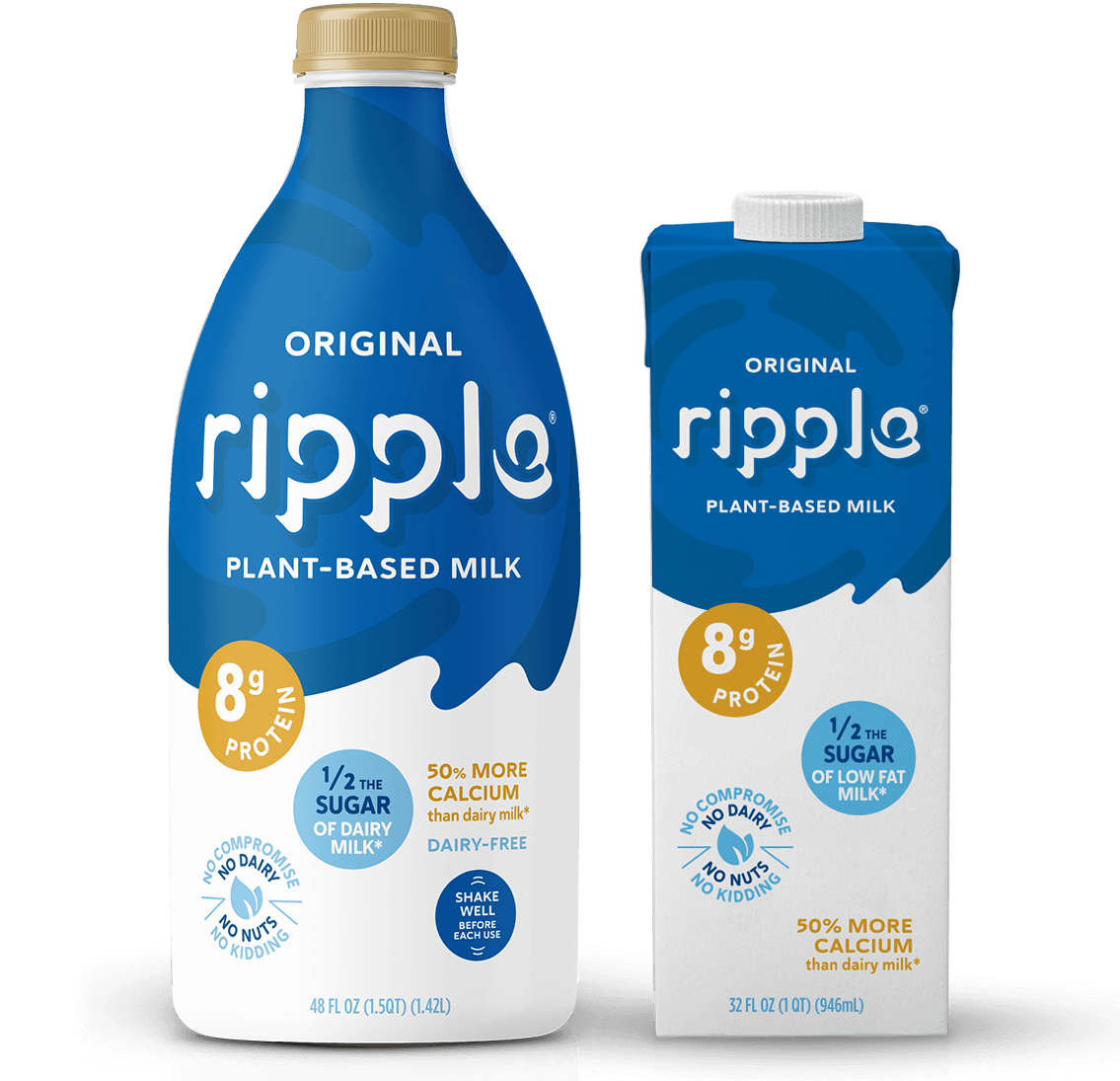
Their breakthrough was developing novel technology that strips out unwanted components (color and flavor) from commercially available plant protein isolates to yield ‘Ripptein,’ a neutral-tasting protein. Put Ripptein alongside commercially available pea protein isolates, which can taste “beany and grassy,” and you’ll immediately taste the difference.
Yellow peas offered numerous advantages: they were abundant, relatively inexpensive, and could be processed into a protein that rivaled animal-based alternatives in both nutritional profile and functionality.
But here’s where most technology-focused startups go wrong: they assume that having great technology automatically translates to having a great business.
They spend years perfecting their innovation in labs, burning through capital while remaining disconnected from real market needs. Ripple’s founders understood something crucial: technology is only valuable if it solves a problem that customers care about and are willing to pay for.
The Strategic Pivot to High-Protein Milk
Rather than trying to launch their pea protein technology across multiple categories simultaneously, Ripple made a strategic decision that would define their success: they focused entirely on creating a high-protein milk alternative. This wasn’t a random choice, it was a carefully calculated market entry strategy.
The plant-based milk market was already established and growing rapidly, with consumers increasingly seeking alternatives to dairy for health, environmental, and ethical reasons. However, existing plant-based milks had significant nutritional shortcomings, particularly in protein content. Almond milk, the category leader, contained virtually no protein. Soy milk had protein, but it came with its own taste and health concerns. Oat milk was gaining popularity but was essentially a carbohydrate-heavy beverage.
Ripple saw an opportunity to create a product that could compete directly with dairy milk in terms of nutrition, particularly protein content, while offering the benefits consumers sought from plant-based alternatives. Their yellow pea protein technology wasn’t just a cool innovation; it was the key to solving a real, pressing problem in an established market.
Three Strategic Lessons from Ripple’s Journey
Lesson 1: Technology Should Serve Market Needs, Not the Other Way Around
The most critical lesson from Ripple’s success is their understanding that technology should be the means to an end, not the end itself. Too many startups fall in love with their technology and then scramble to find markets for it. This backwards approach leads to forced positioning, confused messaging, and ultimately, products that solve problems nobody has.
Ripple flipped this dynamic. They identified a clear market need—nutritionally complete plant-based milk—and then leveraged their technology to address it. Their yellow pea protein wasn’t positioned as a revolutionary new ingredient; it was positioned as the solution to creating plant-based milk that competed with dairy on the metrics that mattered most to consumers.
This approach allowed them to craft compelling marketing messages that resonated with their target audience. They weren’t selling pea protein technology; they were selling “the plant-based milk that doesn’t compromise on nutrition.”
Technology became invisible to consumers, which is precisely what great technology should do.
Lesson 2: Strategic Focus Beats Broad Ambition
The second lesson is about the power of strategic focus. Ripple could have launched their pea protein technology across multiple categories—protein powders, meat alternatives, baked goods, and more. The temptation to maximize their technology’s potential across numerous applications must have been enormous.
Instead, they chose to dominate one category at a time. This decision provided several strategic advantages. First, it allowed them to concentrate their limited resources—marketing dollars, R&D efforts, and management attention —on perfecting one product and winning in one market. Second, it enabled them to build deep expertise in the plant-based milk category, understanding consumer preferences, retail dynamics, and competitive positioning in ways that would have been impossible if they were spread across multiple categories.
This focused approach also made their brand story simpler and more memorable. Ripple became known as “the high-protein plant milk company” rather than “the pea protein technology company.” This clarity was crucial for both consumer adoption and the development of retail partnerships.
Lesson 3: Validate Before You Scale
The third lesson is about the importance of market validation before committing to large-scale production and distribution. Ripple’s approach to testing their high-protein milk concept was methodical and data-driven. They didn’t immediately invest in massive manufacturing facilities or nationwide distribution deals. Instead, they started with targeted launches in specific markets, gathering honest consumer feedback and purchase data.
This validation approach allowed them to refine their product, packaging, and positioning based on actual market performance rather than internal assumptions. They learned which flavors resonated most with consumers, which package sizes performed best, and which retail channels provided the most substantial sales velocity. This real-world data became the foundation for their scaling strategy.
More importantly, this validation process helped them build credibility with retailers and investors. When they eventually expanded nationally, they had concrete proof that their product could succeed in competitive retail environments. This reduced the risk for retail partners and made their growth story more compelling to potential investors.
The Broader Implications
Ripple’s journey from technology to market success offers a blueprint for other entrepreneurs looking to build sustainable business models. Their approach demonstrates that the most successful companies are often those that can bridge the gap between technological capability and market reality.
In today’s startup environment, where technological advancement is rapid and capital is increasingly scrutinized, the companies that will thrive are those that can demonstrate clear paths from innovation to customer value. Ripple’s success with high-protein milk demonstrates that this path doesn’t have to be revolutionary; it simply needs to be honest, focused, and strategically executed.
The plant-based food industry will continue to evolve. Still, the lessons from Ripple’s journey remain constant: understand your market, focus your efforts, and let customers’ needs guide your technology application.
These principles, more than any breakthrough innovation, are what separate successful companies from cautionary tales.
Connect with Jeff at The Marketing Sage Consultancy. Interested in setting up a call with me? Use my calendly to schedule a time to talk. The call is free, and we can discuss your brand and marketing needs.
If you want to learn more about my new offering, The Trusted Advisor Board, you can click here to learn the details. Feel free to email me at jeffslater@themarketing sage.com or text 919 720 0995. Thanks for your interest in working with The Marketing Sage Consultancy.