
There’s a cognitive trap that ensnares even sophisticated marketers: the belief that consumers buy products for their features, or even their benefits.
They don’t.
Consumers buy outcomes.
They buy the transformed version of themselves they envision on the other side of the purchase. The most potent brands understand this intuitively, encoding the desired end state directly into their nomenclature, visual identity, and strategic positioning.
This isn’t semantic wordplay.
It’s the difference between a brand that exists as a commodity and one that operates as an aspiration delivery system. When you position around outcomes rather than attributes, you’re no longer competing on the crowded playing field of product features. You’re occupying psychological real estate in the consumer’s vision of their future self.
The Neuroscience of Outcome-Driven Decision Making
Before we examine some examples, let’s establish why these matters at a neurological level.
Research in consumer psychology reveals that purchase decisions are fundamentally future-oriented simulations. When evaluating a product, the brain doesn’t catalog specifications—it runs a predictive model of how life will be different post-purchase.
The brands that shortcut this mental simulation by explicitly representing the outcome create what behavioral economists call “cognitive fluency”.
Cognitive fluency is the ease with which the brain processes information, which directly correlates with preference and choice.
The implication? Your brand shouldn’t just promise a result. It should be the result.
Do you have a headache? We sell a painkiller.
Four Masterclasses in Outcome Encoding
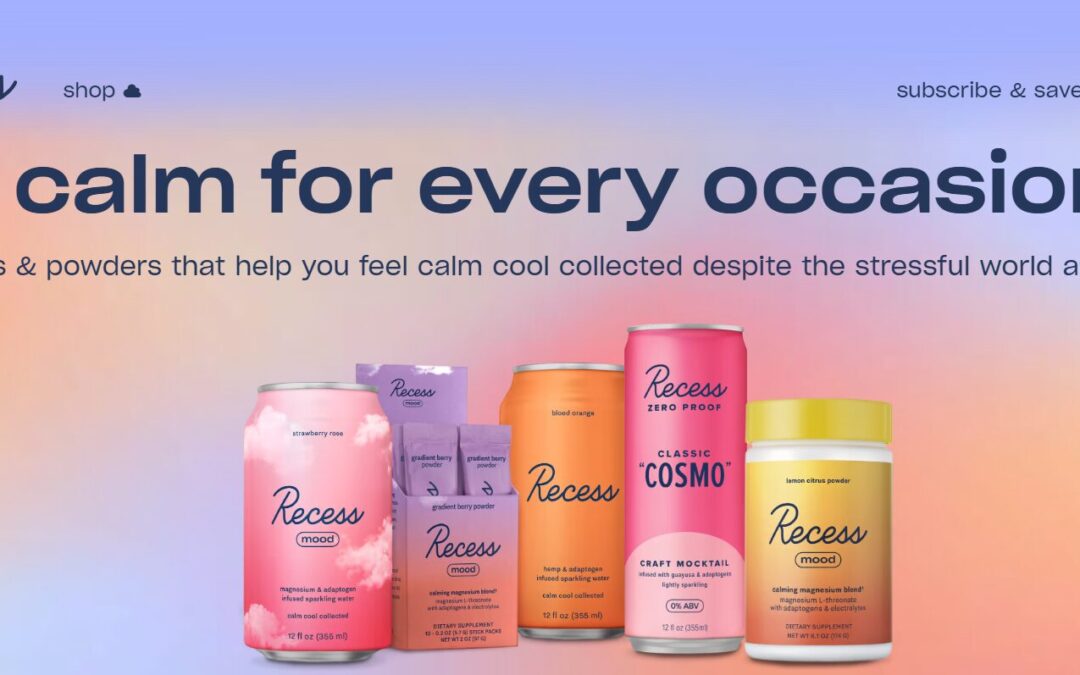
Recess : Calm For Every Occasion
Recess has mastered the art of selling feelings, not just beverages. Rather than leading with ingredient lists or functional benefits, the brand positions itself around the emotional outcome their customers crave: calm, clarity, and balance in our chaotic modern lives.
Their marketing consistently emphasizes “taking a recess”—that moment of pause and reset we all desperately need. The pastel-colored cans, the dreamy aesthetic, and the messaging all reinforce this emotional promise. They’re not selling you a CBD-infused sparkling water; they’re selling you permission to step back, breathe, and recalibrate.
This outcome-driven positioning transforms a functional beverage into a lifestyle ritual. Customers aren’t just hydrating—they’re practicing self-care, finding their calm, and reclaiming moments of peace. By anchoring their brand to this aspirational emotional state rather than product features alone, Recess creates a deeper connection that transcends the transaction itself.
Vuori: The Effortless Vitality You’ll Embody
Vuori operates in the brutally competitive athletic apparel category, yet it’s carved out a distinctive positioning by encoding a specific lifestyle outcome rather than performance metrics.
The name derives from the Finnish word “vuori,” meaning “mountain”.
It doesn’t promise compression technology or moisture-wicking fabric. It promises elevation, both literal and metaphorical.
But the true genius lies in their “built for the active coastal lifestyle” positioning.
They’re not selling workout clothes; they’re selling the outcome of being someone whose fitness is so integrated into their daily existence that the boundary between athletic and casual dissolves entirely.
Their aesthetic—soft, neutral tones, premium hand-feel, designs that transition seamlessly from yoga studio to coffee shop to coastline—communicates the outcome: you’re not someone who works out. You’re someone whose vitality is so natural it requires no performance costume.
Compare this to traditional athletic brands that position around podium finishes and personal records. Vuori recognized a consumer tension: people who want to be fit but don’t want their entire identity consumed by gym culture.
The outcome isn’t “I’ll perform better.” It’s “I’ll be the kind of person for whom wellness is effortless, integrated, and aesthetically coherent with my aspirational lifestyle.” That’s why their customers develop almost cult-like devotion.
Vuori doesn’t sell them activewear; it sells them the outcome of frictionless vitality.
Blueland: The Responsible Simplifier You’ll Become
Blueland sells cleaning tablets that dissolve in water.
But to position them as “cleaning tablets” would fundamentally misunderstand their strategic architecture. The brand name itself, “Blueland”, evokes a utopian vision, a place where consumption is reconciled with planetary health.
Their visual identity, dominated by clean blues and whites and featuring impossibly simple packaging, doesn’t reflect the product. It describes the outcome: a simpler, cleaner, more responsible version of domesticity.
The genius in Blueland’s positioning is how they’ve transformed the mundane category of household cleaning into an outcome about cognitive liberation.
Their messaging doesn’t emphasize cleaning efficacy or environmental benefits. It emphasizes freedom from plastic waste, cluttered cabinets, and decision fatigue about which specialized product to use for which surface. The outcome they’re selling is elegance—in your home, in your environmental footprint, in your mental space.
Every customer touchpoint reinforces this outcome.
The reusable bottles are designed as permanent fixtures worthy of display. The tablets arrive in minimalist packaging that feels like unboxing a luxury product rather than restocking cleaning supplies.
The outcome encoded in every element: “I’m someone who has simplified and elevated the boring necessities of life into something intentional and beautiful.”
They’re not competing with Clorox on killing power; they’re competing with the chaos and compromise of modern consumption itself.
Chamberlain Coffee: The Curated Authenticity You’ll Project
Chamberlain Coffee, founded by YouTuber Emma Chamberlain, could have easily positioned itself as celebrity-endorsed coffee.
Instead, it’s a masterclass in encoding personality as outcome. The brand aesthetic—quirky illustrated cans, unexpected flavor names like “Social Dog” and “Careless Cat,” design elements that feel like a teenager’s journal collaged to life—promises something specific: the outcome of having a personality so confident and individualistic that even your coffee choice becomes an extension of creative self-expression.
The brand doesn’t lead with bean origin, roast profile, or caffeine content (though they deliver on quality).
They lead to the outcome of being someone interesting enough to choose coffee that looks like art supplies: their Instagram-friendly packaging, their intentionally imperfect hand-drawn aesthetic, their embrace of Gen-Z absurdist humor.
All of it communicates that buying Chamberlain isn’t about better coffee. It’s about the outcome of signaling that you’re creative, authentic, and culturally literate enough to choose the anti-corporate coffee brand that feels like a friend made it.
What makes this particularly sophisticated is how they’ve positioned authenticity itself as an achievable outcome through consumption. For their target demographic, young people are navigating the performance of self on social media.
The anxiety around seeming authentic versus manufactured is acute. Chamberlain Coffee offers the outcome of “effortless” authenticity, the kind that can be both genuine and aesthetically coherent.
The product is coffee; the result is personality validation.
The Strategic Architecture of Outcome Positioning
These three brands illuminate a typical architecture:
First, they identify an unstated consumer tension or aspiration.
Vuori saw wellness enthusiasts who didn’t want to look like they were trying too hard. Blueland recognized domestic overwhelm disguised as cleaning product choices. Chamberlain understood the Gen-Z hunger for personality expression that doesn’t feel manufactured.
Second, they encoded the outcome directly into brand semiotics.
Not subtly, not eventually—immediately, in the name, visual system, and messaging. There’s no gap between encountering the brand and understanding the transformation it offers.
Third, they made the product almost secondary to the identity or outcome it delivers.
This is counterintuitive for most marketers, who are trained to lead with product benefits. But when the result is sufficiently compelling, the product becomes simply the vehicle for achieving it.
Three Strategic Imperatives for Outcome-Driven Positioning
1. Reverse-Engineer from Identity, Not Product Category
Stop asking “What does our product do?” Start asking “Who does our customer want to become?” The transformation you enable is your proper category. Vuori isn’t in activewear; they’re in effortless wellness. Blueland isn’t in cleaning products; they’re in domestic elegance. Chamberlain isn’t in coffee; they’re in authentic personality expression. Map the psychological outcome first, then design every brand element to reflect that future self to the consumer.
2. Encode Outcomes in Your Nomenclature and Visual Language
Your brand name and visual identity should telegraph the transformation, not describe the transaction. If your name could apply equally to any competitor, you’re not outcome-positioned. The best outcome-driven brands create immediate cognitive resonance between their semiotics and the consumer’s aspiration. Test this: Can someone understand the emotional or social outcome of choosing your brand within three seconds of exposure?
3. Make the Product Subordinate to the Outcome
This is perhaps the most difficult mental shift for product-centric organizations. Your product is a utility that delivers an outcome; it’s not the value proposition itself. When you lead with outcomes, you transcend competitive feature wars and price sensitivity. You’re selling a better version of the customer, and that has exponentially more value than a better version of the product. Frame every touchpoint, every message, every innovation around outcome delivery, and the product features become merely the proof points rather than the story itself.
The brands that will dominate the next decade of commerce are those that understand this fundamental truth: consumers don’t buy products.
They buy outcomes.
They buy who they’ll become, how they’ll feel, what they’ll signal to others, and what tensions they’ll resolve.
Position your brand as the vehicle to that transformed state, encode that outcome in every brand element, and you’ll create something far more potent than preference: you’ll create inevitability.
Connect with Jeff at The Marketing Sage Consultancy. Interested in setting up a call with me? Use my calendly to schedule a time to talk. The call is free, and we can discuss your brand and marketing needs.
If you want to learn more about my new offering, The Trusted Advisor Board, you can click here to learn the details. Feel free to email me at jeffslater@themarketing sage.com or text 919 720 0995. Thanks for your interest in working with The Marketing Sage Consultancy.